
Quick answer
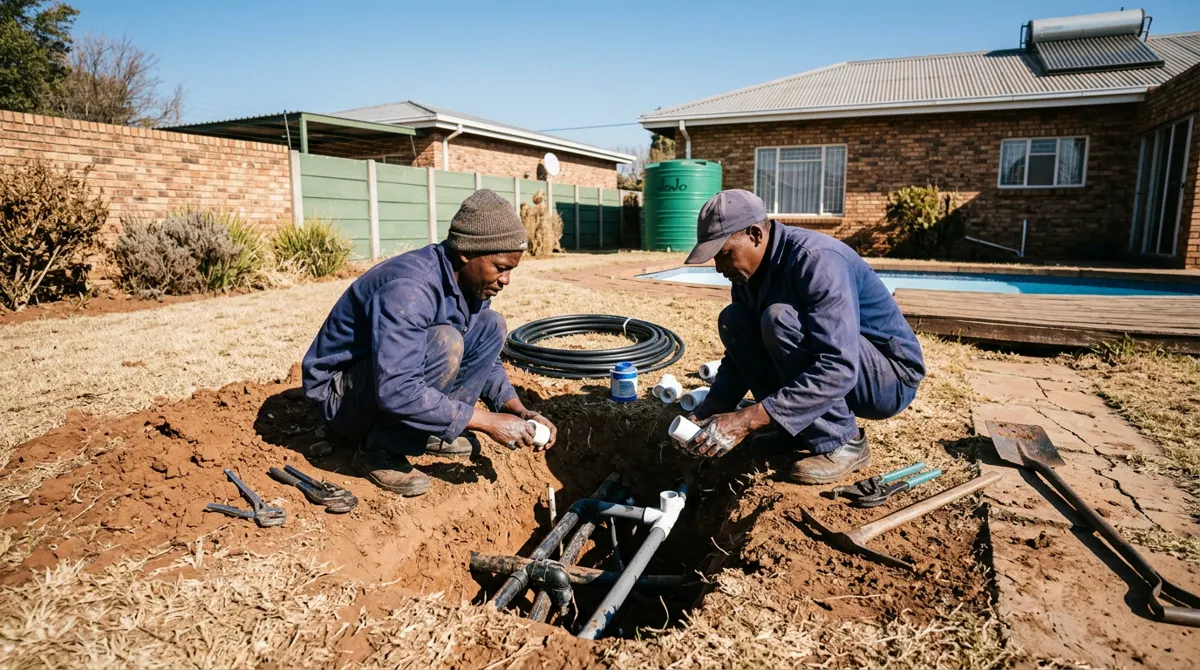
Professional pool pipe repairs start with finding which pipe or connection is leaking, rather than digging where the ground happens to be wet. Fox Plumbing serves Springs from Benoni, using non-invasive tracer-gas leak detection to locate leaks without digging; accessing a buried pipe for the repair may still require excavation.
Signs your pool plumbing needs attention
Frequent top-ups, damp ground beside the pool equipment and water collecting around pipe connections deserve a closer check. Water loss is not automatically a buried pipe leak: evaporation, a leaking filter valve or a fault in the pool shell can produce similar symptoms.
Air bubbles at the return jets or a pump that struggles to stay primed can point to air entering the suction side. A low pool level, blocked skimmer basket or poorly sealed pump lid can also cause trouble, so check accessible components before assuming an underground pipe has failed.
- Note whether water loss changes when the pump runs, but do not treat this as proof of a particular fault.
- Check for drips at visible unions, valves and pump or filter connections.
- Watch for unexpected water at the waste outlet while the system is filtering normally.
- Switch the pump off if it runs dry or cannot maintain water flow.
What affects the cost of pool pipe repairs?
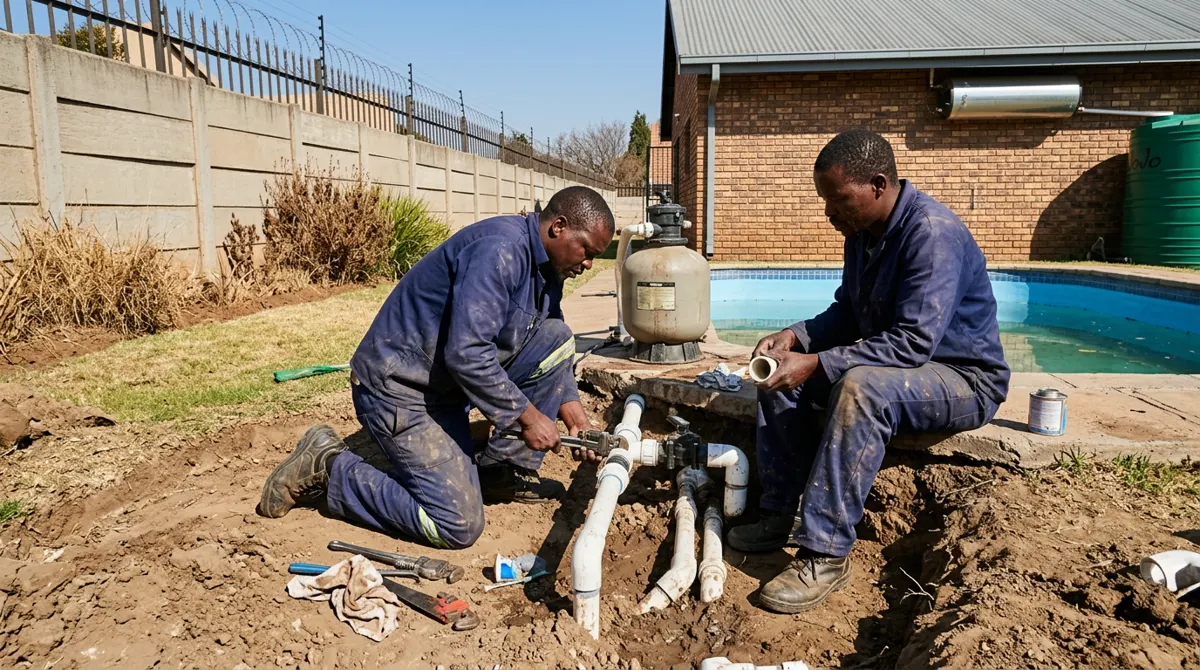
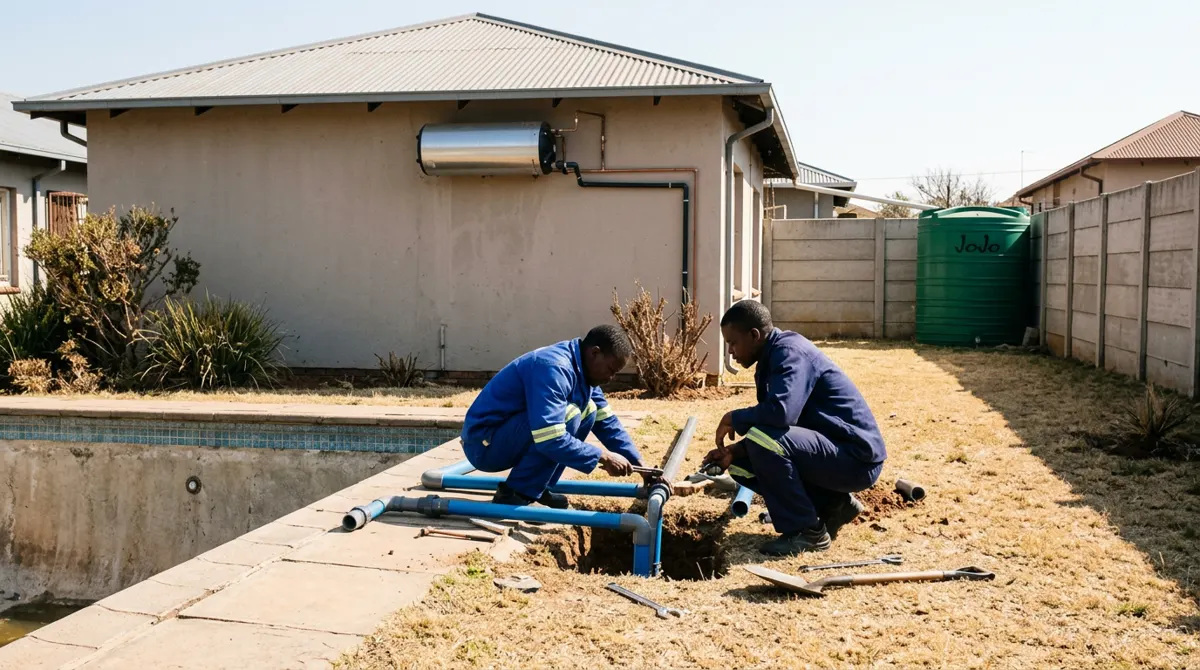
The main cost factors are locating the fault, reaching the damaged section and establishing how much pipework needs replacement. An accessible leaking connection is a different job from a buried line beneath concrete or paving.
Fox Plumbing agrees the price upfront, and the call-out fee includes the first hour of work. Ask what the agreed scope covers, particularly if paving removal or surface reinstatement may be needed. Pensioners qualify for a special rate.
- Which line is affected: suction, return or backwash.
- Pipe depth, route and access around the pool equipment.
- The extent of damage and condition of adjoining pipework.
- Pipe size, fittings and connection requirements.
- Excavation, rubble removal and reinstatement requirements.
Practical preparation for a Springs property
Fox Plumbing is based in Benoni and serves the East Rand, including Springs, and greater Gauteng. When booking, explain whether the suspected pipe route passes beneath lawn, paving or concrete. Mention nearby electrical cables, irrigation pipes and any previous repairs you know about.
Before the visit, photograph visible leaks and record how often you top up the pool. Clear access to the pump and filter without dismantling equipment. Do not drain the pool to investigate a suspected leak without professional advice.
- Send photos of the equipment area and damp patches by email.
- Keep pets away from the work area and arrange access through locked gates.
- Keep electrical equipment away from standing water; do not touch wet switches or connections.
Why choose Fox Plumbing?
Owner Evan Pretorius is a qualified registered plumber with more than 20 years of experience and remains on the tools. Fox Plumbing is a member of IOPSA and PIRB, issues Certificates of Compliance (COCs), and every job is insured. Ask whether a COC is applicable to the work being quoted.
Fox uses harmless tracer gas and a detector for non-invasive leak detection. Most leaks are found within the hour, without digging during detection; repair access is a separate consideration. Phone 084 368 1879 to arrange a visit in Springs. Hours are Monday to Friday, 08:00–17:00, with Saturdays by appointment.
How we do the job
- 1
Check the symptoms and accessible equipment
Start with the reported water loss and visible connections, valves and seals. Rule out straightforward equipment issues before investigating buried pipework.
- 2
Identify the affected line
Separate the possible sources of loss. Appropriate isolation and testing help distinguish a pipe fault from a problem elsewhere in the pool system.
- 3
Locate the leak
Fox uses harmless tracer gas and a detector to find leaks without exploratory digging. The findings guide where access may be needed.
- 4
Agree the repair and access requirements
Confirm the price and scope before repair work begins, including any necessary opening of paving or ground and the arrangements for reinstatement.
- 5
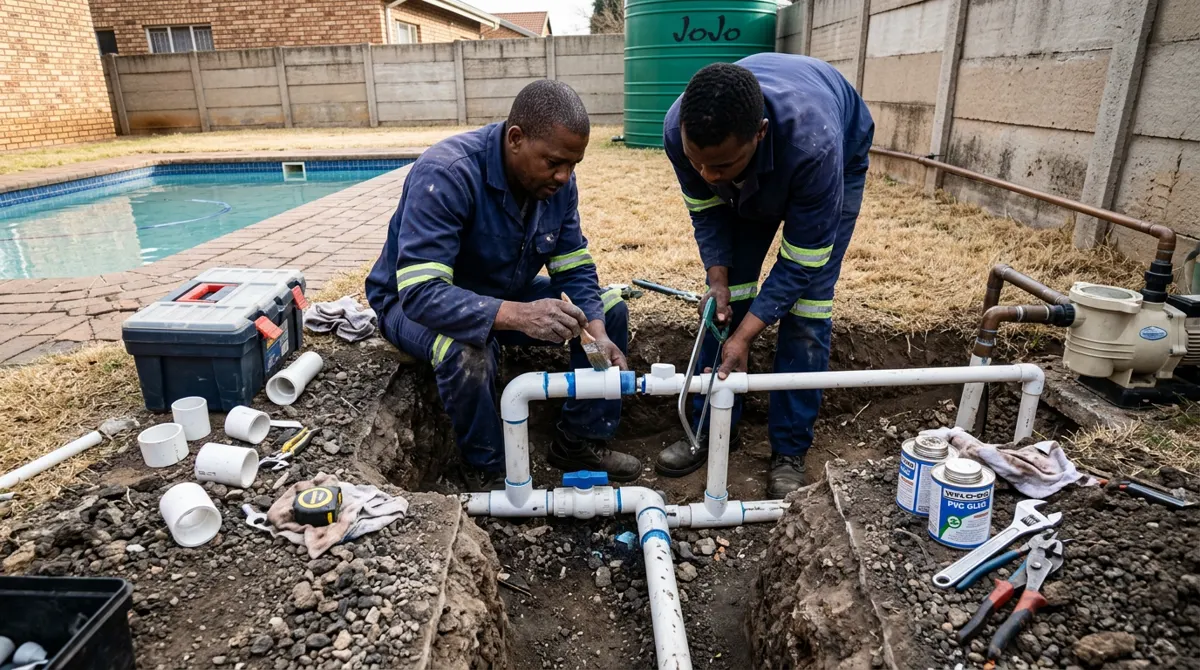
Repair the damaged section
The repair should address the failed pipe or fitting and any obvious strain at the connection. Replacement components must suit the existing pipework and operating conditions.
- 6
Check the repair before closing access
Allow any jointing materials their required curing time, then check for leaks and correct circulation before covering buried connections.
Common questions
How can I tell whether water loss is evaporation or a leak? +
A bucket test can help compare evaporation with pool water loss. Place a bucket of pool water securely on a submerged step, with its rim above the pool water, and mark both levels. Compare the drops after about 24 hours without rain, swimming or topping up. A greater drop in the pool suggests leakage, but does not identify its source.
Does faster water loss with the pump running prove a return pipe leak? +
No. It is a useful clue, but valves, equipment connections and other faults can also leak more during operation. Testing is needed before deciding which component to repair.
Can leak detection find a pipe leak beneath paving? +
Non-invasive tracer-gas detection can help locate buried leaks without digging up the route to search for them. Access to repair the pipe may still require lifting paving or opening concrete; the location and pipe layout determine what is practical.
Will the leak definitely be found within an hour? +
Fox finds most leaks within the hour, but this is not a guarantee for every pool. Access, pipe layout and multiple faults can make an investigation more involved.