
Quick answer
Sustainable commercial plumbing starts with stopping avoidable water loss, matching fittings to the building’s actual needs and maintaining equipment instead of replacing it prematurely. For Gauteng businesses, a practical plan combines leak repairs, efficient taps and toilets, sensible hot-water management and carefully assessed rainwater or greywater options.
Signs your building is wasting water or energy
A rising water account is worth investigating, but compare consumption rather than the total charge alone: tariff changes, occupancy and trading hours can affect the bill. Running toilet cisterns, dripping taps, damp patches and unusually long waits for hot water give maintenance teams more specific places to start.
Check meter readings during a period when all known water uses are stopped. Continued movement can indicate a leak, although automatic irrigation, tank refilling and equipment cycles must first be ruled out. Recording readings and repairs gives you a baseline against which to judge improvements.
- Investigate toilets that refill between uses and taps that do not close properly.
- Check whether irrigation runs unnecessarily or wets paving rather than planted areas.
- Review repeated pipe failures instead of treating each repair as an isolated event.
- Look for hot-water pipes losing heat through missing or damaged insulation.
Choose upgrades by performance, not just water-saving claims
Repair leaks before investing in new equipment. Then assess tap aerators, suitable flow controls and efficient toilet fittings against pressure, usage and hygiene needs. A busy kitchen still needs adequate water for cleaning; reducing flow too far can slow work without delivering a useful saving. Durable, repairable fittings with available spares can also reduce unnecessary replacement waste.
The cost of an improvement depends on the existing installation and the work needed to make it function correctly. Hot-water pipe insulation and appropriate system controls may reduce energy waste, but temperature changes must not compromise hygiene or scald protection. Rainwater and greywater systems need a separate feasibility assessment rather than being treated as automatic upgrades.
- Pipe condition, access and the extent of any concealed damage.
- Number of outlets, operating pressure and peak demand.
- Compatibility with existing toilets, taps and hot-water equipment.
- Required shutdowns, access arrangements and making good after repairs.
- Storage, pumps, treatment, backflow protection and ongoing maintenance for alternative water supplies.
Practical considerations for commercial properties in Gauteng
Gauteng spans several municipal jurisdictions, so check the requirements applicable to the property before changing water connections, drainage or alternative water systems. Do not assume an arrangement accepted at one premises will be suitable at another. In multi-tenant buildings, confirm who controls the meter, isolation valves and maintenance budget before work starts.
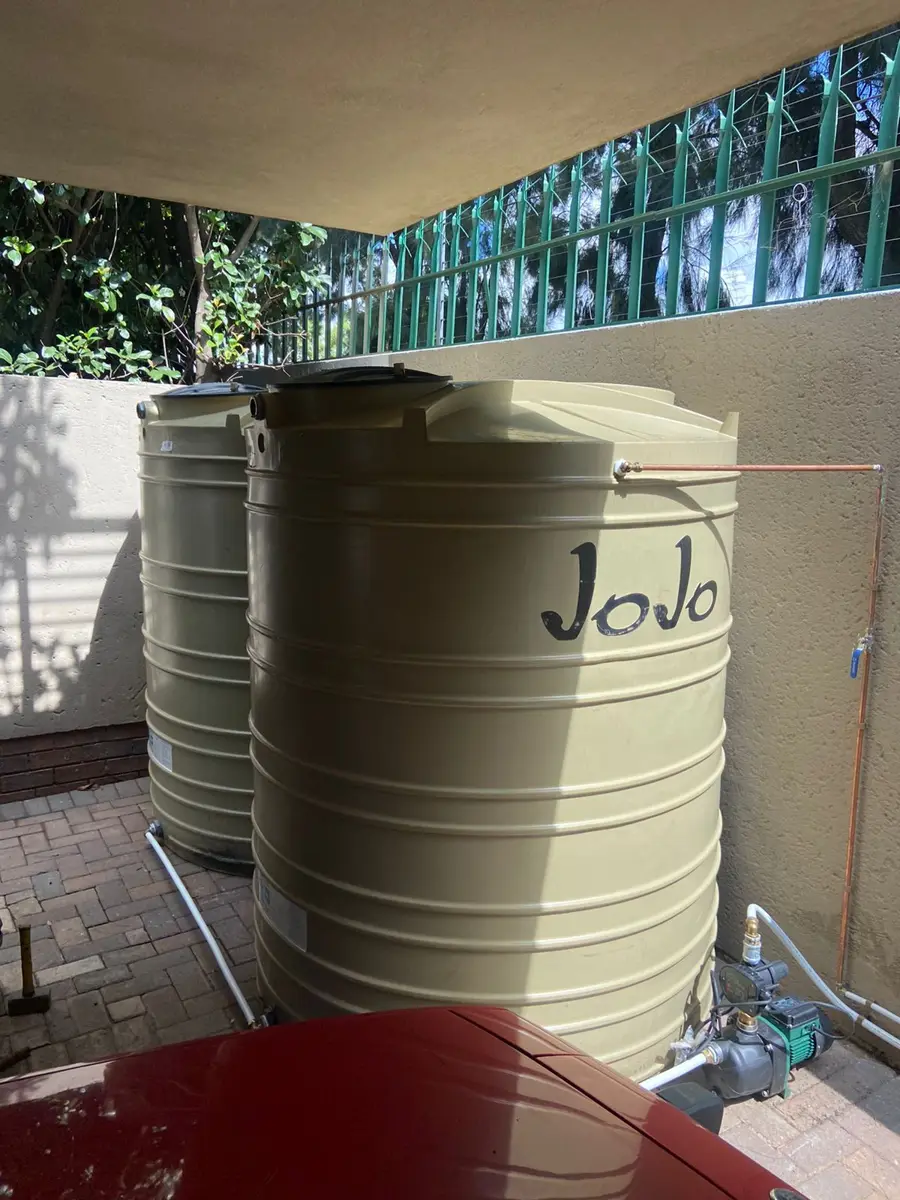
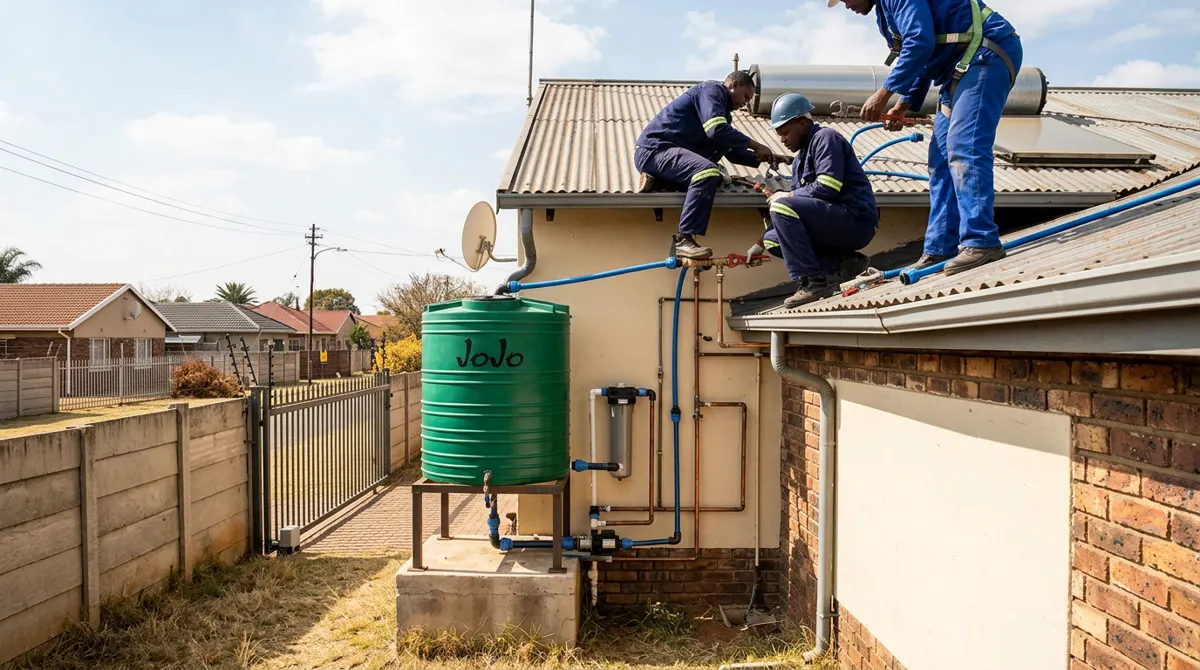
Rainwater can be considered for suitable non-potable uses, such as irrigation or toilet flushing, subject to the necessary design and approvals. Assess roof collection area, seasonal rainfall, demand and maintenance capacity. Greywater requires appropriate treatment and management; neither system should create a cross-connection with drinking water. Backup water storage can improve continuity, but a tank alone does not reduce consumption.
- Label isolation points and plan shutdowns around tenants and business operations.
- Keep non-potable supplies clearly identified and separated from drinking water.
- Allow for pump electricity, filter servicing and tank cleaning when comparing options.
- Assign someone to review meter readings and report faults after installation.
Why involve Fox Plumbing in your water-saving plan?
Fox Plumbing is based in Benoni and serves the East Rand and greater Gauteng. Owner Evan Pretorius is a qualified registered plumber with more than 20 years’ experience and remains on the tools. Fox Plumbing is a member of IOPSA and PIRB and issues Certificates of Compliance (COCs).
For hidden leaks, Fox uses non-invasive detection with harmless tracer gas and a detector. Most leaks are found within the hour, without digging for detection; accessing and repairing the damaged pipe may still require opening the affected area. The price is agreed upfront, the call-out fee includes the first hour of work, and every job is insured. Phone 084 368 1879, Monday to Friday, 08:00–17:00; Saturdays are by appointment.
- Discuss the symptoms, operating hours and access restrictions before the visit.
- Have recent consumption records and previous repair details available.
- Agree on the repair scope and ask which compliance documentation applies.
How we do the job
- 1
Establish the building’s baseline
Review meter readings, occupancy, operating hours and major water uses. Separate genuine changes in consumption from billing or activity changes.
- 2
Inspect and locate losses
Check toilets, taps, valves, visible pipework and hot-water equipment. Where a concealed leak is suspected, use an appropriate detection method before deciding where repair access is needed.
- 3
Prioritise repairs and suitable upgrades
Address active leaks first. Compare efficient fittings, pressure management and hot-water improvements against site conditions, maintenance needs and expected practical benefits.
- 4
Agree on scope, price and disruption
Confirm the proposed work, access requirements, shutdown window and applicable compliance requirements. Assess alternative water systems separately if they are being considered.
- 5
Complete and test the work
After repairs or alterations, check for leaks and verify flow, flushing performance and safe operation. Confirm that water-saving changes still meet the building’s working needs.
- 6
Monitor results and maintain the installation
Compare consumption over similar operating periods. Schedule checks of cisterns, flow controls, valves and any filters or pumps so that faults do not undo the improvements.
Common questions
What should a business do first to make its plumbing more sustainable? +
Start with consumption records and a leak inspection. Repairing a running toilet or concealed leak tackles existing waste before money is spent on additional equipment.
Are low-flow taps suitable for every commercial outlet? +
No. Select flow rates for the task and available pressure. Handwashing outlets may suit flow controls, while cleaning and process outlets need enough water to perform their jobs properly.
Will rainwater harvesting replace a commercial building’s municipal supply? +
Not necessarily. Yield depends on rainfall, collection area, storage and demand. Assess it for suitable uses, with the required separation, protection and maintenance, rather than assuming a constant supply.
Does non-invasive leak detection mean the repair needs no digging? +
No. Fox Plumbing’s tracer-gas detection locates leaks without digging, and most are found within the hour. Repairing the pipe may still require excavation or access through a floor or wall.
How can a facilities manager check whether upgrades are working? +
Compare metered consumption before and after the work over periods with similar occupancy and operating hours. Record unusual events, such as tank refilling or increased production, so the comparison remains useful.