
Quick answer
To trace a hidden water leak, Fox Plumbing uses harmless tracer gas and a detector to locate escaping gas without digging to search for the pipe fault. Based in Benoni and serving the East Rand and greater Gauteng, Fox finds most leaks within the hour, although difficult cases can take longer. Finding the leak is separate from accessing and repairing the damaged pipe.
Signs you need to trace a water leak
A damp wall or wet patch does not necessarily sit directly above a leaking pipe. Water can travel through soil, along pipe routes and beneath floors before appearing somewhere else. Tracing helps narrow down the source before repair work starts.
For a useful first check, turn off taps and stop appliances, irrigation and other equipment that uses water. Wait for toilet cisterns to finish filling, then record the meter reading and check it again while no water is being used. Continued movement suggests water is still flowing somewhere; check visible fittings as well as considering a hidden leak.
- A water bill that rises without a clear change in consumption.
- Damp plaster, lifting paint or a persistent musty smell.
- An unusually wet area in the garden during dry weather.
- Water running or hissing when all outlets are closed.
- An unexplained pressure drop, especially alongside other leak signs.
What affects the cost of tracing a leak?
The time needed depends on access to the plumbing, how easily the affected section can be isolated, the layout of the pipework and whether there is more than one leak. Concealed branches and unclear pipe routes can make the investigation more involved.
Fox Plumbing agrees the price upfront, and the call-out fee includes the first hour of work. Ask what the agreed scope covers, including how any additional tracing time or subsequent repair will be handled. Pensioners receive a special rate.
- Access to the meter, stopcock and relevant pipe connections.
- The extent and complexity of the pipe network being checked.
- Time needed to isolate and prepare the affected pipe section.
- Whether further investigation is needed after the first leak is located.
- Access and reinstatement requirements for a separate repair.
Practical checks for Gauteng properties
In a complex or property with shared water infrastructure, establish which meter and shut-off valve serve your unit. Contact the managing agent or body corporate if access to shared areas is needed. A moving shared meter cannot, on its own, identify which unit has a leak.
An unexpectedly high municipal bill is worth checking against the actual meter reading and whether the account uses an estimated reading. Dampness can also come from rain penetration or a drainage problem rather than a pressurised supply pipe. Tell the plumber when the symptoms occur, particularly after rain, water-supply interruptions or use of a particular fixture.
- Have recent meter readings and photographs of damp areas ready.
- Clear access to the meter, stopcock and affected rooms.
- If water is actively causing damage, close the property's stopcock if safe and accessible.
- Keep away from wet electrical fittings and seek appropriate professional help.
Why book Fox Plumbing?
Fox Plumbing is based in Benoni. Owner Evan Pretorius is a qualified registered plumber with more than 20 years of experience and remains on the tools. Fox is a member of IOPSA and PIRB, issues Certificates of Compliance (COCs), and every job is insured.
The leak-tracing service uses harmless tracer gas and a detector, with no digging for detection. Call 084 368 1879 to arrange a visit in the East Rand or greater Gauteng. Hours are Monday to Friday, 08:00–17:00, with Saturdays by appointment.
- Owner on the tools.
- Price agreed before work starts.
- Call-out fee includes the first hour of work.
- Special rate for pensioners.
How we do the job
- 1
Describe the symptoms
Explain where you have noticed dampness, meter movement or a billing change. Mention any recent plumbing work and whether the problem is constant or intermittent.
- 2
Check the likely source and agree the scope
The investigation starts by distinguishing visible water use from a possible concealed pipe leak. Confirm access arrangements and the agreed price before work begins.
- 3
Prepare the pipe section for tracing
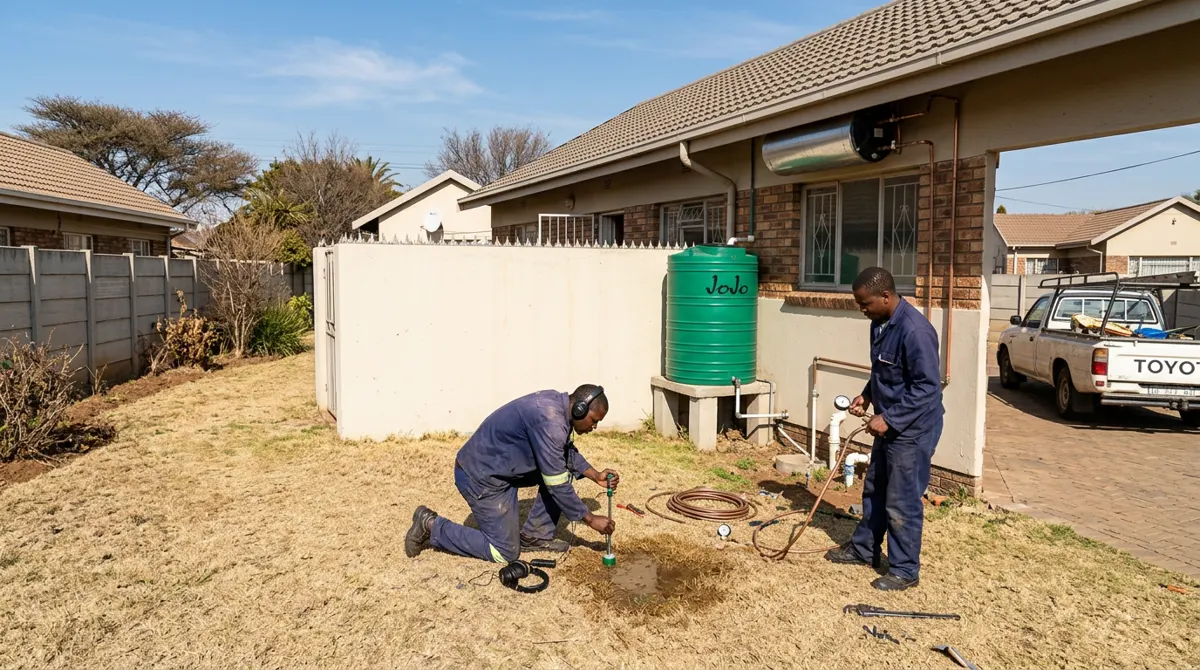
The relevant pipe section is isolated and prepared for harmless tracer gas. This may require a temporary interruption to the property's water supply.
- 4
Follow the tracer gas
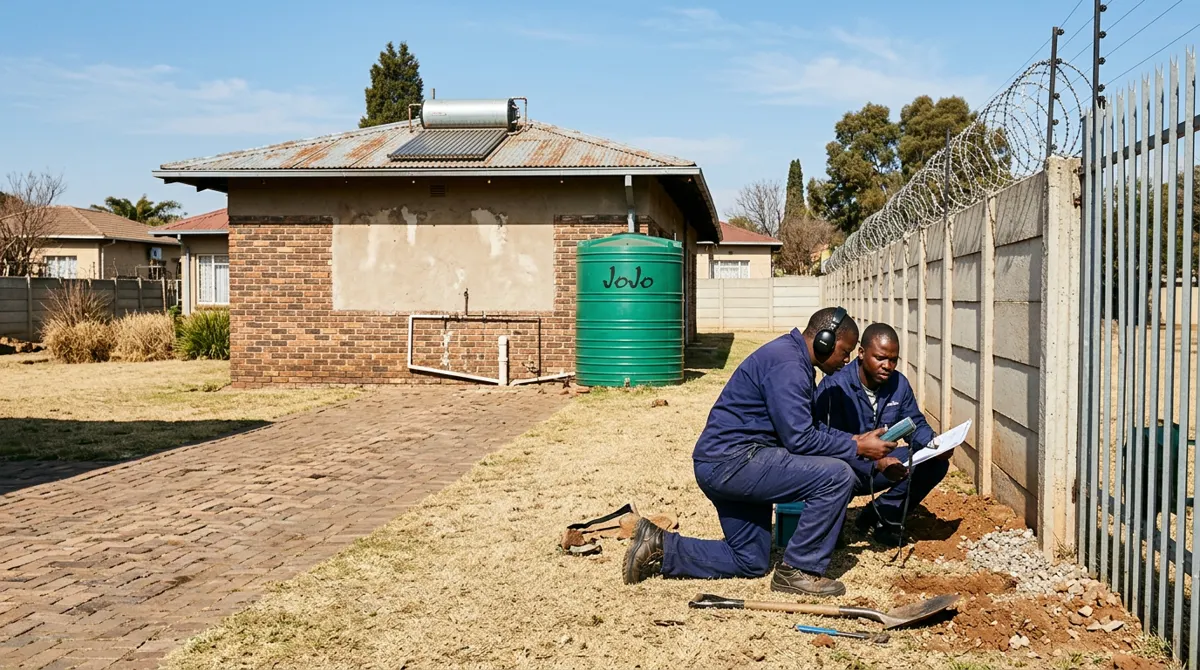
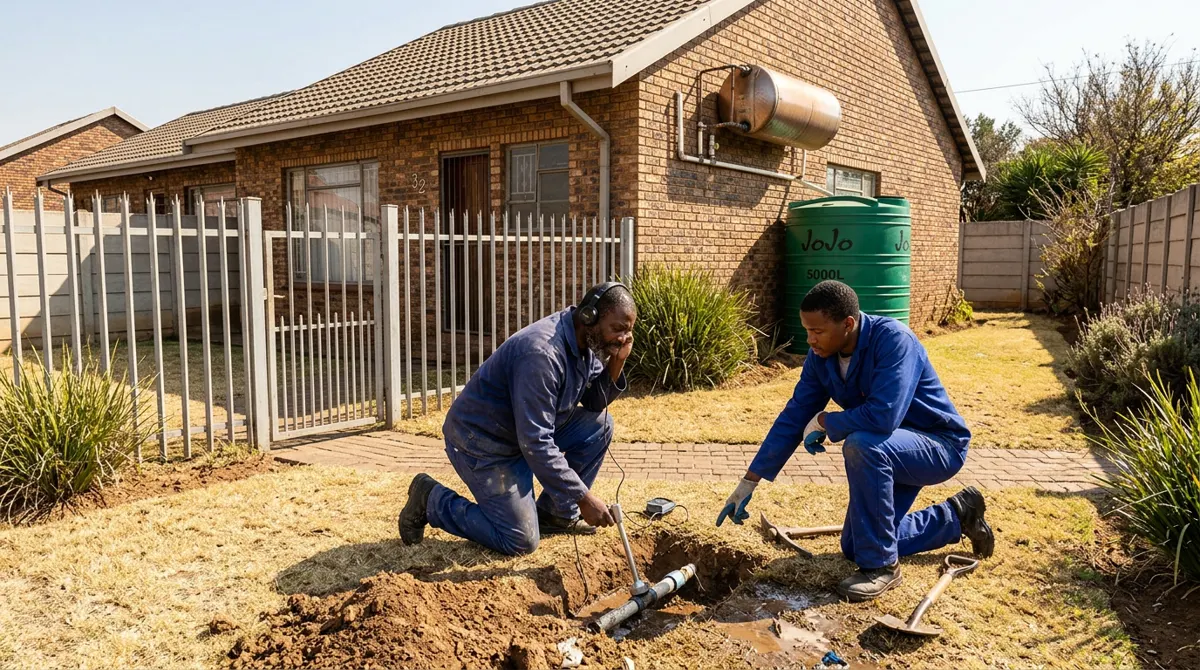
Gas escaping through the pipe fault is detected using a specialised detector. This narrows down the leak location without digging to search for it.
- 5
Plan access and repair
Once the leak is located, discuss the access needed to repair the pipe. Confirm the repair scope and cost separately rather than assuming detection includes excavation, tile removal or reinstatement.
Common questions
Can you trace a water leak without digging? +
Yes. Fox Plumbing uses non-invasive tracer gas detection, so digging is not needed to search for the leak. Accessing the damaged pipe for repair may still require opening a floor, wall or section of ground.
How long does leak tracing take? +
Fox finds most leaks within the hour. Complex layouts, difficult isolation or multiple leaks can extend the investigation, so this is not a guaranteed completion time.
Is the tracer gas harmful? +
Fox uses harmless tracer gas. The plumber prepares the relevant pipe section and uses a detector to identify where gas escapes.
Does a moving water meter prove there is an underground leak? +
No. It indicates water is passing through the meter. A filling toilet cistern, irrigation system or another connected outlet could explain the movement. Rule out ordinary use and visible leaks before assuming the pipework underground is damaged.
Will insurance pay for leak detection and repairs? +
Cover depends on your policy and the cause of the leak. Ask your insurer about approval and documentation requirements before authorising non-urgent work. Fox's job insurance is separate from cover under your own property policy.