
Quick answer
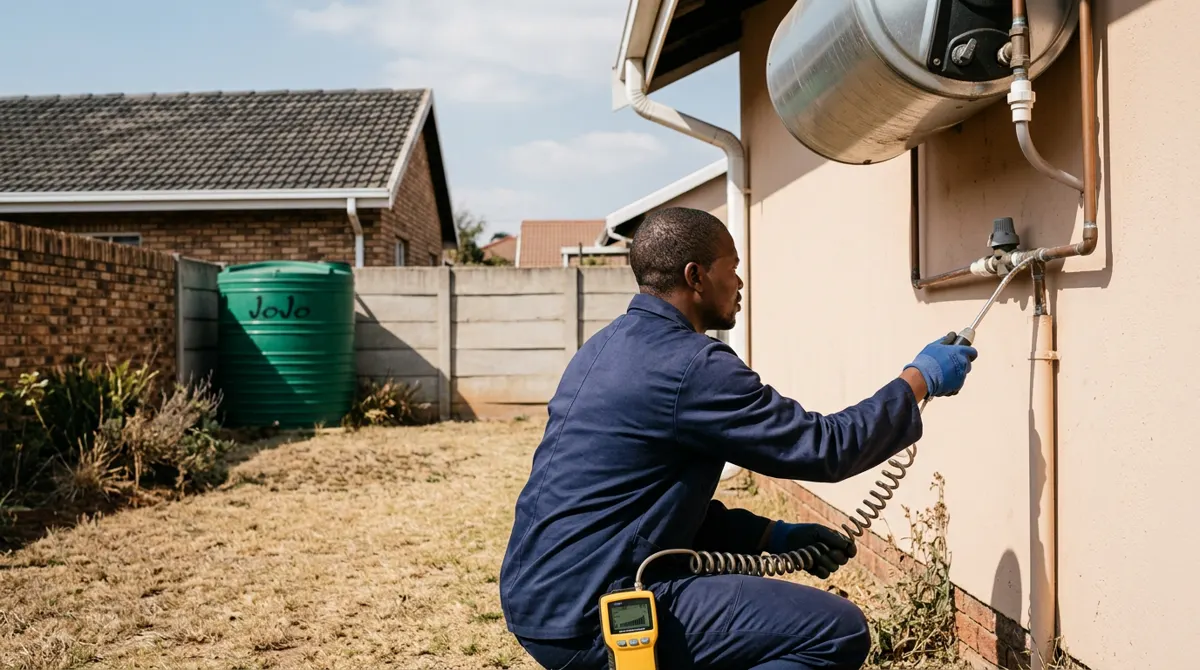
Tracer gas leak detection locates hidden water leaks by introducing harmless gas into an isolated pipe and using a detector to find where it escapes. Fox Plumbing provides this non-invasive service across the East Rand and greater Gauteng, finding most leaks within the hour without digging to locate them.
When tracer gas leak detection is useful
A concealed pipe leak does not always leave a puddle above the damaged section. Water can travel beneath paving or along a wall before becoming visible, so the wet patch alone may not identify the repair location.
Tracer gas is useful when the suspected pipe is out of sight and the source is unclear. It can also help where background noise or poor sound transmission through plastic pipes makes listening for a leak difficult. A visible leaking tap or exposed pipe joint usually does not need this type of investigation.
- Your water meter continues moving when taps, toilets and water-using appliances are not drawing water.
- Your bill rises without a corresponding change in water use.
- A patch of paving, lawn or flooring stays damp in dry weather.
- You have unexplained pressure loss alongside other signs of a leak.
What affects the cost
The work involved depends on how easily the suspected pipe can be isolated, the length of the pipe run and access to the area being tested. Uncertain pipe routes, several possible leaking sections or difficulty draining a line can add time.
Fox Plumbing agrees the price upfront, and the call-out fee includes the first hour of work. Most leaks are found within the hour, but that is not a guarantee for every property. Ask what the agreed price covers and how any additional work will be handled before testing starts.
- Access to the meter, stopcocks and suspected pipe route.
- The number of sections that need separate testing.
- Time needed to prepare and isolate the pipe.
- Any subsequent access work or pipe repair, distinct from locating the leak.
- A special rate is available for pensioners.
Preparing for a visit in Gauteng
Fox Plumbing is based in Benoni and serves the East Rand and greater Gauteng. When booking, give your suburb, describe the symptoms and say whether the suspected line runs beneath a building, driveway, garden or shared area.
Make the meter and accessible shut-off valves easy to reach. For a complex or shared property, arrange permission and access with the caretaker or managing agent beforehand. Testing may require a temporary interruption to the affected water supply, so mention any shared connections when you book.
- Share recent meter readings or unusual billing changes if available.
- Point out previous repairs and provide pipe plans if you have them.
- Keep parked vehicles and stored items clear of the suspected route.
- Do not lift paving or break tiles just to prepare for detection.
Why choose Fox Plumbing
Owner Evan Pretorius is a qualified registered plumber with more than 20 years of experience and remains on the tools. Fox Plumbing is a member of IOPSA and PIRB, issues Certificates of Compliance (COCs), and every job is insured.
For tracer gas leak detection, call 084 368 1879. Hours are Monday to Friday, 08:00–17:00, with Saturday visits by appointment. Explain what you have noticed so the suspected leak and access requirements can be discussed before the visit.
- Owner on the tools.
- Price agreed upfront.
- Call-out fee includes the first hour of work.
- Non-invasive detection using harmless tracer gas and a detector.
How we do the job
- 1
Review the symptoms
Discuss water use, meter movement, damp areas and previous repairs to establish which pipe section needs investigation.
- 2
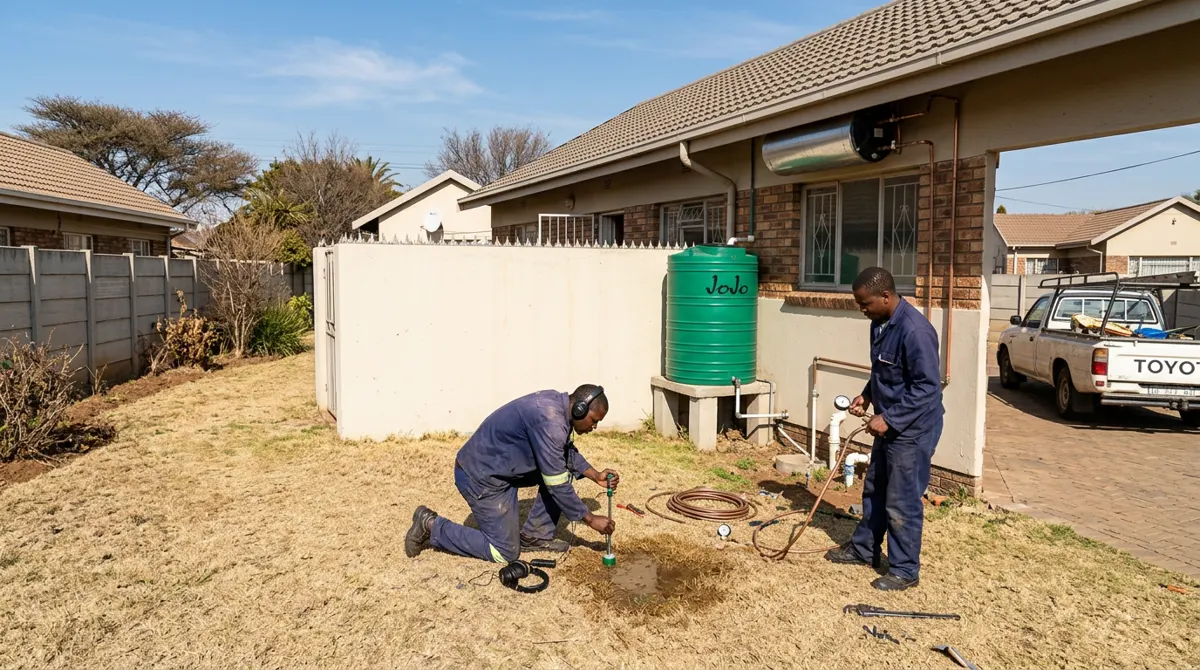
Isolate and prepare the pipe
The affected section is isolated and drained as needed for testing. Water to that section may be unavailable while the test is carried out.
- 3
Introduce harmless tracer gas
Tracer gas is introduced into the prepared pipe. If there is an opening, gas can escape through it and migrate towards the surface.
- 4
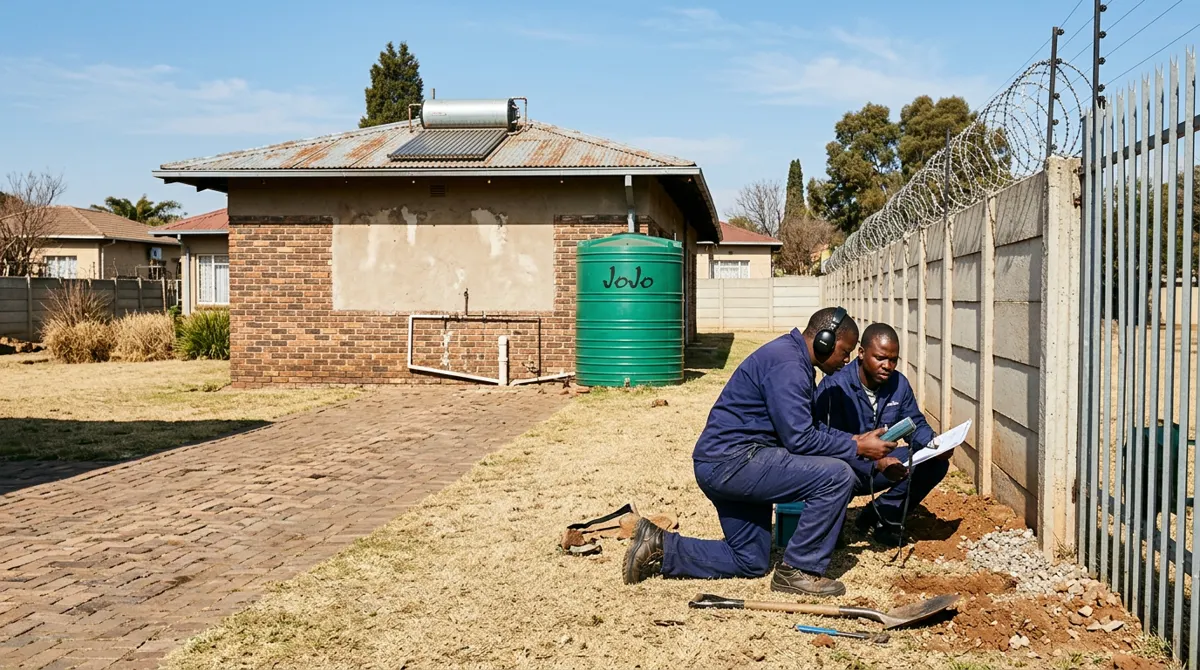
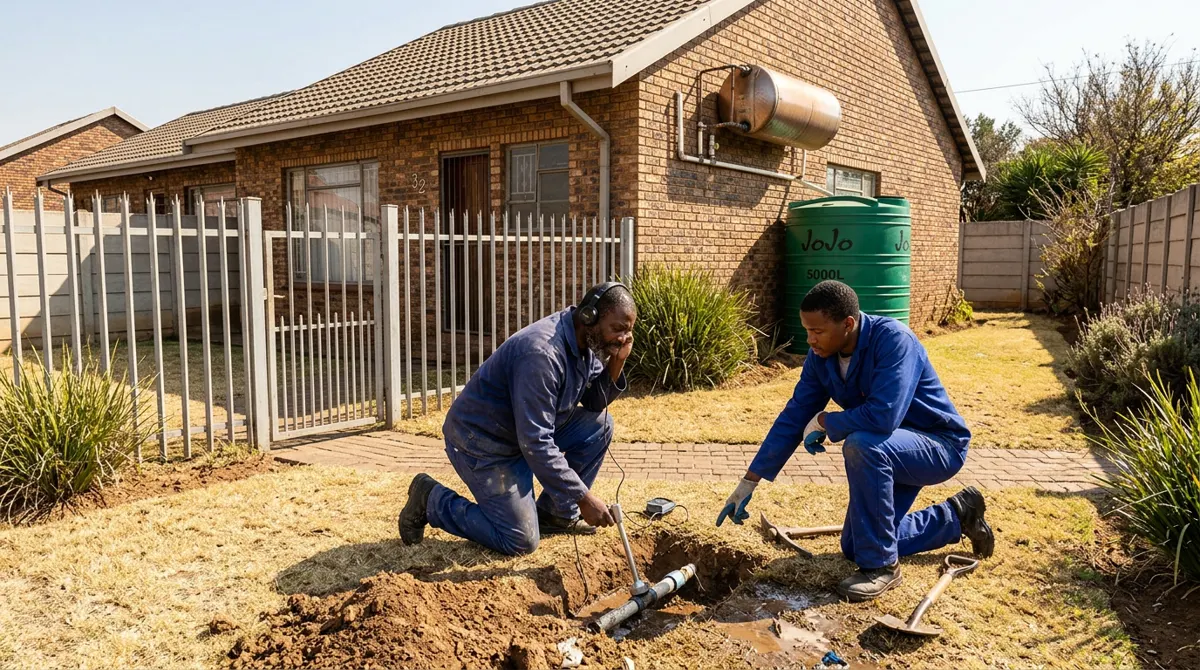
Scan with the detector
The accessible area along the suspected pipe route is checked for escaping gas. Readings are assessed together rather than treating the first signal as the exact break.
- 5
Identify the likely repair area
The findings are explained and the likely leak location is identified. Detection requires no digging, but reaching the pipe for a repair may require localised excavation or opening a surface.
Common questions
Is tracer gas leak detection safe? +
Fox Plumbing uses harmless tracer gas to investigate water pipe leaks. The pipe is prepared for the test by the plumber; this is not a test using household fuel gas.
Will my water need to be turned off? +
The section being tested normally needs to be isolated and may need draining. Depending on the available valves, this can interrupt water to part or all of the property. Discuss shared supplies before the appointment.
Does no digging mean the repair will also be non-invasive? +
No. The detection process locates the leak without exploratory digging. A buried or concealed pipe may still need to be exposed for repair, but locating it first helps limit unnecessary disturbance.
How long does it take to find a leak? +
Fox Plumbing finds most leaks within the hour. Preparation, access, pipe layout and the need to test multiple sections can extend the investigation. The call-out fee includes the first hour of work.
Can tracer gas find a leak beneath paving or concrete? +
It can help locate concealed leaks beneath these surfaces when escaping gas can reach a detectable point. Gas may travel through gaps or along surrounding material, so surface conditions affect how readings are interpreted. An exact location cannot be guaranteed before testing.