
Quick answer
A water leak detection sensor warns you when water reaches its sensing contacts; some systems also monitor unusual water flow or connect to an automatic shut-off valve. It can help you catch a leak early, but a sensor under a cupboard cannot locate a leaking pipe inside a wall or underground. For hidden leaks in Gauteng, Fox Plumbing uses non-invasive detection with harmless tracer gas and a detector.
When a water leak detection sensor is useful
A sensor is useful where a small leak could go unnoticed: beneath a sink, beside washing-machine connections or near a geyser drip tray. A basic battery unit sounds a local alarm. Connected models can send remote notifications, while flow-monitoring systems look for unusual water use rather than water on the floor.
If you already have damp plaster, swollen cupboard boards or unexplained water use, investigate the cause rather than relying on a new alarm. A dry sensor does not prove that your plumbing is leak-free: water must reach a spot sensor before it can respond.
- Use spot sensors near vulnerable connections and along the likely path of escaping water.
- Choose remote alerts if an audible alarm would go unheard while you are away.
- Treat recurring alarms as a reason to check the plumbing, not simply move the sensor.
- Investigate a meter that continues moving when all taps and water-using appliances are off, allowing for toilets or tanks that may still be filling.
What affects the cost of leak monitoring?
The cost depends on what you need the system to do. A standalone moisture alarm is a different installation from a connected network of sensors or a flow monitor with a motorised shut-off valve. Check exactly what is included before buying: some devices need a separate hub, compatible valve or subscription for particular features.
Finding and repairing an existing leak is separate from buying a monitoring device. Fox Plumbing agrees the price upfront, and its call-out fee includes the first hour of work. Pensioners receive a special rate.
- Number of locations to monitor and the sensor type needed at each point.
- Local alarm only, phone notifications or automatic water isolation.
- Hub, connectivity, power supply and ongoing battery requirements.
- Pipe size, valve compatibility and access for plumbing alterations.
- Whether an existing leak needs locating and repairing before monitoring begins.
Practical placement and power checks for Gauteng homes
Place sensing contacts on a surface where a leak is likely to collect, following the manufacturer's instructions. Under a sink, keep the device clear of stored cleaning products that could knock it aside. Around a geyser, use a suitable sensor or probe without obstructing the drip tray outlet, and leave difficult roof-space access to a professional.
Plan for power interruptions. A battery alarm may still sound locally, but phone notifications can depend on a powered hub, router and working internet connection. Check whether a shut-off system operates locally without internet and how its valve can be operated manually.
- Test the alarm where it will be installed, including whether it can be heard with cupboard doors closed.
- Confirm wireless coverage at the actual sensor location.
- Keep sensors away from routine splashes unless the device is designed for that setting.
- Check batteries and test alerts at the intervals specified by the manufacturer.
- Know where your main stopcock is and keep it accessible.
When to call Fox Plumbing for a hidden leak
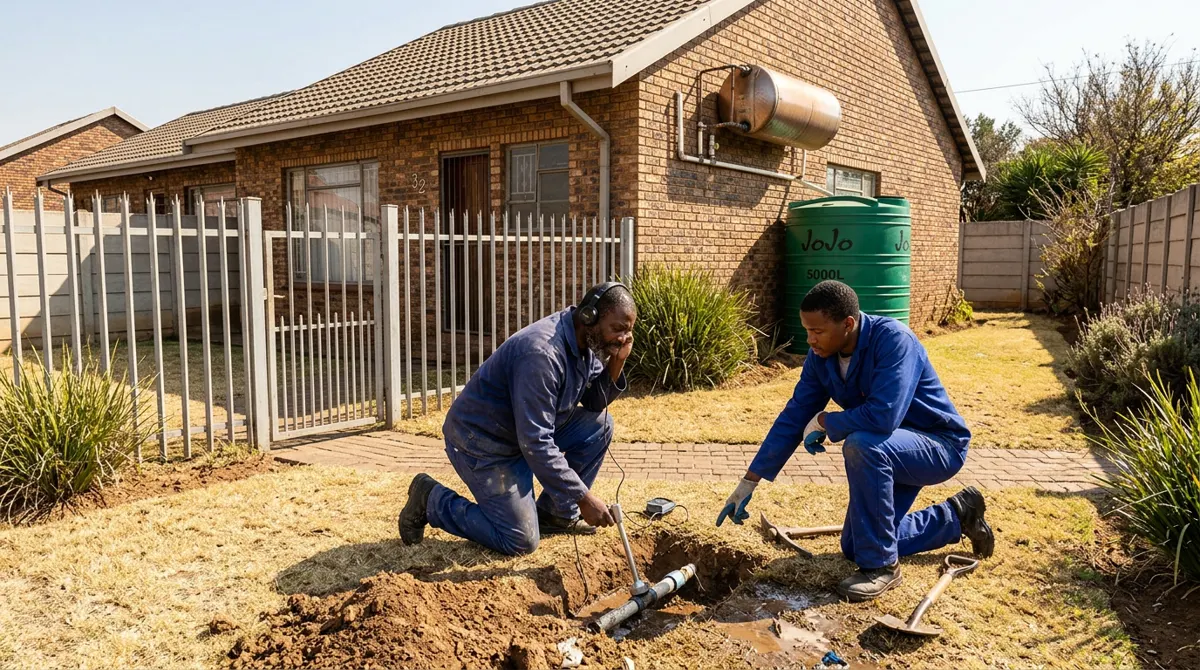
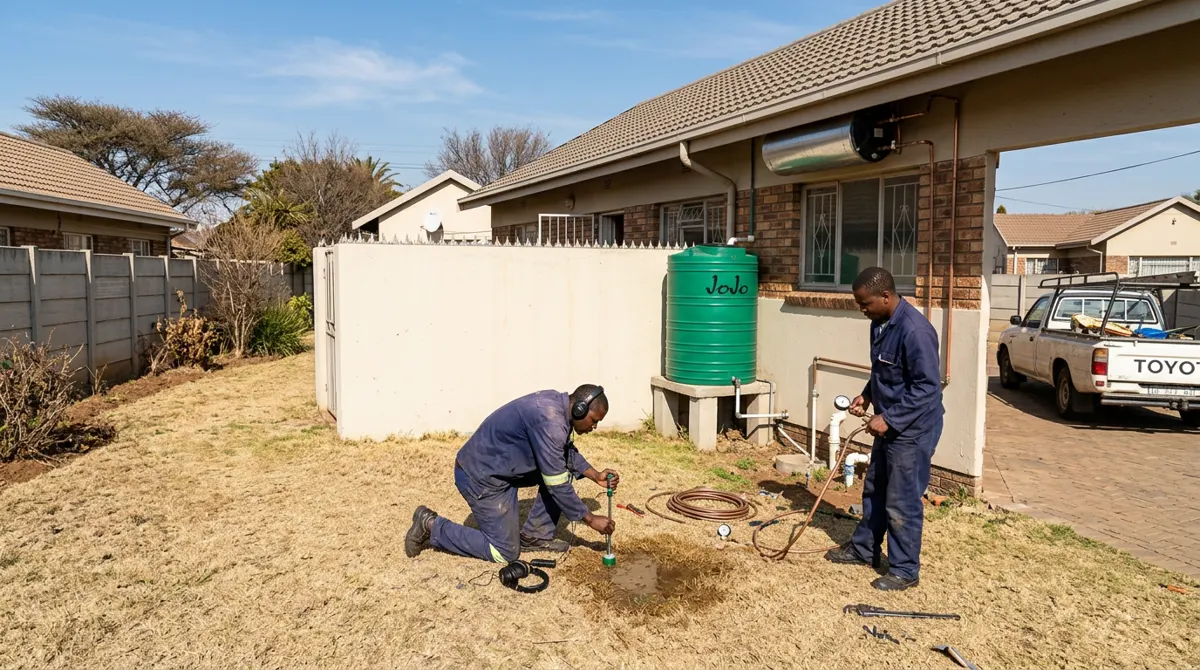
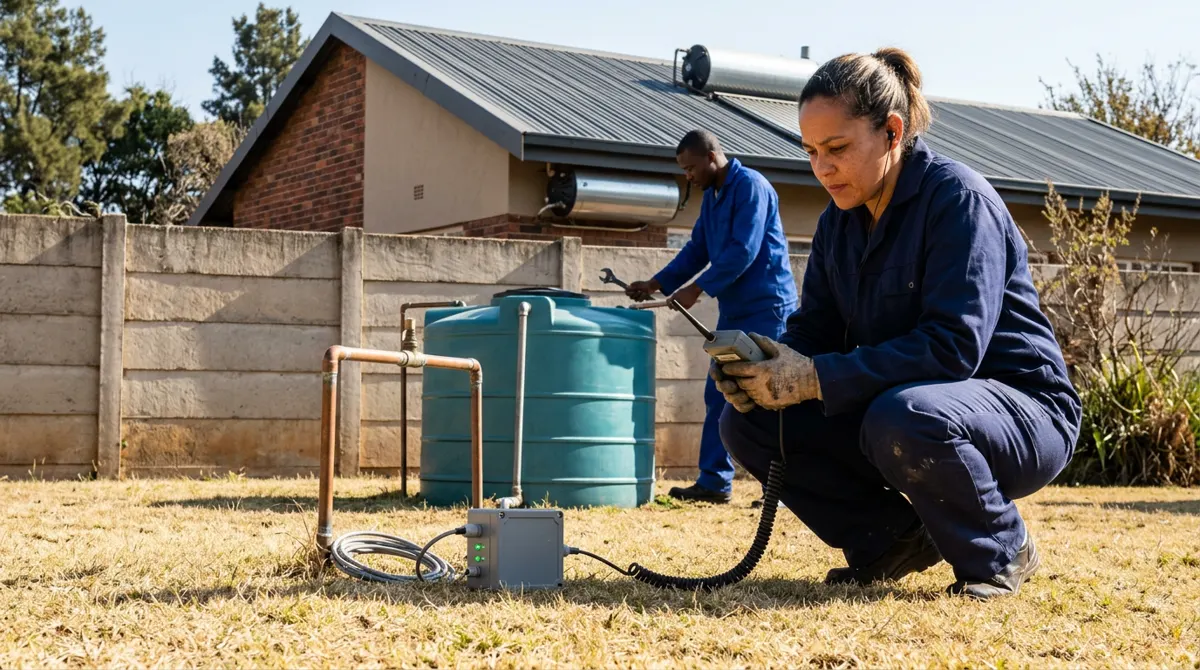
A household moisture sensor warns about water at its location; professional leak detection helps locate the source of a concealed pipe leak. Based in Benoni, Fox Plumbing serves the East Rand and greater Gauteng, using harmless tracer gas and a detector for non-invasive leak detection. Most leaks are found within the hour, with no digging during detection; accessing a pipe for repair is a separate matter.
Owner Evan Pretorius is a qualified registered plumber with more than 20 years of experience and remains on the tools. He is a member of IOPSA and PIRB and issues Certificates of Compliance (COCs). Every job is insured. Phone 084 368 1879, Monday to Friday, 08:00–17:00; Saturdays are by appointment.
How we do the job
- 1
Identify what needs monitoring
List the places where escaping water could remain unnoticed. If there are already signs of a hidden leak, arrange investigation rather than waiting for a sensor to detect it.
- 2
Choose the right type of device
Decide whether you need a local moisture alarm, remote notifications or a compatible automatic shut-off system. Check power, connectivity and any hub requirements.
- 3
Position the sensor correctly
Follow the manufacturer's placement instructions so water can reach the sensing contacts. Keep the device accessible for testing without blocking drains or drip tray outlets.
- 4
Arrange plumbing work where required
A standalone battery sensor generally needs no pipe alterations. Have a qualified plumber assess any inline flow monitor or shut-off valve installation for compatibility and safe access.
- 5
Test the complete response
Use the manufacturer's test procedure to check the alarm, phone notification and valve operation where fitted. Confirm who will respond if an alert arrives while the property is unattended.
- 6
Maintain it and act on alerts
Replace batteries as required and retest after moving the device or changing network settings. On an alert, check the source safely and isolate the water if needed; keep away from wet electrical equipment.
Common questions
Does a water leak detection sensor need Wi-Fi? +
A basic audible moisture alarm does not. Remote alerts need a communication connection, which may be Wi-Fi, a separate hub or another network depending on the model. Check what still works during an internet or power outage.
Will a sensor turn off the water automatically? +
Only if it is part of a compatible system with an automatic shut-off valve. A standalone moisture alarm cannot close your water supply. Check the valve's manual override and behaviour during a power failure.
Can a sensor find an underground pipe leak? +
A spot moisture sensor cannot pinpoint an underground leak. A flow monitor may flag unexpected consumption, but locating the source requires a separate investigation. Fox Plumbing uses harmless tracer gas and a detector for hidden leak detection.
Should I put a sensor in my geyser drip tray? +
A suitable sensor or probe can provide warning there, provided its installation follows the manufacturer's instructions and does not obstruct drainage. It does not replace a correctly installed drip tray, discharge pipes or geyser maintenance.
Does finding a leak without digging mean the repair needs no digging? +
No. Fox Plumbing's detection method is non-invasive and needs no digging to locate the leak. Repairing the damaged pipe may still require access through a wall, floor or ground, depending on its position.