
Quick answer
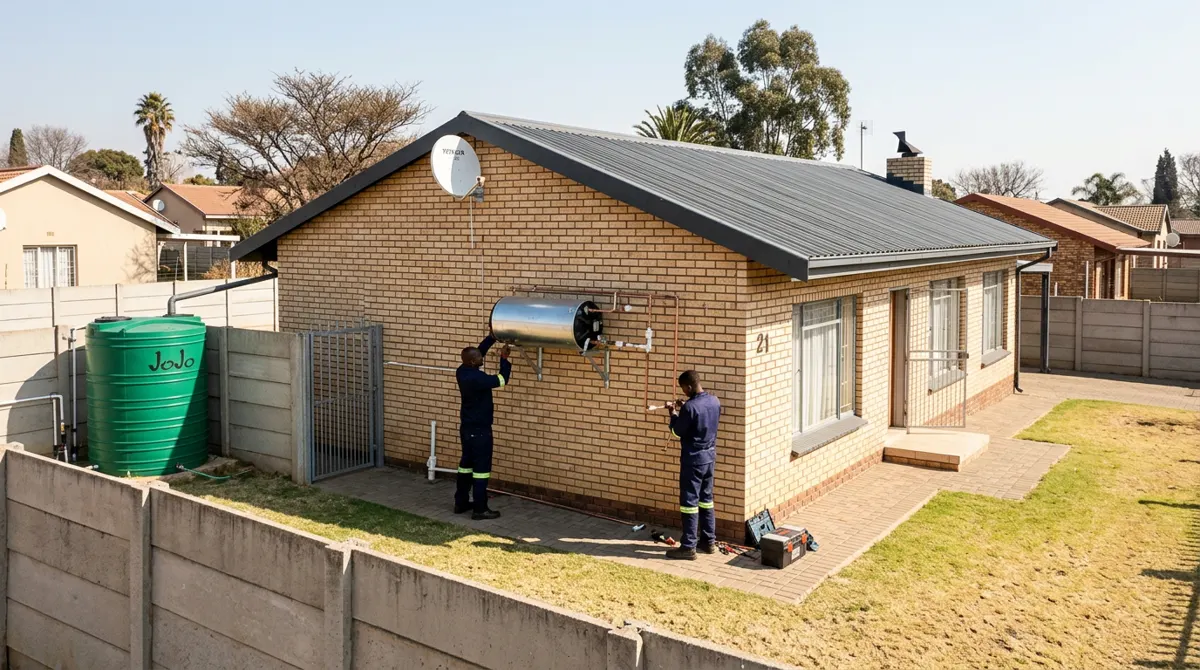
An electric geyser installation involves fitting a storage tank that heats water with an electric element, together with its plumbing, supports, safety components and electrical supply. A complete installation must manage water pressure, temperature and drainage safely—not simply connect a new tank to the existing pipes.
When do you need an electric geyser installation?
You may need an installation when building a home, adding a separate living area or replacing a leaking storage tank. Relocating a geyser is also an installation job: its new position needs suitable support, maintenance access and safe routes for pipes and discharge outlets.
Poor hot-water performance does not automatically mean the whole geyser needs replacing. A faulty element, thermostat, valve or leaking pipe may be repairable. Have the fault identified before choosing a replacement, especially if the only symptom is cold water or a slow recovery time.
- Water coming through the ceiling near the geyser needs urgent investigation; the leak could be from the tank or its connections.
- Visible corrosion, repeated leaks or damage around the cylinder are reasons to arrange an assessment.
- Regularly running out of hot water may indicate that the tank no longer suits the household’s bathing pattern.
- Missing safety components or inadequate support may require corrective installation work even if the tank still heats.
What affects the cost of installing an electric geyser?
The scope depends on the tank you need and the condition of the existing installation. A replacement in the same position can still require new valves, pipework, insulation or drainage if the old arrangement is unsuitable. Reusing parts should depend on their condition and compatibility, not just whether they fit.
Choose capacity around peak demand: how many people shower close together, whether baths are used and how much reheating time is available. A larger tank holds more hot water, but it needs suitable space and support and may have higher standing heat losses.
- Tank capacity, pressure rating, mounting orientation and manufacturer requirements.
- Roof access, working space and the difficulty of removing the old cylinder.
- The condition and suitability of supports, safety valves, drip tray and discharge pipes.
- Distance from the geyser to outlets and the amount of pipework or insulation needed.
- Electrical circuit, earthing, isolator or connection work that requires an electrician.
- Relocation, making good disturbed areas and the compliance documentation included in the scope.
Gauteng practicalities: pressure, power and compliance
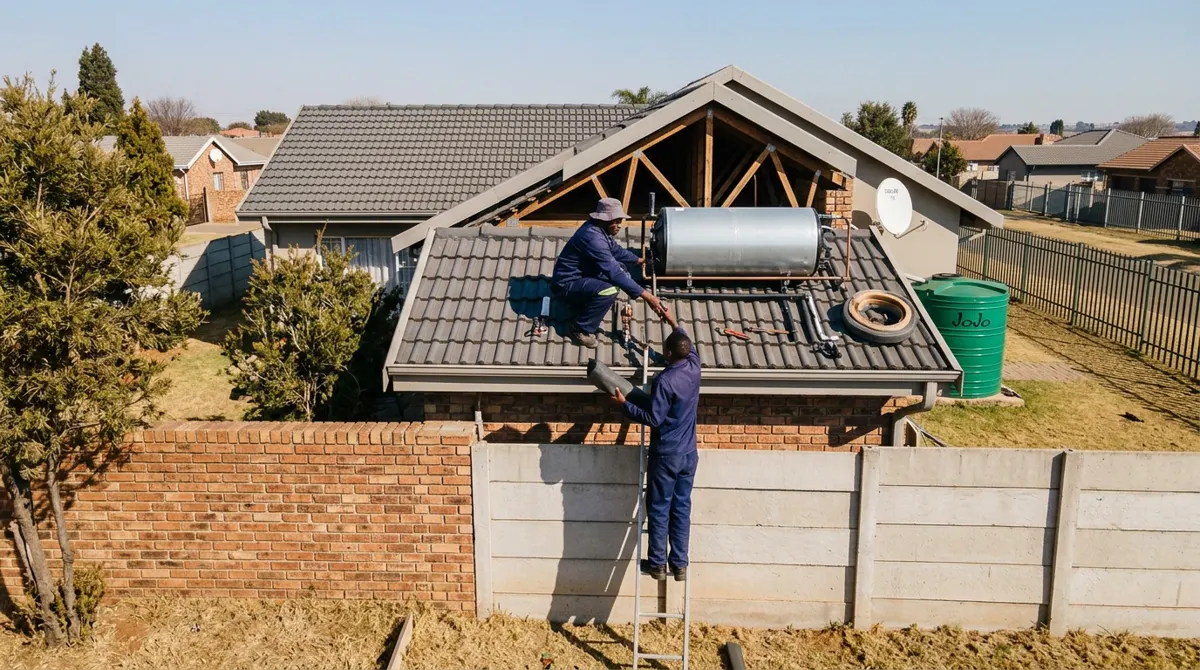
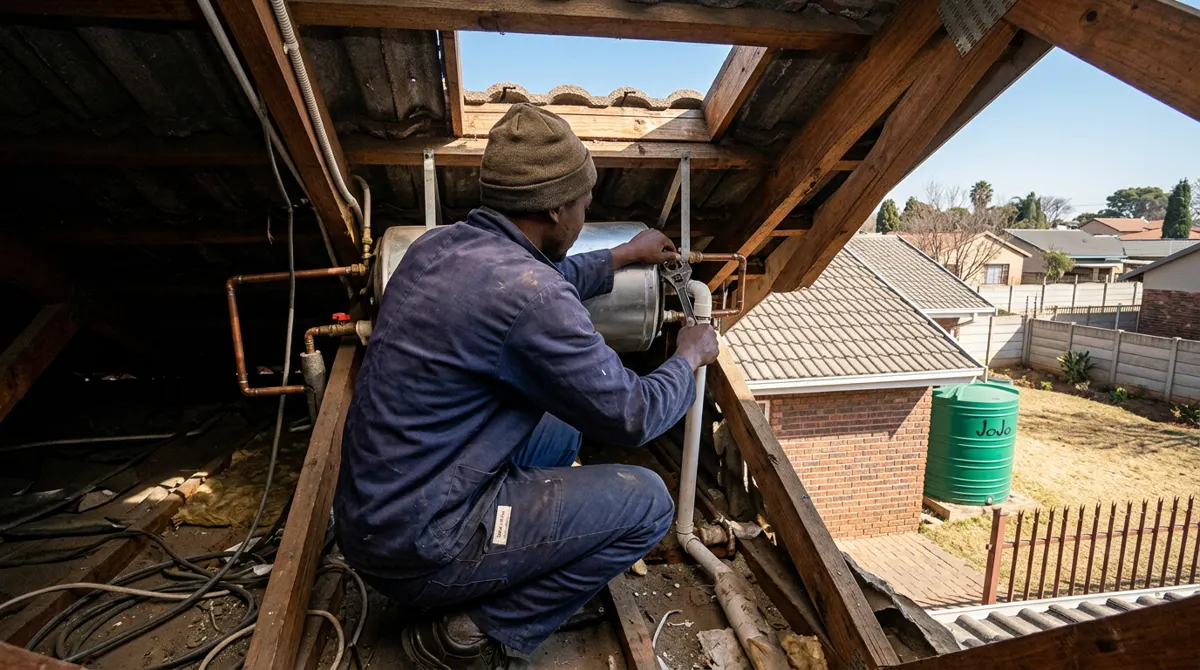
For Gauteng homes, check both the available water supply and any booster-pump arrangement before specifying the geyser’s pressure controls. Pressure ratings must be compatible across the installation. A roof-mounted tank also needs support designed for its filled weight, accessible servicing space and properly routed drainage. A drip tray helps manage leakage, but cannot guarantee protection against every major tank failure.
Installation work should meet applicable SANS 10254 requirements and the manufacturer’s instructions, with electrical work handled by an appropriately qualified electrician. Plumbing and electrical Certificates of Compliance cover different work; confirm which documents your job requires. Insurance conditions vary, so ask your insurer what records it needs rather than assuming a certificate guarantees cover.
- Pressure-control equipment manages incoming pressure; temperature-and-pressure safety protection serves a separate purpose.
- Vacuum breakers help protect the system against damaging vacuum conditions.
- Safety discharge pipes must remain unobstructed. Never cap a pipe because it is dripping.
- Power cuts interrupt heating, although an insulated tank retains some stored heat. Never energise an empty geyser.
- If a geyser leaks, switch off its circuit at the distribution board only if it is safe and dry to do so, shut off its water supply if safely accessible, and call a plumber.
Why choose Fox Plumbing for an installation assessment?
Fox Plumbing is based in Benoni and serves the East Rand and greater Gauteng. Owner Evan Pretorius is a qualified registered plumber with more than 20 years’ experience, is a member of IOPSA and PIRB, and issues Certificates of Compliance. He works on the tools, so the owner is directly involved in the work.
The price is agreed upfront, the call-out fee includes the first hour of work, pensioners receive a special rate and every job is insured. Call 084 368 1879 to discuss a new installation, replacement or assessment. Hours are Monday to Friday, 08:00–17:00, and Saturday by appointment.
- Send photographs of the geyser, its label and the surrounding pipework if these are safely accessible.
- Explain whether you have a leaking tank, insufficient hot water or a planned new installation.
- Ask for the agreed scope to identify plumbing work, any separate electrical requirements and the documentation to be supplied.
How we do the job
- 1
Assess demand and inspect the site
Check household hot-water use, existing faults, water pressure, access, structural support and electrical requirements. Establish whether repair, replacement or a new installation is appropriate.
- 2
Select the geyser and agree the scope
Choose suitable capacity, pressure rating and mounting orientation. Identify required safety components, drainage, pipework and any electrical work before agreeing the price.
- 3
Isolate supplies and prepare the position
Safely isolate electricity and water, drain and remove the old unit where applicable, and prepare suitable supports and a drip tray with drainage.
- 4
Fit the tank and plumbing protections
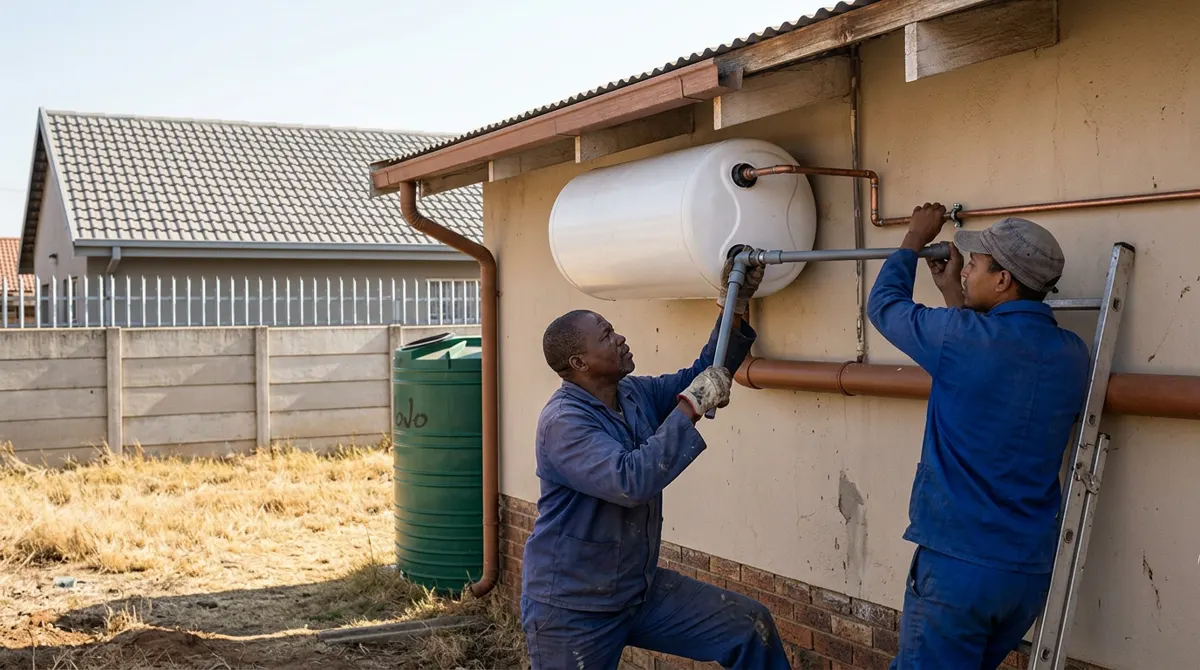
Secure the cylinder and install compatible pressure controls, safety valves, vacuum protection and pipework according to applicable requirements. Route discharge pipes safely and insulate pipework as required.
- 5
Fill, connect and test
Fill the cylinder and purge trapped air before energising the element. Have electrical connections and checks completed by an appropriately qualified electrician, then check for leaks and verify operation of the system.
- 6
Hand over the installation
Explain safe isolation, normal discharge behaviour and warning signs. Supply the applicable compliance documentation and retain the geyser’s warranty and installation records.
Common questions
Is an electric geyser the same as an instant water heater? +
No. A conventional electric geyser stores heated water in an insulated cylinder. An instantaneous heater heats water as it flows through the unit and has different electrical or fuel-supply requirements.
Can I replace a geyser myself? +
This is not a suitable DIY job. A filled tank is heavy, and incorrect pressure protection or electrical connections can be dangerous. Use a qualified plumber and an appropriately qualified electrician for their respective work.
Does a dripping overflow mean the geyser is faulty? +
Not necessarily. Some expansion discharge can occur during heating, but continuous heavy flow, a sudden change or water from a safety outlet needs assessment. Note which pipe is discharging if you can do so safely, and never block it.
Do I need both a plumbing and an electrical COC? +
The documents address different parts of the installation. Confirm the plumbing certification and electrical certification requirements for the actual work being done; one does not replace the other. Fox Plumbing issues plumbing Certificates of Compliance.
How long does an electric geyser installation take? +
It depends on access, the condition of the existing setup and whether the geyser is being relocated. Support repairs, new discharge routes or electrical upgrades can extend the job. Ask for a time estimate after assessment, including filling, testing and reheating.