
Quick answer
Geyser repairs involve finding and fixing faults in your hot-water system, such as a failed heating element, faulty thermostat, leaking connection or defective valve. Many faults can be repaired without replacing the whole geyser, but a leaking inner cylinder generally requires replacement. Because an electric geyser combines hot water, pressure and electricity, diagnosis and repairs need appropriately qualified professionals.
Signs your geyser needs attention
Cold water does not automatically mean the geyser has failed. The cause could be an interrupted power supply, a timer setting, a faulty thermostat or a worn heating element. Weak hot-water flow can come from a valve, restriction or mixer fault, so the plumber needs to establish whether the problem affects one tap or the whole property.
Leaks also need careful diagnosis. Water coming through a ceiling could originate from the cylinder, a connection or nearby pipework. Occasional dripping from an expansion relief outlet during heating can be normal; persistent flow needs assessment. Never block a discharge pipe or interfere with a safety valve.
- No hot water, or water that runs cold much sooner than usual.
- Unexpectedly scalding water, steam or a sudden change in temperature.
- Continuous discharge from an external pipe, or water around the geyser.
- Damp ceiling patches, a sagging ceiling or water dripping indoors.
- Repeated electrical tripping, a burning smell or new, persistent noises.
What affects the cost of geyser repairs?
The main cost factor is the actual fault. Replacing a serviceable component is a different job from replacing a leaking cylinder or correcting an unsafe installation. The geyser's condition, compatible parts and any applicable warranty also influence whether repair is sensible.
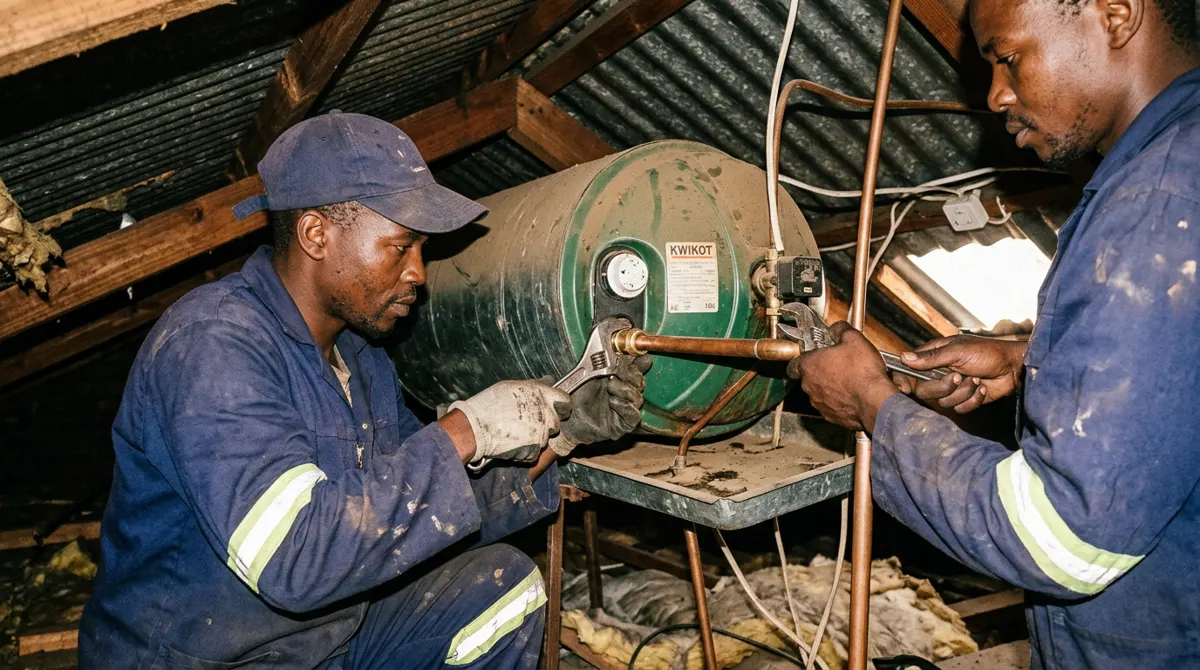
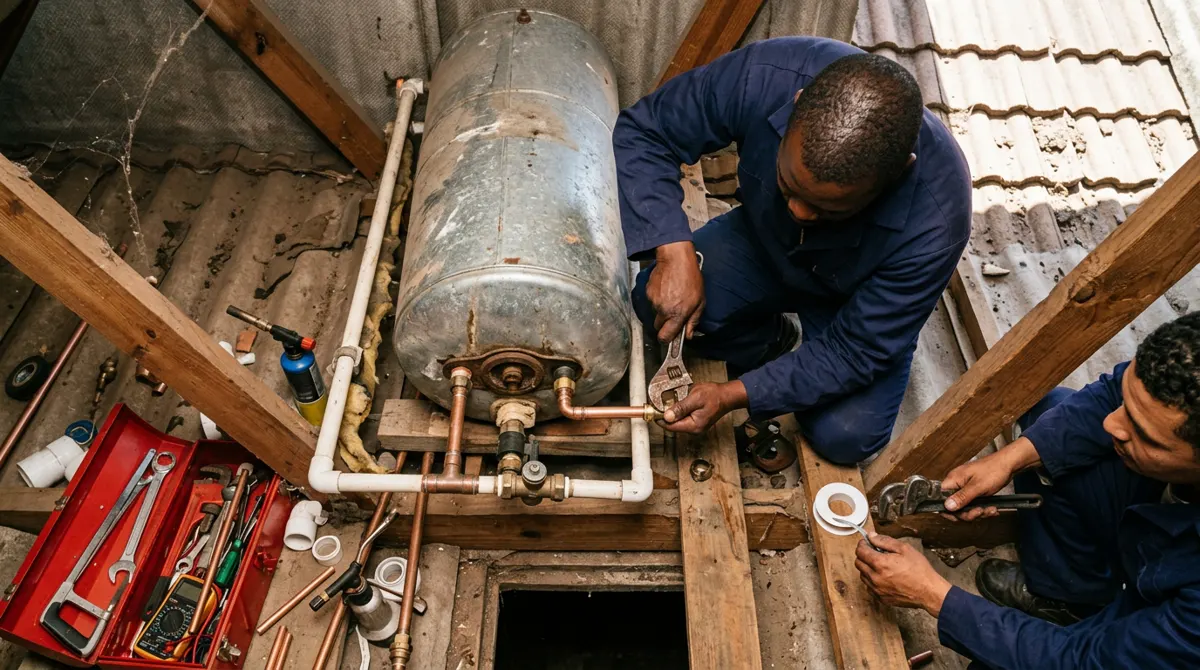
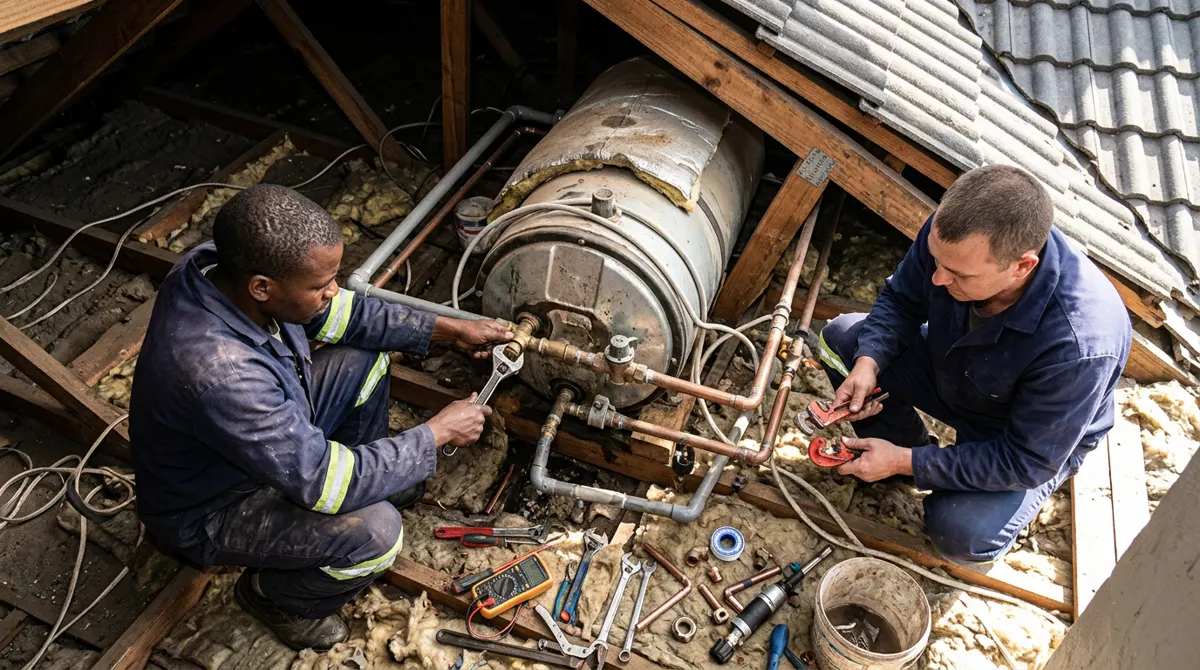
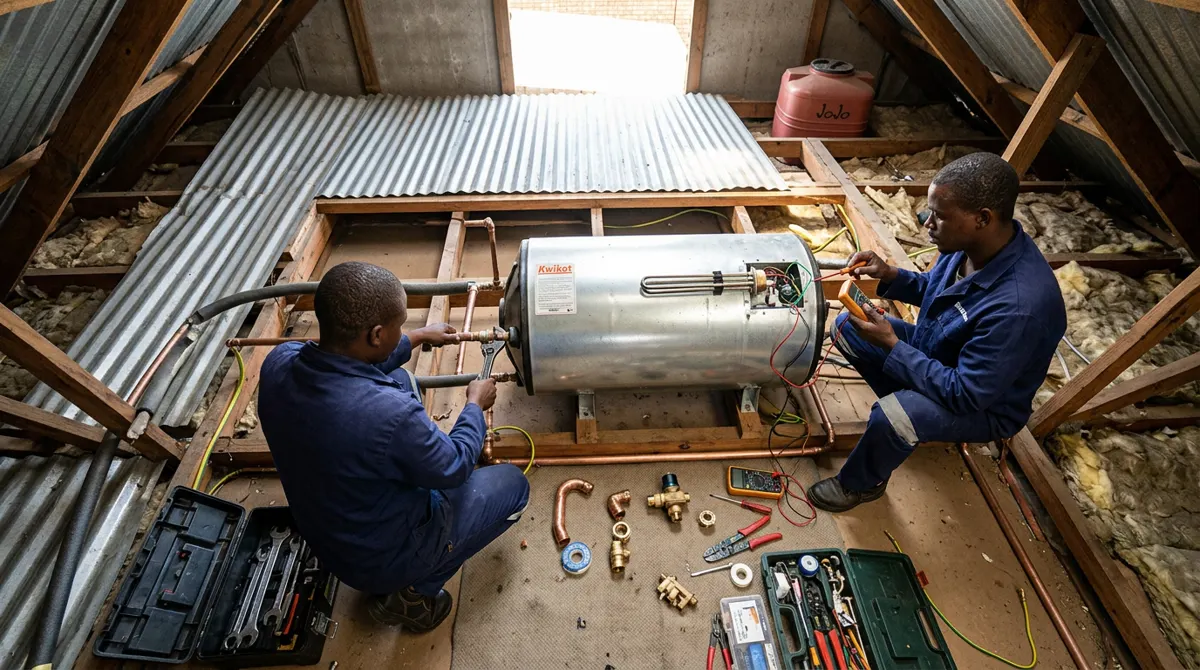
Access matters too. A unit in a cramped roof space may take more work to reach and drain than an accessible external installation. Ask for the diagnosis, proposed work and agreed price before repairs begin, including how any additional work will be authorised.
- Which component has failed and whether suitable replacement parts are available.
- The geyser's type, capacity, condition and warranty requirements.
- Safe access to the unit and the time needed to isolate and drain it.
- The condition of valves, connecting pipes, supports, drip tray and discharge routes.
- Whether separate electrical work or installation corrections are necessary.
- Whether the water source is obvious or needs further leak investigation.
Practical advice for Gauteng homes
After a power interruption, a storage geyser needs time to heat its water again. Before booking a repair for cold water, check whether power has returned and whether the geyser's timer is scheduled to run. Do not remove electrical covers or repeatedly reset a breaker that trips.
For an active indoor leak, switch off the geyser's electricity at the distribution board only if you can reach it without approaching water or wet electrical equipment. Close the water supply if it is safe to do so, keep people away from a wet or sagging ceiling, and arrange help promptly. Do not climb into a wet roof space. Geyser work should follow applicable South African requirements, including SANS 10254 where relevant; ask what compliance documentation the particular job requires.
- Note when the problem started and whether it followed a power or water interruption.
- Check whether all hot taps are affected or only one fixture.
- Send photographs only from a safe position; do not enter the roof to get them.
- For sectional-title properties, notify the managing agent and confirm access and approval arrangements.
Geyser help from Fox Plumbing
Fox Plumbing is based in Benoni and serves the East Rand and greater Gauteng. Owner Evan Pretorius is a qualified registered plumber with more than 20 years' experience and remains on the tools. He is a member of IOPSA and PIRB and issues Certificates of Compliance (COCs).
The price is agreed upfront, the call-out fee includes the first hour of work, pensioners receive a special rate, and every job is insured. Call 084 368 1879 to discuss the symptoms and arrange a visit. Hours are Monday to Friday, 08:00–17:00, with Saturdays by appointment.
- Owner-led service with the proposed repair explained before work starts.
- Upfront price agreement rather than assumptions about which part needs replacing.
- Ask about the COC requirements for your repair or replacement.
How we do the job
- 1
Establish the symptoms
The plumber asks about temperatures, leaks, pressure changes and electrical tripping, then checks where the fault appears. Information about previous repairs and the geyser's warranty can help.
- 2
Make the system safe
Electricity and water are isolated as appropriate before work begins. The system may need to cool and be drained. Electrical testing and repairs must be handled by a suitably qualified person.
- 3
Identify the cause
The investigation distinguishes a cylinder leak from a leaking fitting, checks relevant valves and examines the heating controls where appropriate. A symptom alone is not enough to justify replacing the geyser.
- 4
Agree and carry out the work
The findings and repair or replacement options are explained before the price is agreed. Faulty parts are replaced with suitable components, and any additional safety or compliance work is discussed.
- 5
Refill, test and hand over
The geyser is filled and air cleared before power is restored. The completed work is checked for leaks and correct operation, with aftercare advice and applicable compliance documentation explained.
Common questions
Can a leaking geyser be repaired? +
It depends on the source. A leaking connection, seal or valve may be repairable without replacing the cylinder. If the inner cylinder has corroded through or ruptured, replacement is generally necessary. Water through a ceiling does not, by itself, prove the cylinder has burst.
Is a dripping geyser discharge pipe normal? +
Some dripping from an expansion relief outlet during heating can be normal. Persistent flow, a sudden increase, very hot discharge or steam needs prompt professional assessment. Different outlets serve different purposes, so have the source identified and never cap the pipe.
Can I replace a geyser thermostat or element myself? +
These parts involve mains electricity and potentially hot, pressurised water. Do not open electrical covers or attempt replacement unless you are appropriately qualified. Incorrect work can cause electric shock, overheating, leaks or damage to the new component.
Does an old geyser always need replacing? +
No. Age is one consideration, not a diagnosis. Cylinder condition, repeated faults, parts availability, warranty cover and installation safety all matter. A sound cylinder with one failed component may still be worth repairing.
Does a plumbing COC cover electrical repairs too? +
A plumbing COC does not replace any required electrical certification. Ask which documentation applies to the plumbing work and whether a separate qualified electrical professional is needed.