
Quick answer
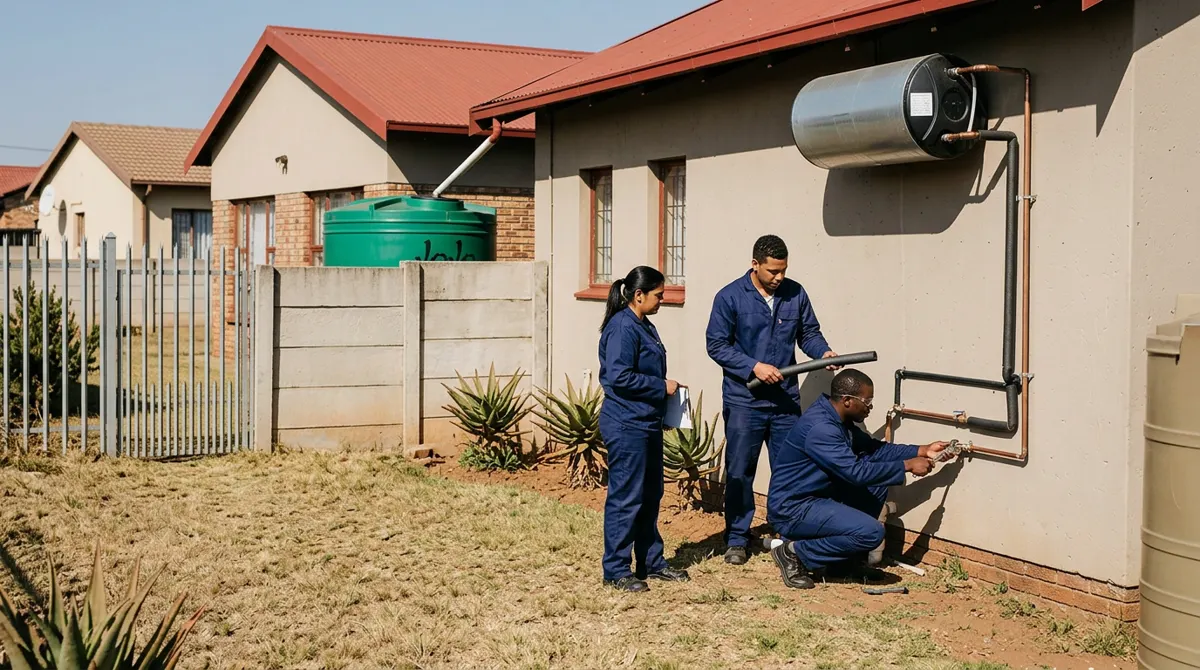
A hydroboil installation involves fitting a plumbed-in boiling-water dispenser, usually wall-mounted, for making hot drinks in offices, staff kitchens and similar spaces. The work includes secure mounting, a cold-water connection, the correct electrical supply and any vent or overflow arrangements required by the manufacturer. The unit heats and stores water, so drinks are available without repeatedly filling a kettle, although its capacity and reheating rate limit how much it can dispense at once.
When does a hydroboil installation make sense?
A boiling-water dispenser is useful where several people need hot drinks close together, especially during shared tea breaks or meetings. It can reduce kettle queues and the need to carry and refill a kettle, but a lightly used kitchen may not justify a permanently heated unit.
Choose capacity around your busiest serving period rather than staff numbers alone. Check both the amount of hot water available immediately and the time the unit needs to recover after heavy use. These dispensers are for drinks, not a replacement for a geyser supplying sinks.
- People regularly queue for the kettle during breaks.
- Meeting-room drinks place a sudden demand on the kitchen.
- An existing dispenser repeatedly runs short during peak use.
- A kitchen upgrade creates an opportunity to plan safe access, plumbing and power together.
What affects the cost of installation?
The work depends on the chosen model and the condition of the installation point. Replacing a compatible unit in a suitable location can involve less work than creating a new point across the room, but existing valves, pipework and electrical connections still need checking.
Ask for a clear scope covering the appliance, plumbing, mounting, any required discharge arrangement and electrical work. Fox Plumbing agrees the price upfront, and its call-out fee includes the first hour of work.
- Unit capacity, controls and manufacturer-specified accessories.
- Distance from a suitable cold-water supply and access to pipework.
- Wall strength, mounting requirements and servicing clearance.
- Measured supply pressure and any required pressure-control components.
- Vent, overflow or drainage provisions specified for the model.
- Electrical supply alterations, removal of an old unit and making good disturbed finishes.
Practical considerations for Gauteng kitchens
Gauteng's altitude affects the temperature at which water boils. Follow the unit's commissioning instructions, including any altitude or boiling-point calibration, rather than assuming every dispenser should reach the same temperature. Water pressure and mineral content also vary by property and supply, so pressure control, filtration and descaling should be based on actual conditions and the manufacturer's guidance.
Power interruptions stop the unit reheating, and a water interruption can prevent refilling. Follow the model's shutdown and restart instructions; do not assume it is safe to run with an empty tank. Position the outlet where users can fill cups without reaching across a sink, and keep the hot-water stream away from passing traffic.
- Confirm that the wall can support the unit when full.
- Keep service panels, isolation valves and required clearances accessible.
- Never cap or obstruct a vent or overflow outlet.
- Plan a safe splash area and any required discharge route before mounting.
- Use the specified cleaning and descaling procedure; fit and replace filters where required.
Discuss your installation with Fox Plumbing
Fox Plumbing is based in Benoni and serves the East Rand and greater Gauteng. Owner Evan Pretorius is a qualified registered plumber with more than 20 years' experience and remains on the tools. Fox Plumbing is a member of IOPSA and PIRB and issues Certificates of Compliance (COCs); ask which certification applies to your installation. Electrical alterations and their certification must be handled by an appropriately qualified electrical professional.
Every job is insured, and pensioners receive a special rate. Phone 084 368 1879 to discuss the unit, location and required work. Hours are Monday to Friday, 08:00–17:00, with Saturdays by appointment.
- Send the proposed unit's make, model and capacity if you have already selected one.
- Include photographs of the wall, sink, nearby plumbing and electrical outlet.
- Explain how many drinks you need during the busiest break or meeting.
How we do the job
- 1
Assess demand and choose a suitable unit
Match usable capacity and recovery rate to peak demand. Check the manufacturer's installation requirements before buying, including available space, power and water supply.
- 2
Inspect the proposed installation point
Check wall strength, clearances, supply pressure, access to an isolation valve and the required vent or discharge route. Identify any electrical work that needs a qualified electrical professional.
- 3
Mount the dispenser securely
Use fixings suitable for the wall and the appliance's filled weight. Position and level the unit as instructed, keeping its tap accessible and allowing room for maintenance.
- 4
Connect the water supply and required outlets
Provide an accessible water isolation valve and fit any pressure control, filtration or backflow protection required by the manufacturer and applicable requirements. Route vents and overflows exactly as specified.
- 5
Fill, power and commission
Follow the manufacturer's filling sequence before energising the heater. Complete any specified calibration, flushing and sanitising, then check for leaks, correct filling, heating and safe dispensing.
- 6
Explain operation and hand over documentation
Show the user how to isolate the unit, restart it after interruptions and maintain it. Provide relevant documentation and explain any applicable compliance certification.
Common questions
Is Hydroboil a general name for any boiling-water dispenser? +
Hydroboil is a product name often used informally for wall-mounted boiling-water dispensers. Requirements differ between makes and models, so use the exact model's installation manual rather than treating all units as interchangeable.
Does a hydroboil need a drain? +
That depends on the model. Some units have specific vent, overflow or drip-tray drainage requirements. A sink underneath does not automatically satisfy those requirements; confirm the correct arrangement before installation.
Can it use an ordinary plug socket? +
Some models are designed for a suitable plug socket; others need a different electrical arrangement. Check the appliance's rating and instructions, and have the supply assessed where necessary. Do not rely on an extension lead or overloaded multiplug.
Will it use less electricity than a kettle? +
Not necessarily. Consumption depends on demand, insulation, standby heat loss and how each appliance is used. A well-sized dispenser with appropriate timer or energy-saving controls can suit a busy kitchen, while a kettle may be more practical for occasional drinks.
How often does it need servicing? +
Follow the manufacturer's schedule and adjust maintenance to usage and water conditions. Slower heating, reduced flow, unusual noise or leaks warrant attention. Where a filter is fitted, replace it at the specified interval rather than waiting for the taste to change.