
Quick answer
A leaking basin is a washbasin that allows water to escape through its fittings, connected pipes, seals or a crack in the basin itself. Unlike a tap dripping into the bowl, a basin leak usually wets the cupboard, wall or floor and needs its source identified before the correct repair can be made.
Signs your basin needs a leak repair
A damp cupboard base, swollen shelf edges, peeling paint or a musty smell can reveal a leak before you see a puddle. Water can travel along a hose or pipe before dripping, so the wettest spot is not necessarily where the fault starts.
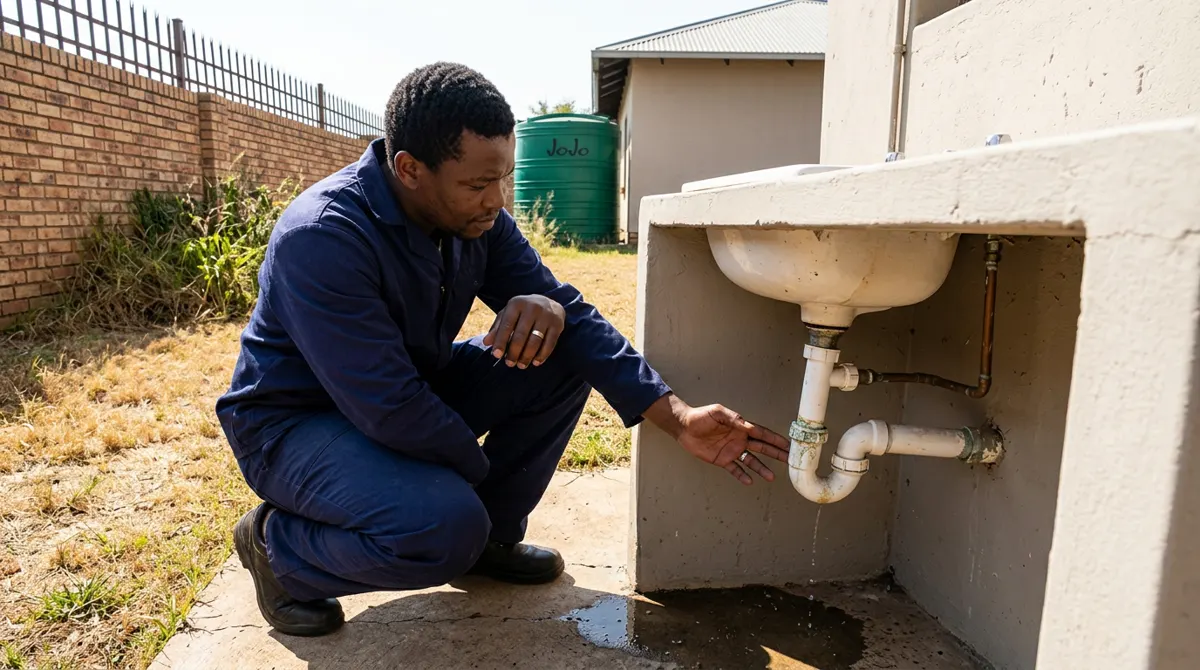
The timing offers useful clues. A supply connection can leak while the basin is unused because it remains under pressure. A waste fitting or trap may leak only when water drains, while a failed perimeter seal usually lets splashed water reach the wall or cupboard. Cracked ceramic and leaking overflow connections are other possibilities.
- Water with the taps off: check for visible moisture around supply hoses, tap connections and isolation valves.
- Water during draining: suspect the waste outlet, trap or connecting waste pipe.
- Dampness after splashing: inspect the joint between the basin, counter and wall.
- A drip from the tap spout into the bowl is a tap fault, not necessarily a leak beneath the basin.
- Persistent damp with no visible source may come from concealed plumbing or a nearby fixture.
What affects the cost of fixing a leaking basin?
The repair depends on which component has failed and whether it can be serviced or needs replacing. An accessible trap seal is a different job from a corroded supply connection behind a fitted vanity. A cracked basin may need replacement rather than a seal repair.
Fox Plumbing agrees the price upfront, and its call-out fee includes the first hour of work. Ask what the agreed scope covers, including parts and any further investigation. If additional faults are discovered, agree on the revised work before it proceeds. Pensioners receive a special rate.
- The number and location of leaking components.
- Access behind cupboards, pedestals or fitted panels.
- The condition of isolation valves and existing pipework.
- Availability and compatibility of replacement fittings.
- Whether concealed leak detection is needed.
- Any separate repairs needed to damaged cabinetry or finishes.
Practical advice for Gauteng homes and complexes
Empty the vanity and keep the area dry while arranging help. If a supply fitting is leaking, close the basin's isolation valve if it is accessible and turns freely; do not force a seized valve. If that does not stop the flow, use the property's main stopcock where safe and permitted. Stop using a basin with a waste leak, and keep people away from wet electrical fittings.
In a flat or sectional-title complex, tell the landlord, managing agent or body corporate promptly if water could affect another unit. Check the building's shut-off arrangements before closing a shared supply. Fox Plumbing is based in Benoni on the East Rand and serves the East Rand and greater Gauteng; confirm appointment availability for your area.
- Place a container under a small drip only as a temporary measure.
- Photograph visible drips and note whether they occur during use or while the basin is idle.
- Do not keep running water to investigate a leak that is already damaging the cupboard.
- Report damp on the ceiling below a bathroom, even if the basin cupboard appears dry.
Why choose Fox Plumbing for a basin leak?
Owner Evan Pretorius is a qualified registered plumber with more than 20 years of experience and remains on the tools. He is a member of IOPSA and PIRB, and Fox Plumbing issues Certificates of Compliance (COCs). Every job is insured.
For suspected concealed leaks, Fox Plumbing offers non-invasive detection using harmless tracer gas and a detector. Most leaks are found within the hour, without digging for detection; accessing a pipe for the repair may still require opening a surface. An obvious basin fitting leak may not need this service. Phone 084 368 1879, Monday to Friday 08:00–17:00, or arrange a Saturday appointment.
How we do the job
- 1
Establish when the leak occurs
The plumber asks when the water appears and checks the basin, cupboard and surrounding area. Supply connections, waste fittings, overflow connections and perimeter seals are inspected rather than assuming the puddle marks the source.
- 2
Carry out controlled checks
With surfaces dried, the plumber checks for leaks at rest and during carefully controlled tap use and draining. Testing stops if water could cause further damage. Unexplained damp may require a wider plumbing investigation.
- 3
Explain the repair and agree the price
The faulty component, suitable replacement parts and access requirements are explained. Fox Plumbing agrees the price before the repair proceeds.
- 4
Isolate and repair the faulty components
The water supply is isolated where necessary. Depending on the cause, the work may involve replacing a hose or seal, refitting a waste connection, correcting pipe alignment or renewing a perimeter seal. Cracked ceramic is assessed for replacement.
- 5
Test the repair and explain aftercare
Supply connections are checked under pressure and the waste assembly is tested during draining. Where sealant is used, its curing instructions determine when the basin can be used again. The cupboard should then be dried and checked for recurring moisture.
Common questions
Why is the cupboard wet when the basin has not been used? +
A supply hose, isolation valve or tap connection can leak while the taps are closed. Residual water from earlier use or a leak elsewhere can also cause damp. Avoid assuming it is the trap without checking the source.
Can I seal a leaking trap with silicone? +
Smearing silicone over the outside is not a reliable repair. The joint may have a damaged washer, poor alignment or a cracked fitting. It should be dismantled and repaired using the seals and assembly method specified for that fitting.
Can I tighten a leaking connection myself? +
More force is not always the answer. Overtightening can distort washers, split plastic fittings or damage the basin. If you cannot identify the fitting and correct repair method, isolate the supply where necessary and arrange a plumber.
Does every leaking basin need tracer-gas detection? +
No. Visible leaks at hoses, traps or waste outlets can often be diagnosed directly. Non-invasive detection is an option when evidence points to a concealed pipe leak rather than an accessible basin fitting.
Can I keep using the basin until it is repaired? +
Avoid using it if draining or splashing causes water to escape. For a supply-side leak, simply leaving the tap closed may not stop the water; the affected supply needs isolating. A container underneath does not protect against a leak getting worse.