
Quick answer
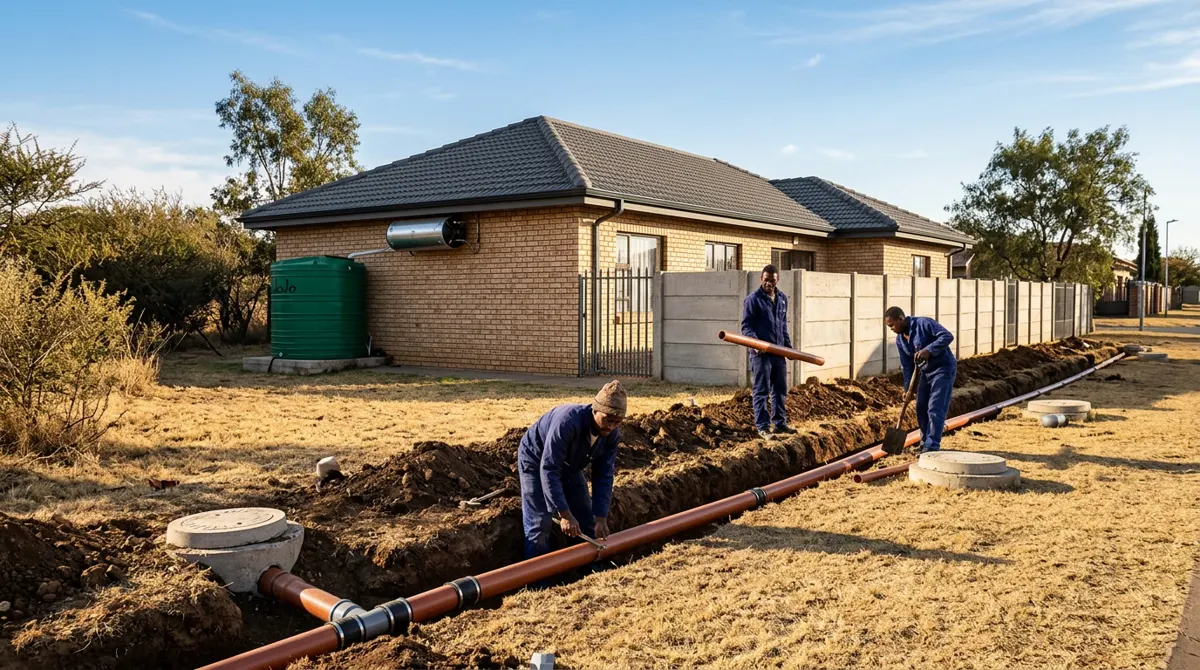
A new sewer drain installation is a new underground pipe system that carries wastewater from toilets, sinks, baths and showers to an approved sewer connection or other authorised disposal system. It involves planning the route and levels, excavating trenches, laying and testing pipes, and providing access for future maintenance. It is needed for new buildings, some extensions or drainage systems that cannot be reliably repaired.
When do you need a new sewer drain installation?
A new building needs a suitable drainage system before its plumbing can be used. Adding a bathroom or garden cottage may also require new drains, although connecting to a sound existing line can sometimes be sufficient. The existing pipe capacity, condition and connection levels need checking first.
On an established property, repeated blockages, sewage surfacing in the garden or several fixtures draining slowly warrant investigation—not an automatic full replacement. Unblocking removes an obstruction; a repair fixes a local defect; a new installation creates or replaces a drainage route. The right choice depends on what has actually failed.
- New construction with no existing wastewater drainage connection.
- Extensions that add fixtures beyond what the existing drainage layout can accommodate.
- Collapsed, displaced or extensively damaged pipes that are unsuitable for local repairs.
- Incorrect pipe levels or a poor route that causes recurring drainage problems.
What affects the cost of installing sewer drains?
The work involved depends on much more than the length of pipe. A short drain beneath a concrete driveway can require more excavation and reinstatement than a longer run through accessible soil. The depth and position of the approved connection also influence the trench depth and whether gravity drainage is feasible.
Ask for a written scope that distinguishes pipework, excavation, rubble removal, testing and surface reinstatement. Clarify how unforeseen buried obstacles will be handled and agreed before additional work proceeds.
- Pipe route, length, diameter, depth and number of branches.
- Soil conditions, rock, groundwater and measures needed to keep trenches safe.
- Access for excavation equipment and the location of existing underground services.
- Inspection access points, connection arrangements and any pumping requirements.
- Municipal requirements, inspections and applicable compliance documentation.
- Removal and reinstatement of paving, concrete, landscaping or other surfaces.
Gauteng practicalities: connections, rain and ground conditions
Gauteng spans several municipal jurisdictions, so confirm the relevant council’s drainage requirements before starting. Establish the approved connection position and depth, and check whether plans, permissions or inspections are required. Work must meet applicable drainage standards, including SANS 10252-2 where relevant, and local bylaws. A plumber’s Certificate of Compliance does not replace municipal approvals.
Keep stormwater separate from sewage: roof downpipes and yard runoff must not discharge into the sewer. During Gauteng thunderstorms, these extra flows can overload drainage and contribute to sewage overflows. Ground conditions also differ between sites; rock, unstable ground or dolomitic conditions may call for specialist input rather than a standard trench detail.
- Locate underground water, electricity and other services before excavation.
- Check servitudes and property boundaries before choosing a route.
- Keep inspection points accessible after paving or landscaping.
- Plan temporary toilet and wastewater arrangements if an occupied property will be disconnected.
Speak to Fox Plumbing about your drainage work
Fox Plumbing is based in Benoni and serves the East Rand and greater Gauteng. Owner Evan Pretorius is a qualified registered plumber with more than 20 years of experience and remains on the tools. Fox Plumbing is a member of IOPSA and PIRB and issues Certificates of Compliance; confirm which documentation applies to your installation.
The price is agreed upfront, the call-out fee includes the first hour of work, pensioners receive a special rate, and every job is insured. Call 084 368 1879 to discuss your property, the proposed work and access arrangements. Hours are Monday to Friday, 08:00–17:00, with Saturdays by appointment.
- Have any existing drainage drawings ready for the assessment.
- Explain whether the work is for a new build, an extension or a failing drain.
- Ask what the agreed scope includes, especially approvals, testing and reinstatement.
How we do the job
- 1
1. Assess the property and connection
Identify the fixtures to be served, assess any existing drains and establish the approved discharge point. Check connection levels, underground services, access restrictions and relevant municipal requirements.
- 2
2. Plan the pipe route and fall
Select suitable pipe sizes, materials, branches and maintenance access points. Calculate the gradient for the proposed layout rather than applying one slope to every installation. Where gravity drainage is not feasible, assess an appropriate alternative.
- 3
3. Excavate and prepare the trenches
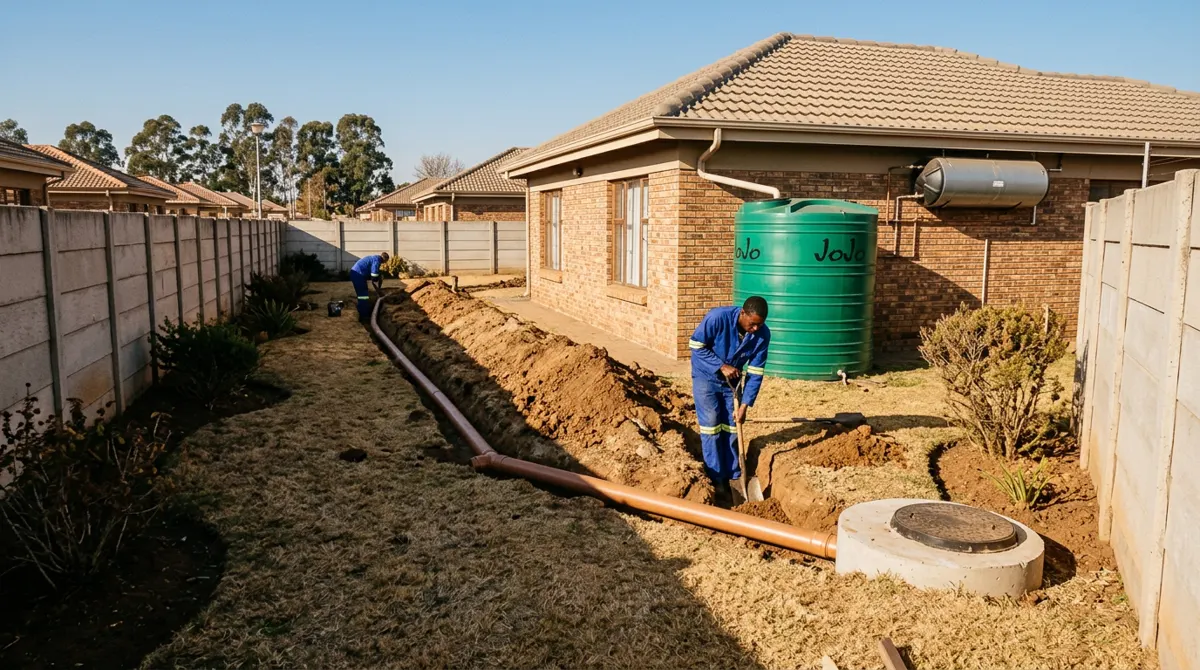
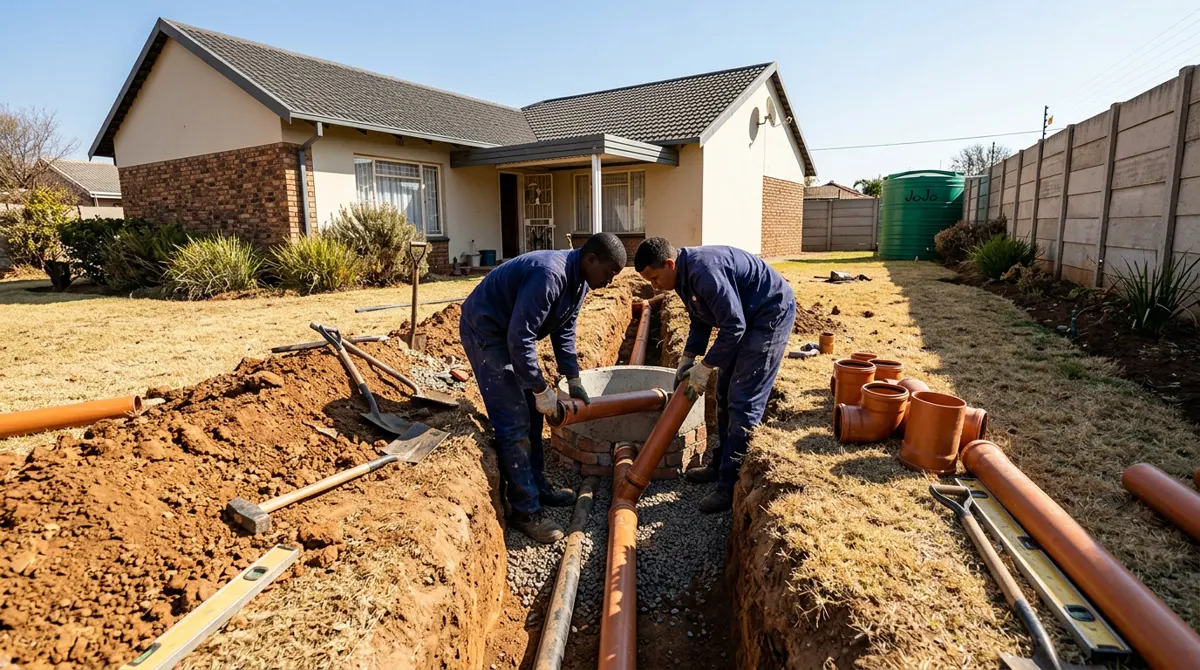
Excavate along the agreed route with suitable trench safety measures. Prepare specified bedding to support the pipes evenly and protect them from rocks, movement and concentrated loads.
- 4
4. Lay and connect the drains
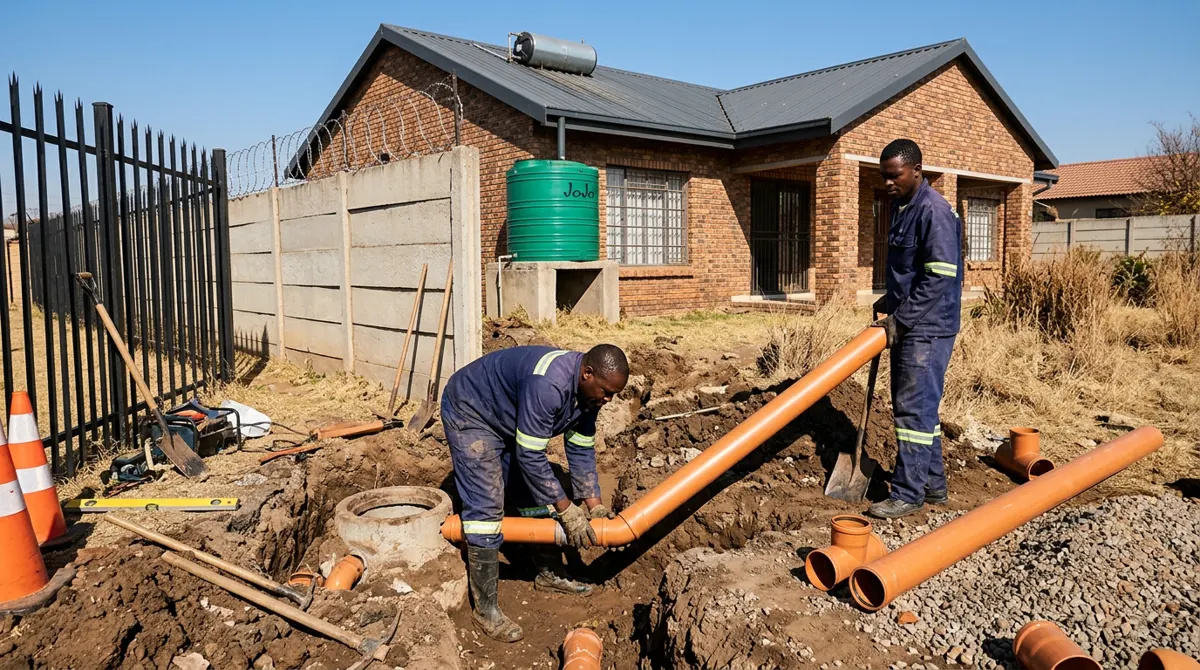
Install pipes and fittings to the planned alignment and levels, with properly made joints and accessible inspection points. Fit gullies and ventilation arrangements where required by the drainage design.
- 5
5. Test before covering
Check alignment, gradients, joints and drainage performance using the applicable testing requirements. Arrange required inspections while the work remains visible and correct defects before backfilling.
- 6
6. Backfill, reinstate and hand over
Place suitable material around the pipes and compact the backfill appropriately without displacing or damaging the installation. Complete the agreed surface reinstatement and provide applicable documentation, along with the location of maintenance access points.
Common questions
Does every recurring blockage mean I need new sewer pipes? +
No. A removable obstruction or isolated damaged joint may be resolved without replacing the full line. Investigate the cause first; widespread deterioration, collapse or incorrect levels may justify a new drainage route.
Do new sewer drains need council approval in Gauteng? +
New drainage and significant alterations can require approved plans, permissions and inspections. Requirements depend on the municipality and scope of work, so confirm them before excavation. Do not assume an existing municipal sewer nearby is available for an unauthorised connection.
What gradient should a sewer drain have? +
There is no single gradient suitable for every drain. The required fall depends on pipe diameter, expected discharge, layout and applicable standards. The installer must measure the available levels and design a workable route.
Can I use the toilets while the installation is underway? +
Sometimes, if the existing drainage can remain operational while the new line is laid. During disconnection and final connection, affected fixtures must not be used. Agree on the interruption and any temporary arrangements before work starts.
How long does a new sewer drain installation take? +
Timing depends on the route, depth, ground conditions, access, inspections and reinstatement. A useful programme can only be given after assessing the site. Ask specifically how long drainage will be unavailable, as this may be shorter than the overall job.