
Quick answer
Drain unblocking means removing an obstruction from a waste pipe, sewer drain or stormwater drain so water can flow away properly. It can involve clearing a trap, retrieving an object or using drain-clearing equipment, depending on the blockage and the condition of the pipe. You do not need to wait for a complete overflow: slow drainage and repeated backups also need attention.
Signs your drain needs unblocking
A single slow basin may have hair and soap build-up in its trap or nearby waste pipe. When several fixtures drain slowly, or flushing the toilet makes water rise in the shower, the obstruction may be further along a shared drain.
Unblocking restores flow; drain cleaning removes accumulated deposits and can help prevent future blockages. The work can overlap, but neither will repair a cracked, collapsed or badly aligned pipe. A drain that repeatedly blocks needs investigation rather than another temporary clearance.
- Water stands in a sink, shower or bath instead of draining away.
- A toilet rises unusually high when flushed or backs up repeatedly.
- An outside gulley overflows when water is used indoors.
- Gurgling accompanies slow drainage, or sewage smells persist.
- A stormwater inlet remains flooded after its surface grate has been cleared.
What affects the cost of drain unblocking?
The cost depends on where the obstruction sits, how difficult it is to reach and what is needed to remove it. Clearing an accessible sink trap is a different job from dealing with roots in an underground sewer line.
Ask what the agreed work includes and whether further investigation or pipe repairs would be separate. Fox Plumbing agrees the price upfront, and the call-out fee includes the first hour of work. Pensioners qualify for a special rate.
- The location and depth of the blockage, and access to suitable cleaning points.
- The material causing the blockage, such as grease, wipes, roots or building debris.
- The clearing method required and the time needed to restore flow.
- The pipe material and condition, which influence safe tool selection.
- Whether recurring problems require a camera inspection or repairs.
Practical advice for Gauteng homes and properties
Keep stormwater and sewage problems separate when describing a blockage. Rainwater pooling around an outdoor grate suggests a different starting point from a toilet backing up during dry weather. Before Gauteng's summer rains, remove accessible leaves and litter from surface grates without entering chambers or lifting heavy covers.
In a complex, tell the caretaker or managing agent if several units are affected: the blockage may be in a shared line. If sewage is escaping from a municipal manhole, keep clear and report it to the relevant municipality. Responsibility for a connection or shared drain should be confirmed rather than assumed.
- If sewage is backing up, stop flushing and avoid using appliances or taps that discharge into the affected drain.
- Keep children and pets away from contaminated water.
- Do not enter manholes or underground chambers; hazardous gases may be present.
- Tell the plumber which fixtures are affected, when it started and whether it happens only during rain.
Drain assistance from Fox Plumbing
Fox Plumbing is based in Benoni and serves the East Rand and greater Gauteng. Owner Evan Pretorius is a qualified registered plumber with more than 20 years of experience and works on the tools. He is a member of IOPSA and PIRB and issues Certificates of Compliance (COCs). Every job is insured.
Phone or call 084 368 1879 to discuss the symptoms and arrange a booking. Hours are Monday to Friday, 08:00–17:00, with Saturdays by appointment. Mention any previous blockages and any drain chemicals already used so the work can be planned safely.
- Owner on the tools.
- Price agreed upfront.
- Call-out fee includes the first hour of work.
- Special rate for pensioners.
How we do the job
- 1
1. Establish what is affected
The plumber asks about the symptoms and checks whether the problem involves one fixture, several connected fixtures or an outdoor drain. Previous blockages and recent building work can provide useful clues.
- 2
2. Find a suitable access point
The trap, cleaning eye or inspection point is assessed for safe access. Pipe condition and the risk of releasing backed-up wastewater influence where work begins.
- 3
3. Select the clearing method
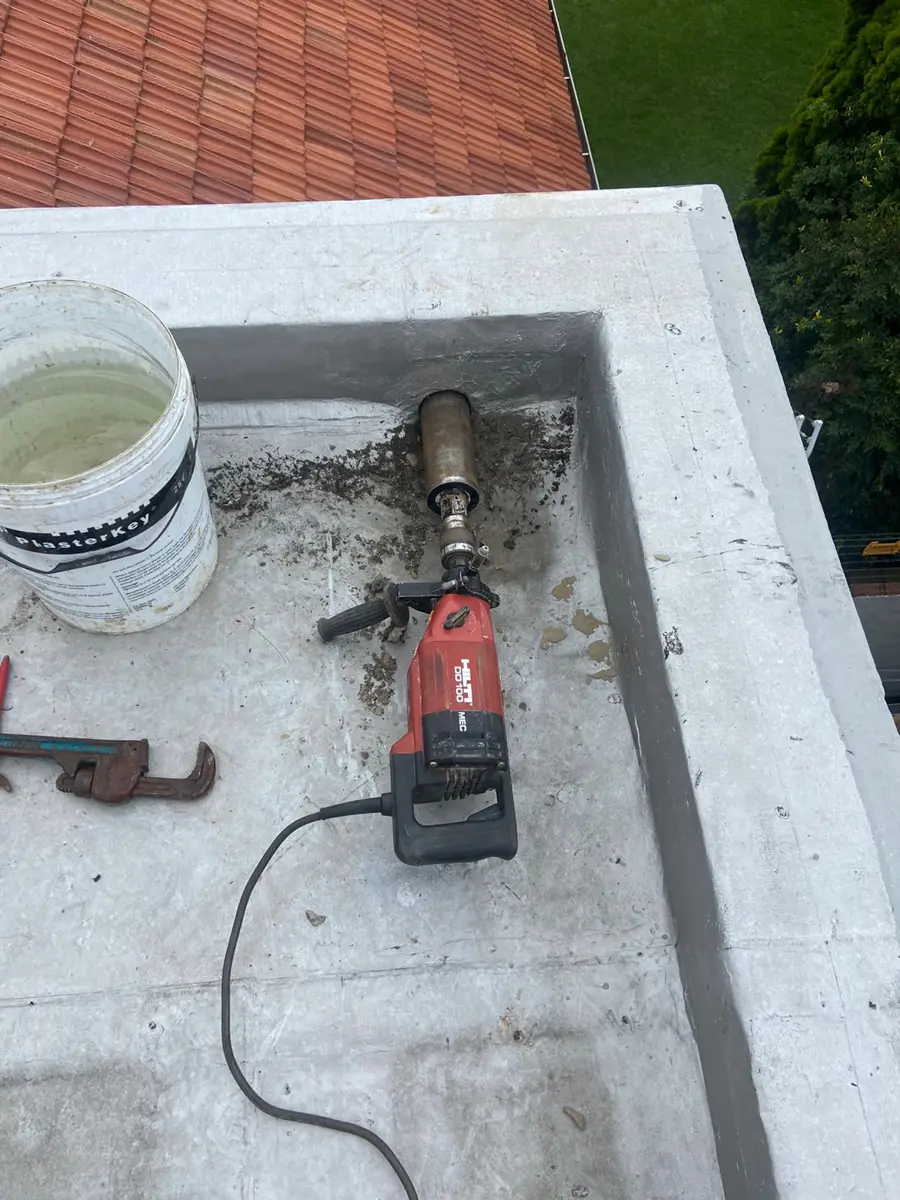
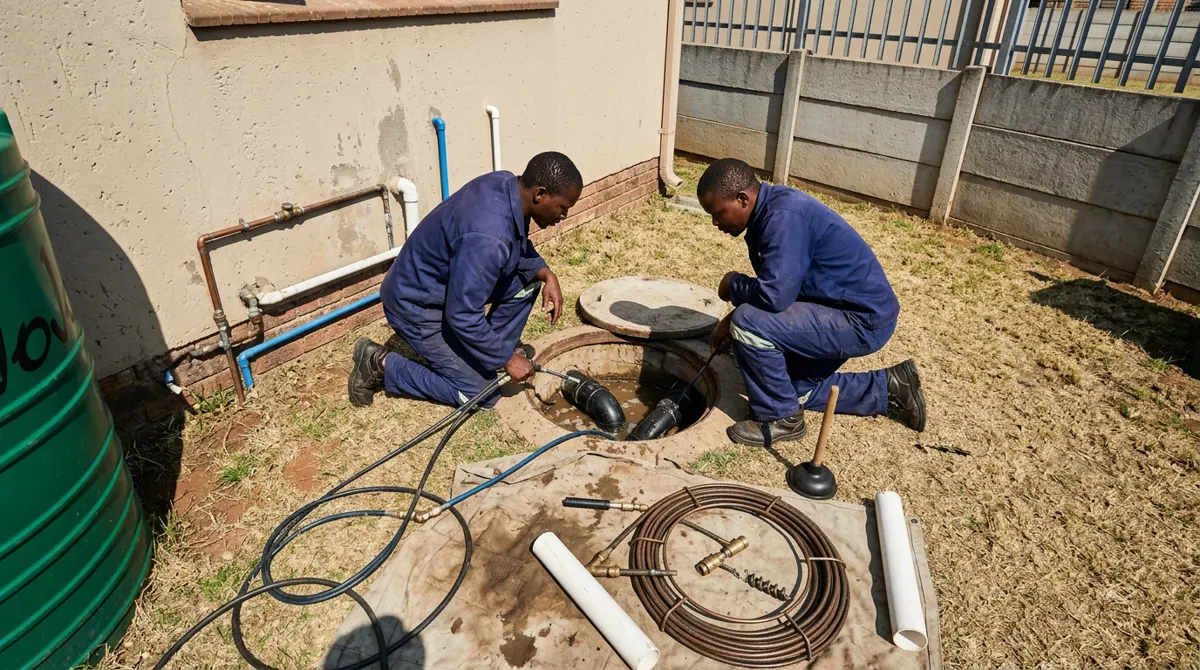
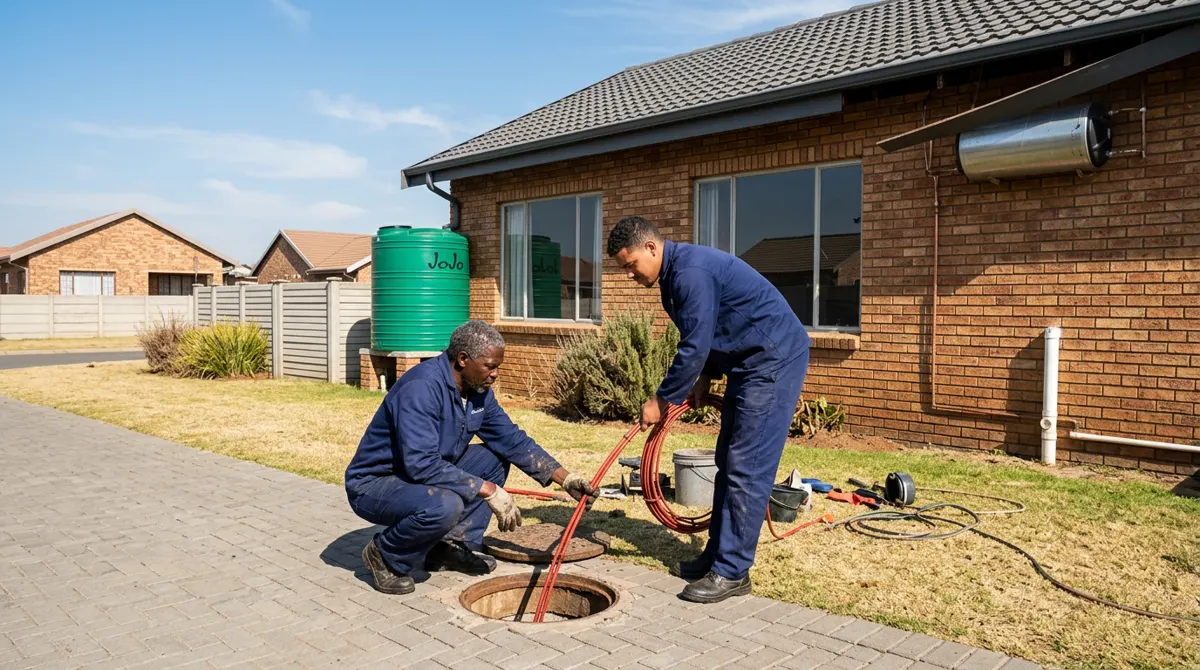
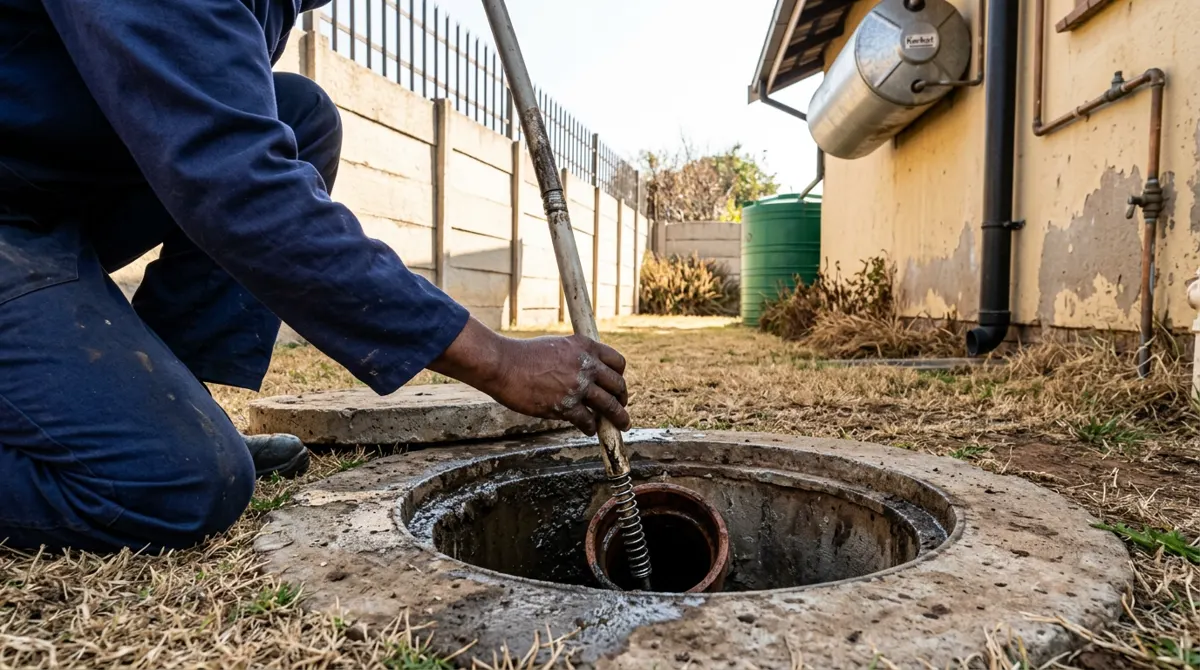
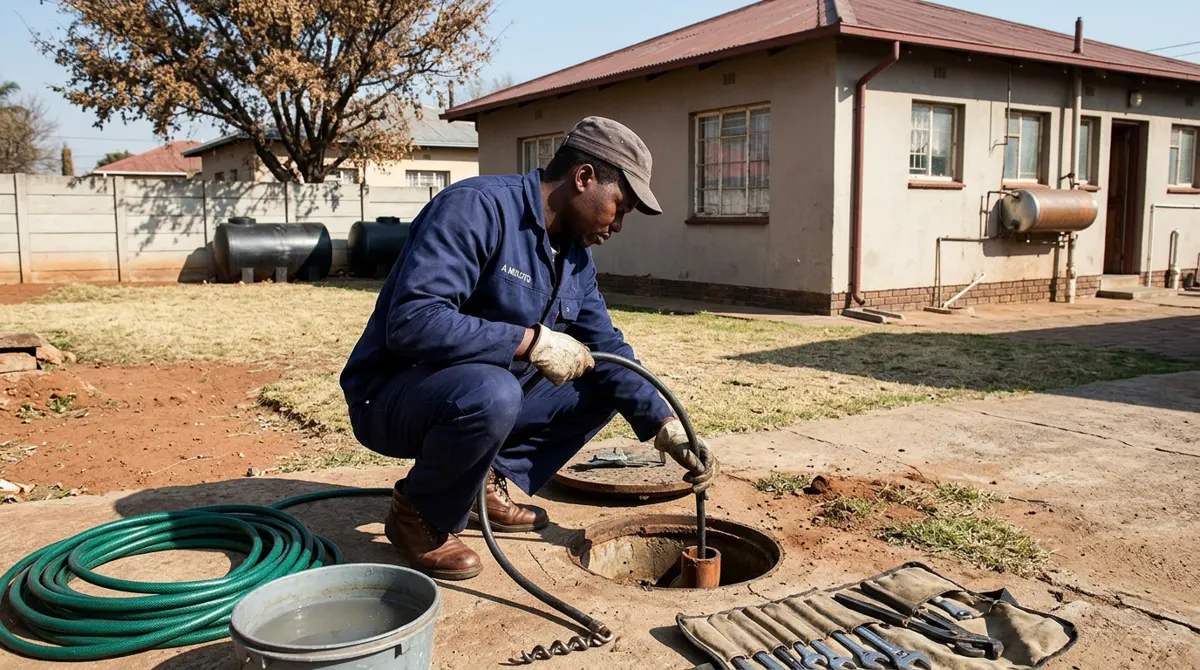
An accessible trap may be dismantled and cleaned. Deeper obstructions may need a mechanical cable or high-pressure water jetting where suitable. The method should match the obstruction and pipe condition; not every blockage needs heavy equipment.
- 4
4. Remove the obstruction
The blockage is retrieved, broken up or flushed through using the selected method. If damage prevents effective clearance, the plumber should explain the findings and discuss further work rather than force tools through.
- 5
5. Test drainage and explain next steps
Controlled water tests check that the affected fixtures drain without backing up. Persistent or recurring symptoms may justify further investigation, such as a camera inspection, to check for roots, damage or poor pipe alignment.
Common questions
Can I unblock a drain with a plunger? +
A plunger can help with a small, local blockage in a sink, basin or toilet. Stop if wastewater rises elsewhere or several fixtures are affected. Do not plunge a drain containing chemical cleaner because it may splash onto your skin or eyes.
Should I use caustic soda or drain acid? +
These products can cause burns and leave hazardous liquid trapped behind a blockage. They will not repair pipe damage or reliably remove objects and roots. Never mix drain cleaners with other chemicals, and tell the plumber exactly what you have used.
Why does my drain keep blocking? +
Possible causes include remaining deposits, wipes or grease entering the drain, root intrusion, damaged joints or poor pipe alignment. Recurrence does not automatically mean the pipe needs replacing, but it does warrant checking the underlying cause.
Does drain unblocking always require digging? +
No. Many blockages can be reached through existing access points or by removing a fixture trap. Excavation may be necessary if a pipe is damaged or inaccessible, but the need should be established before digging is proposed.
How can I reduce future blockages? +
Put cooled cooking fat in the bin rather than down the sink, use hair catchers and flush only toilet paper and human waste. Keep wipes, sanitary products and building waste out of drains, and clear leaves from accessible stormwater grates.