
Quick answer
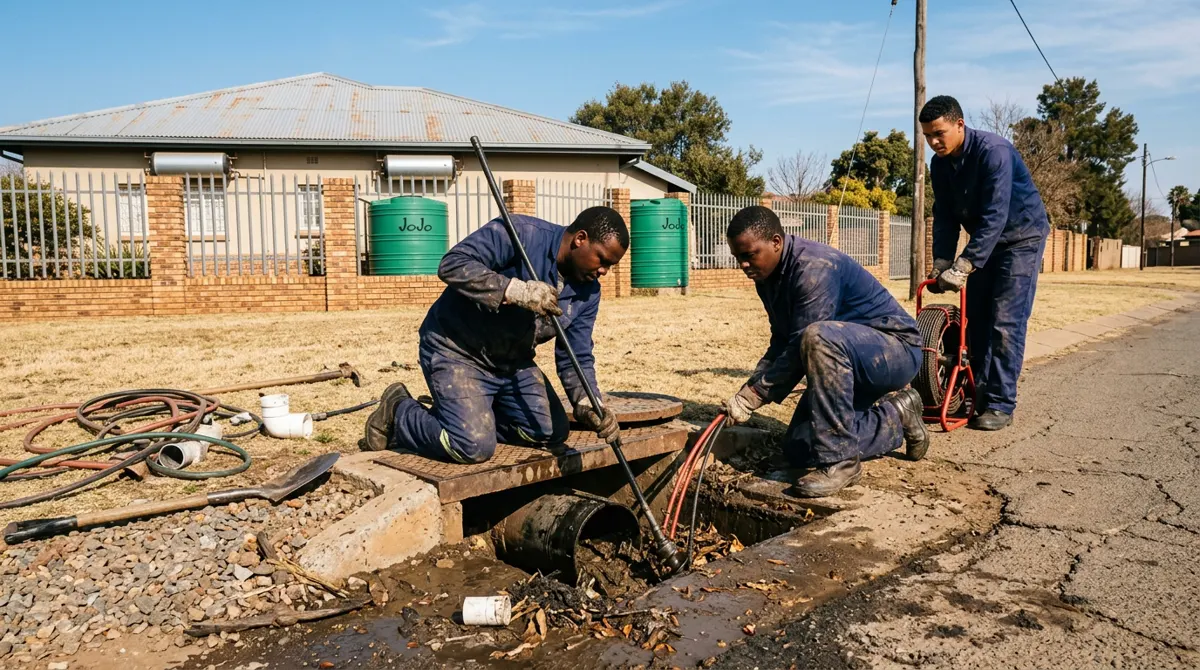
Storm water drain unblocking means removing leaves, silt, roots or other obstructions from the channels and pipes that carry rainwater away from your property. It restores drainage from areas such as roofs, driveways and paving; it is separate from clearing the sewer pipes that carry toilet and household wastewater. If a pipe is broken or the drainage layout is unsuitable, clearing a blockage alone will not solve the problem.
Signs your storm water drain needs attention
Watch what happens at ground-level collection points during rain, from a safe position. Water backing up around a downpipe, overflowing from a catchpit or remaining on paving after nearby areas have drained can indicate a blockage. A catchpit is a collection chamber that traps some debris before water enters the drainage pipe.
Pooling does not automatically mean a pipe is blocked. A low spot in the paving, an obstructed surface grate or an overwhelmed outlet can produce similar symptoms. Repeated water accumulation against a building needs attention because prolonged wetting can contribute to damp and damage.
- Water rises at a drain inlet instead of flowing away.
- Sand, leaves or litter cover the grate or fill the collection chamber.
- The same area floods repeatedly, even during relatively light rain.
- Drainage improves after clearing but slows again soon afterwards.
- A gutter overflows despite being clean: check the downpipe and its downstream connection too.
What affects the cost of storm water drain unblocking?
The work depends on where the obstruction sits, what it contains and whether the pipe is still sound. Loose leaves near an accessible inlet are a different job from compacted silt deep underground or roots entering through damaged joints.
Fox Plumbing agrees the price upfront, and its call-out fee includes the first hour of work. When booking, ask how any additional time, specialist investigation or repair work would be handled. Pensioners get a special rate.
- Access to grates, catchpits, inspection points and the outlet.
- The length and depth of the affected pipe run.
- The type and extent of debris inside the system.
- Whether rodding, water jetting or further investigation is appropriate.
- Pipe damage, recurring root entry or poor falls that require repair rather than clearing.
- Whether paving or other surfaces must be opened and reinstated.
Practical storm water advice for Gauteng properties
Gauteng's summer thunderstorms can expose drainage problems quickly. Before the rainy season, remove accessible leaves and litter from surface grates and check that garden soil, mulch and building sand cannot wash into them. Recheck after heavy rain or building work, when fresh debris may have collected.
Keep rainwater drainage separate from sewer drainage. An outdoor gulley may receive kitchen or bathroom wastewater, so its position outside does not make it a storm water inlet. Do not divert a downpipe into it. If the property's outlet is clear but the street drainage is backing up, report the public drainage problem to the relevant municipality; clearing a private pipe cannot remove a downstream municipal obstruction.
- Do not sweep driveway sand or cement residue into drains.
- Keep access points visible rather than covering them with paving or landscaping.
- Do not redirect runoff onto a neighbour's property.
- Stay out of flooded chambers and keep clear of water near electrical equipment.
- Photograph the overflow location from a safe position to help explain an intermittent problem.
Speak to Fox Plumbing about a drainage problem
Fox Plumbing is based in Benoni and serves the East Rand and greater Gauteng. Owner Evan Pretorius is a qualified registered plumber with more than 20 years of experience and remains on the tools. Fox Plumbing is a member of IOPSA and PIRB, issues Certificates of Compliance, and every job is insured.
Phone or call 084 368 1879 to discuss the symptoms and arrange a visit. Hours are Monday to Friday, 08:00–17:00, with Saturdays by appointment. Explain whether the problem occurs only during rain, which collection points overflow and whether the drain has been cleared before.
- Owner on the tools.
- Price agreed upfront.
- Call-out fee includes the first hour of work.
- Special rate for pensioners.
How we do the job
- 1
Identify the affected drainage route
Establish which roof, driveway or paved area feeds the problem inlet and where the water should discharge. Confirm that the affected line carries storm water rather than sewage.
- 2
Check accessible inlets and outlets
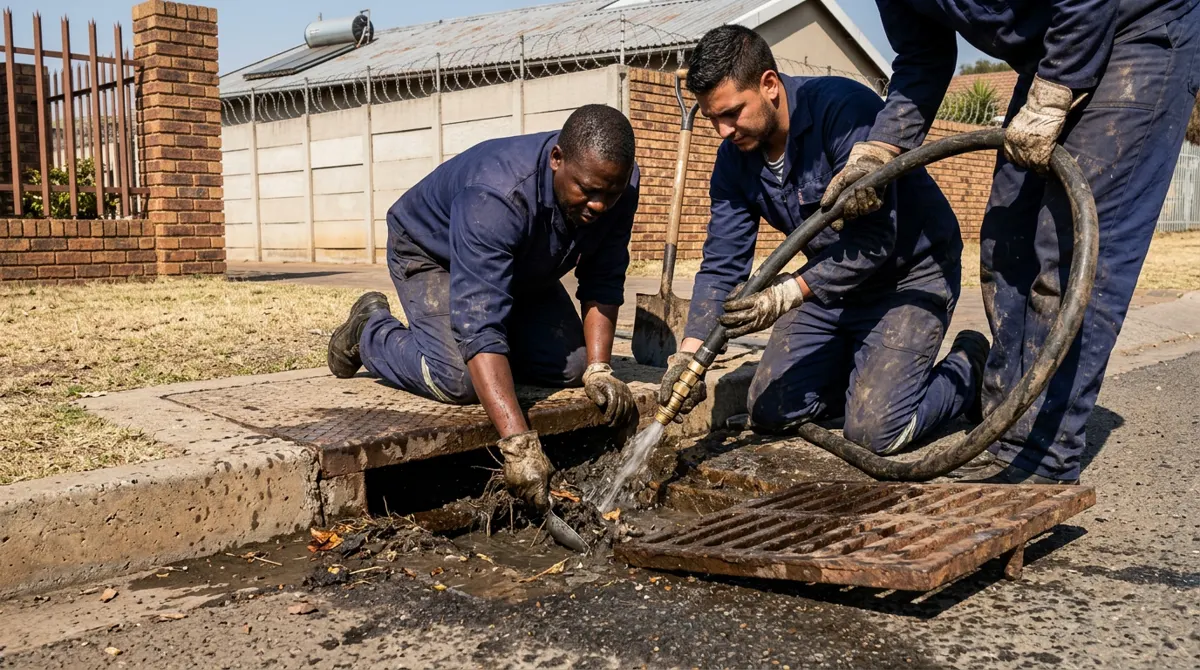
Inspect grates, catchpits and accessible discharge points. Remove reachable surface debris safely and check whether the restriction is at the inlet, inside the pipe or beyond the property.
- 3
Choose a suitable clearing method
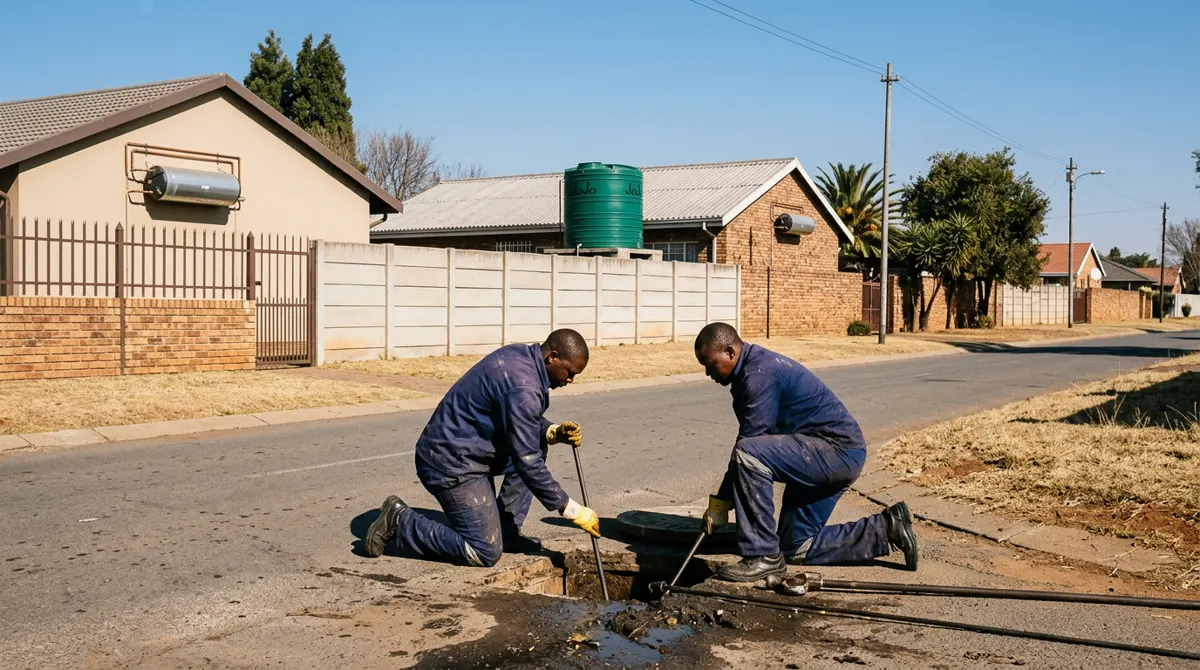
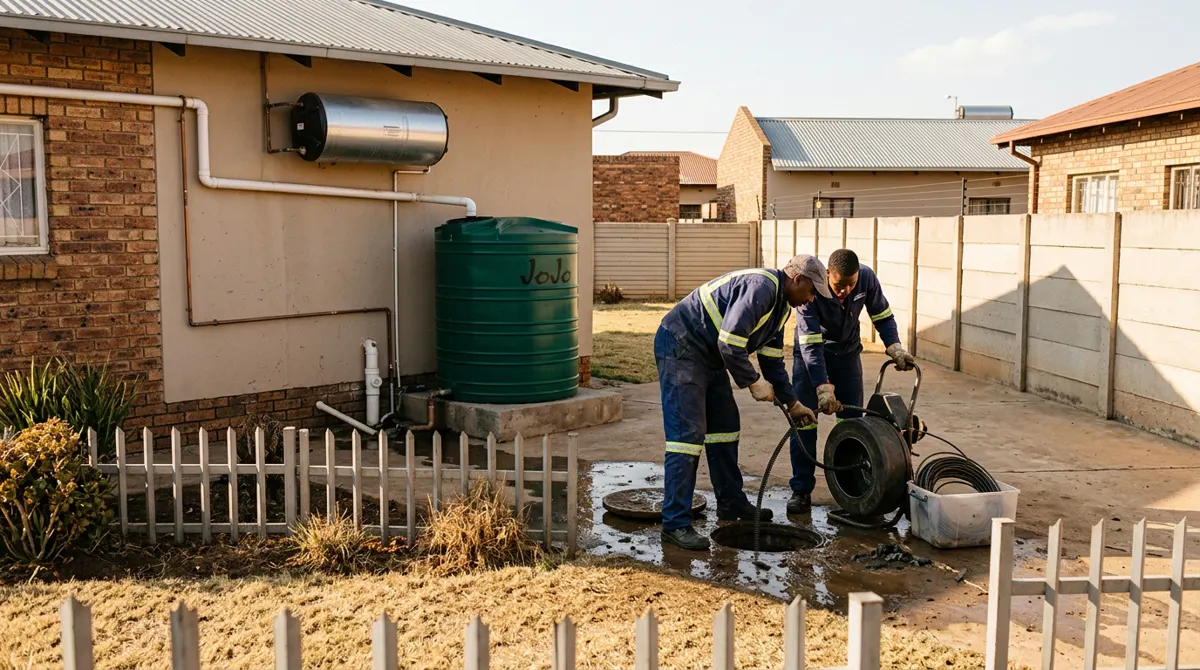
Depending on access, pipe condition and blockage material, a plumber may use drain rods or controlled high-pressure water jetting. Fragile or damaged pipes need particular care; no single method suits every drain.
- 4
Clear the obstruction and remove collected debris
Loosen the blockage and retrieve accessible solids from collection points rather than simply washing surface rubbish into the next section. Root intrusion or suspected collapse may require further investigation and separate repair work.
- 5
Test flow and explain any remaining issues
Run a controlled water test where practical and observe accessible downstream points. This checks immediate flow but does not prove the system can handle every storm. Record any suspected damage, outlet restriction or maintenance needs.
Common questions
Can I unblock a storm water drain myself? +
You can remove loose leaves and litter from an accessible surface grate, using gloves and keeping clear of sharp debris. A garden hose may help rinse a shallow inlet, but stop if water backs up. Do not enter chambers, lift heavy covers alone or use chemical drain cleaners to tackle silt, roots or building rubble.
Why does my drain block again after it has been cleared? +
Recurring blockages can come from soil washing into the inlet, roots entering damaged joints, a broken pipe or sections where water and silt settle because the fall is inadequate. Repeated clearing treats the obstruction, not necessarily its cause. Further inspection may be needed.
Will unblocking fix every flooded driveway? +
No. Water may collect because the paving slopes away from the inlet, the drainage system lacks capacity or the downstream outlet is submerged or obstructed. The cause needs checking before deciding whether clearing, repair or drainage alterations are appropriate.
Does storm water drain unblocking always involve digging? +
No. Many obstructions can be reached through existing access points without excavation. Digging may be necessary if a pipe has collapsed, needs replacement or cannot be accessed safely. Clearing and structural repairs are different jobs.
What if the overflow smells like sewage? +
Treat foul-smelling or visibly contaminated overflow as potentially unsafe. Keep children and pets away, avoid contact and arrange a plumbing assessment. Smell alone cannot identify the pipe, but the problem should not be assumed to be ordinary rainwater drainage.