
Quick answer
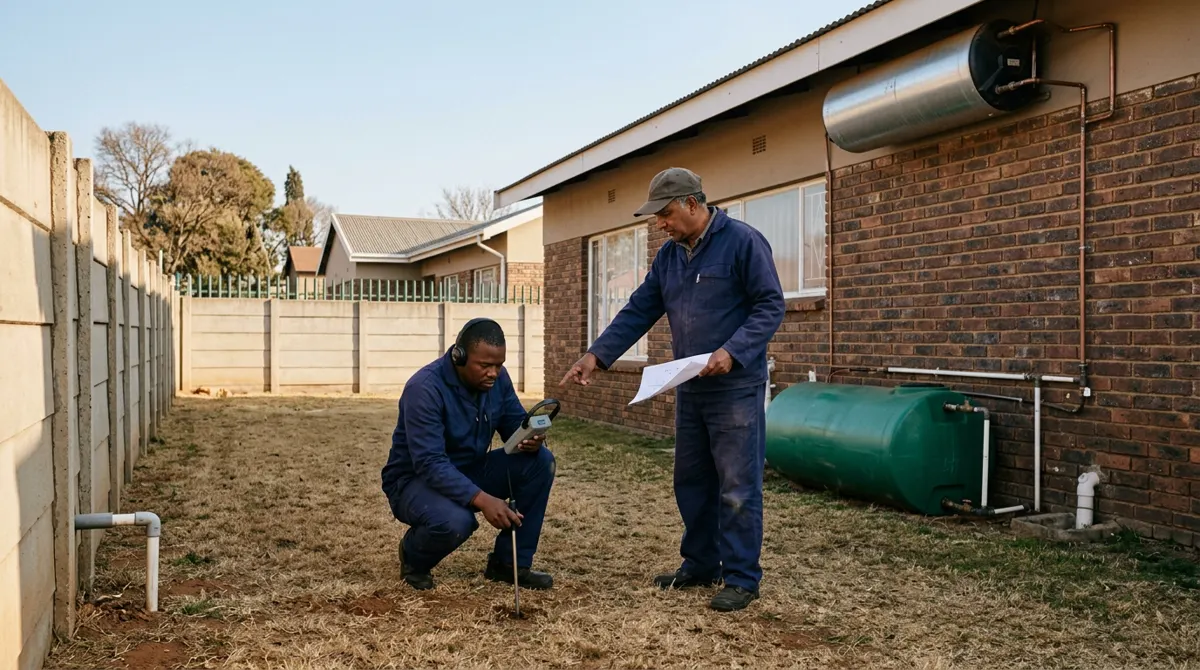
Water leak detection is the process of locating an escaping-water source, especially when a leaking pipe is hidden beneath paving, under a floor or inside a wall. Fox Plumbing uses harmless tracer gas and a detector to locate hidden leaks without digging during detection. Finding the leak and repairing the pipe are separate tasks; a repair may still require access through the surrounding surface.
Signs you may need water leak detection
A visible dripping tap is usually straightforward to identify. Hidden leaks are less obvious: you may notice damp plaster, a wet patch in the garden during dry weather, or water use that remains unusually high after accounting for household activities. Water can travel away from a damaged pipe, so the dampest spot is not necessarily where the leak starts.
For a useful first check, turn off taps and stop water-using appliances, irrigation and pool top-ups. Allow toilet cisterns to finish filling, then record the water meter reading and check it again after a period with no deliberate water use. Movement suggests water is still flowing somewhere downstream of the meter, but it does not identify the source. A running toilet or overlooked automatic top-up can also explain it.
- A meter reading that changes when no water should be in use.
- Recurring damp patches, peeling paint or damaged skirting near concealed pipes.
- An unexplained wet area beneath paving or in the garden.
- A persistent water-flow sound when taps and appliances are off.
- An unexpected increase in billed consumption; check whether readings are actual or estimated before drawing conclusions.
What affects the cost of finding a water leak?
The work involved depends on the pipe layout, the area that needs testing and how easily sections can be isolated. Accessible shut-off valves and information about previous plumbing alterations can help narrow the search. Multiple leaks or an uncertain pipe route can make the investigation more involved.
Fox Plumbing agrees the price upfront, and the call-out fee includes the first hour of work. Pensioners receive a special rate. Confirm what the agreed work covers, including whether pipe repair, access work and surface reinstatement are included or need separate agreement.
- The size of the property and length of the suspected pipe run.
- Access to the meter, valves and pipe connection points.
- Whether separate buildings, irrigation or other branches share the supply.
- The number of suspected leaks and time needed to investigate.
- Any repair, excavation or finishing work needed after detection.
Practical advice for Gauteng properties
Before booking, note when the problem started and whether it changes after rain, irrigation or normal household water use. Dampness can come from roofing, waterproofing, drainage or condensation rather than a leaking supply pipe. Giving the plumber this context helps avoid treating every wet wall as the same problem.
In a complex or on a shared property, establish which meter and shut-off valve serve your unit, and involve the managing agent where communal pipes may be affected. If water is actively causing damage, close your property's supply valve if it is safe and you know which valve to use. Keep clear of wet electrical fittings and do not enter standing water where electricity may be present.
- Have recent meter readings and photographs of the affected areas ready.
- Arrange access to locked meter boxes, outbuildings and the suspected leak area.
- Tell the plumber about concealed pipework or previous repairs if you know about them.
- Check insurer requirements before authorising work if you intend to claim.
Why use Fox Plumbing for leak detection?
Fox Plumbing is based in Benoni and serves the East Rand and greater Gauteng. Owner Evan Pretorius is a qualified, registered plumber with more than 20 years of experience and remains on the tools. Fox Plumbing is a member of IOPSA and PIRB, issues Certificates of Compliance (COCs), and every job is insured.
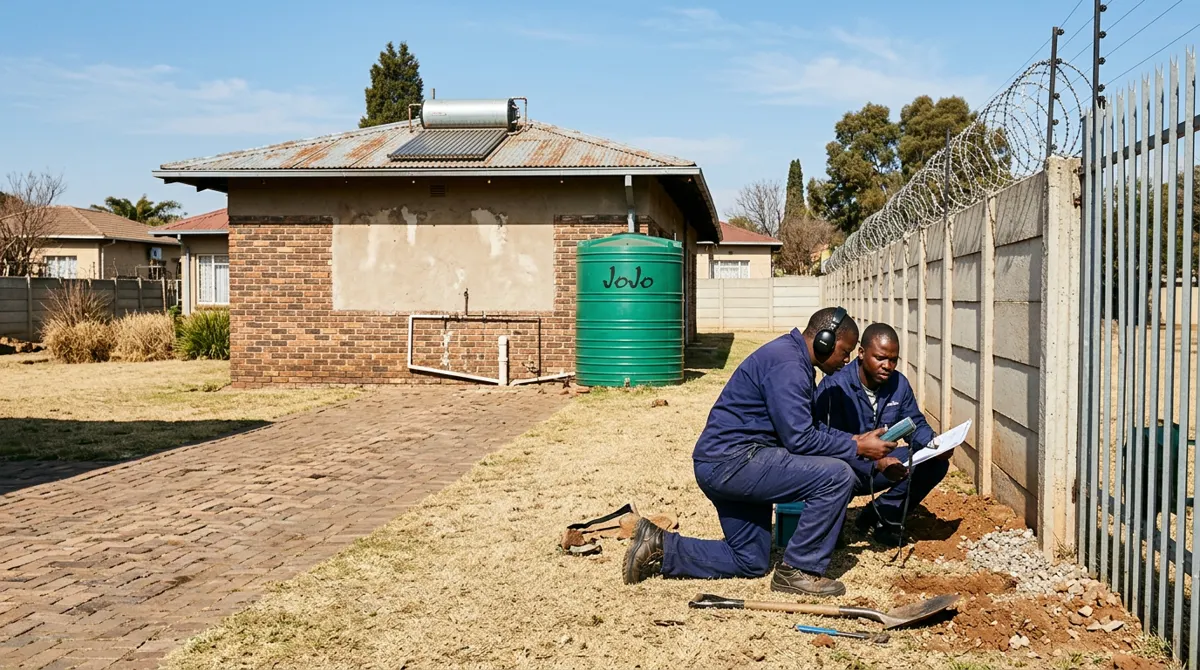
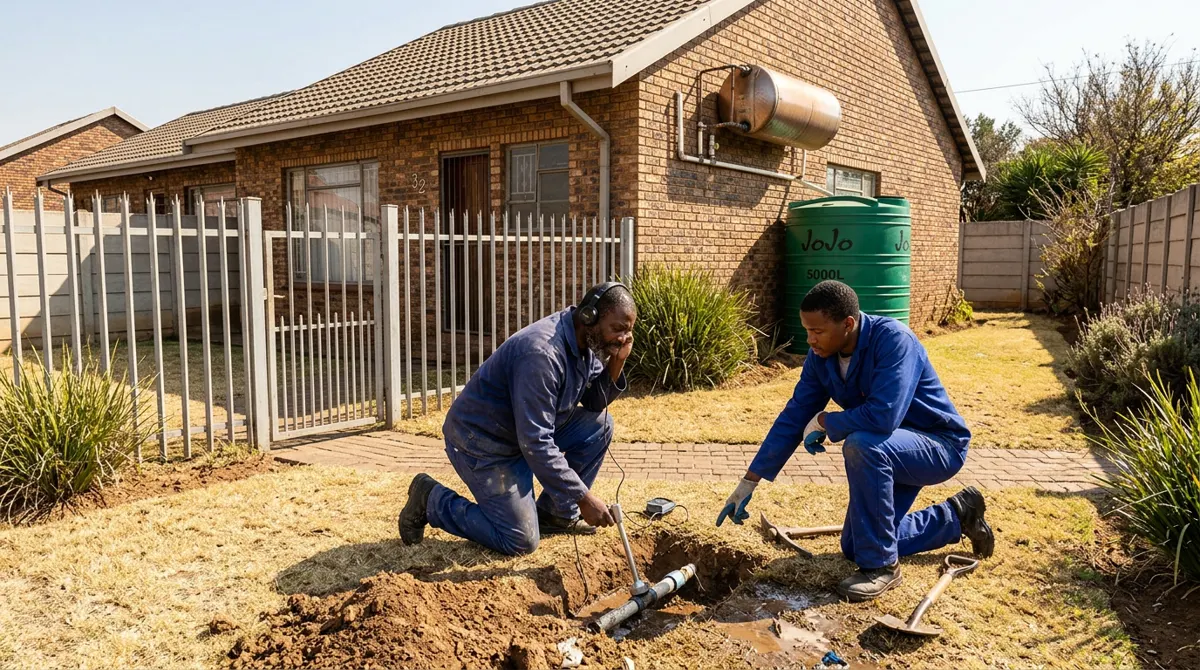
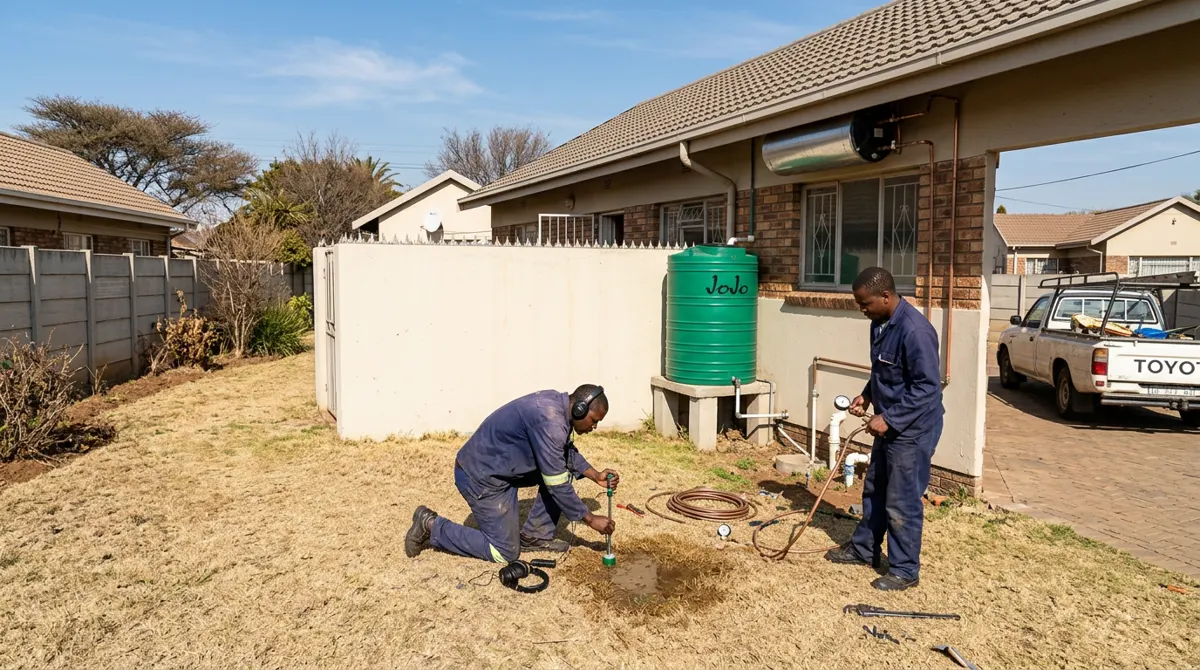
Fox uses harmless tracer gas and a detector for non-invasive leak detection, with no digging during the detection process. Most leaks are found within the hour, although the layout and conditions can affect the time needed. Call 084 368 1879 to discuss the symptoms and arrange a visit.
- Price agreed upfront.
- Call-out fee includes the first hour of work.
- Special rate for pensioners.
- Monday to Friday, 08:00–17:00; Saturday by appointment.
How we do the job
- 1
Review the symptoms
The plumber reviews the damp areas, consumption concerns and any previous repairs. This helps establish whether a hidden pipe leak is likely or whether another source of moisture needs investigation.
- 2
Identify and isolate the suspected pipe section
The supply layout and available valves are checked so the relevant section can be prepared for testing. Access to the meter and shut-off points helps with this stage.
- 3
Introduce harmless tracer gas
Tracer gas is introduced into the prepared pipe section under controlled conditions. Where there is a leak, gas can escape through the opening and migrate towards the surface.
- 4
Trace the gas with a detector
The detector is used over the suspected route to identify escaping gas and narrow down the leak location without exploratory digging. Surface conditions and the route the gas takes can affect the investigation.
- 5
Explain the findings and agree the next work
The findings guide the repair plan and any access needed. Before proceeding, confirm the repair scope, price and responsibility for reinstating paving, tiles or other finishes.
Common questions
Does non-invasive leak detection mean nothing will need to be dug up? +
It means Fox Plumbing's detection process does not require digging to search for the leak. Once located, a buried or concealed pipe may still need targeted excavation or an opening in a wall or floor for repair.
How long does water leak detection take? +
Fox Plumbing finds most leaks within the hour. This is not a guarantee for every property: complex pipe routes, difficult isolation or more than one leak can require additional investigation.
Does leak detection include fixing the leak? +
Detection locates the problem; repair addresses the damaged pipe or fitting. Do not assume both are included in the same scope. Fox Plumbing agrees the price upfront, so confirm the included work before authorising it.
Will my building insurance cover leak detection? +
Cover depends on your policy and the circumstances. Ask your insurer whether detection, access, pipe repair and resulting damage are covered, and whether prior authorisation or particular supporting documents are required. Fox Plumbing's job insurance is separate from your own building cover.
Can a damp wall be caused by something other than a pipe leak? +
Yes. Rain penetration, failed waterproofing, condensation and drainage problems can also cause dampness. Note whether the patch appears after rainfall or water use, but have the cause assessed rather than assuming the nearest pipe is leaking.