
Quick answer
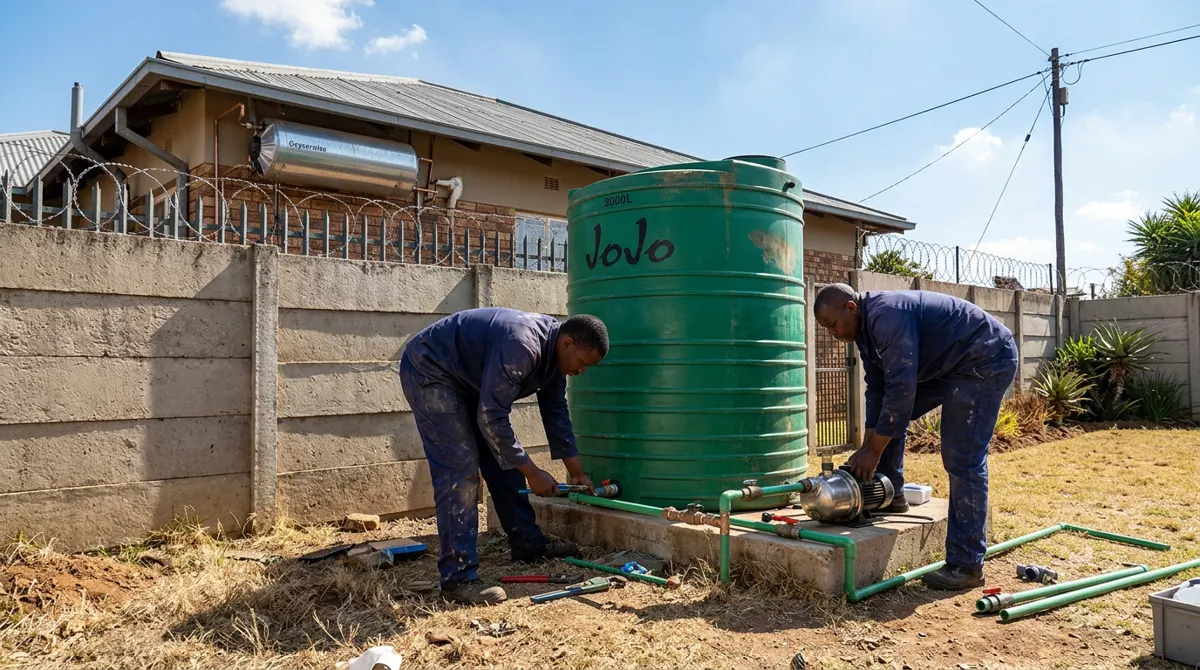
A backup water supply system stores water in a tank and uses a correctly sized pump to supply your property when municipal water is unavailable. For a Benoni home or business, the right setup depends on essential water use, available space, required pressure and whether the pump will have power during an outage.
When a backup water supply makes sense
Consider stored water if supply interruptions leave you unable to flush toilets, wash hands or keep essential business facilities running. Decide whether you need backup for the whole property or only selected fixtures: keeping toilets and a kitchen supplied requires a different plan from running several showers at once.
Low pressure alone is not proof that you need a tank. If only one tap is affected, or pressure stays poor while neighbouring properties have normal supply, investigate restrictions, valves or leaks before choosing a backup system.
- List the fixtures you cannot do without during an interruption.
- Estimate essential daily use and the length of interruption you want to cover.
- Allow for extra occupants or business activity rather than choosing a tank by available space alone.
What affects the installation cost
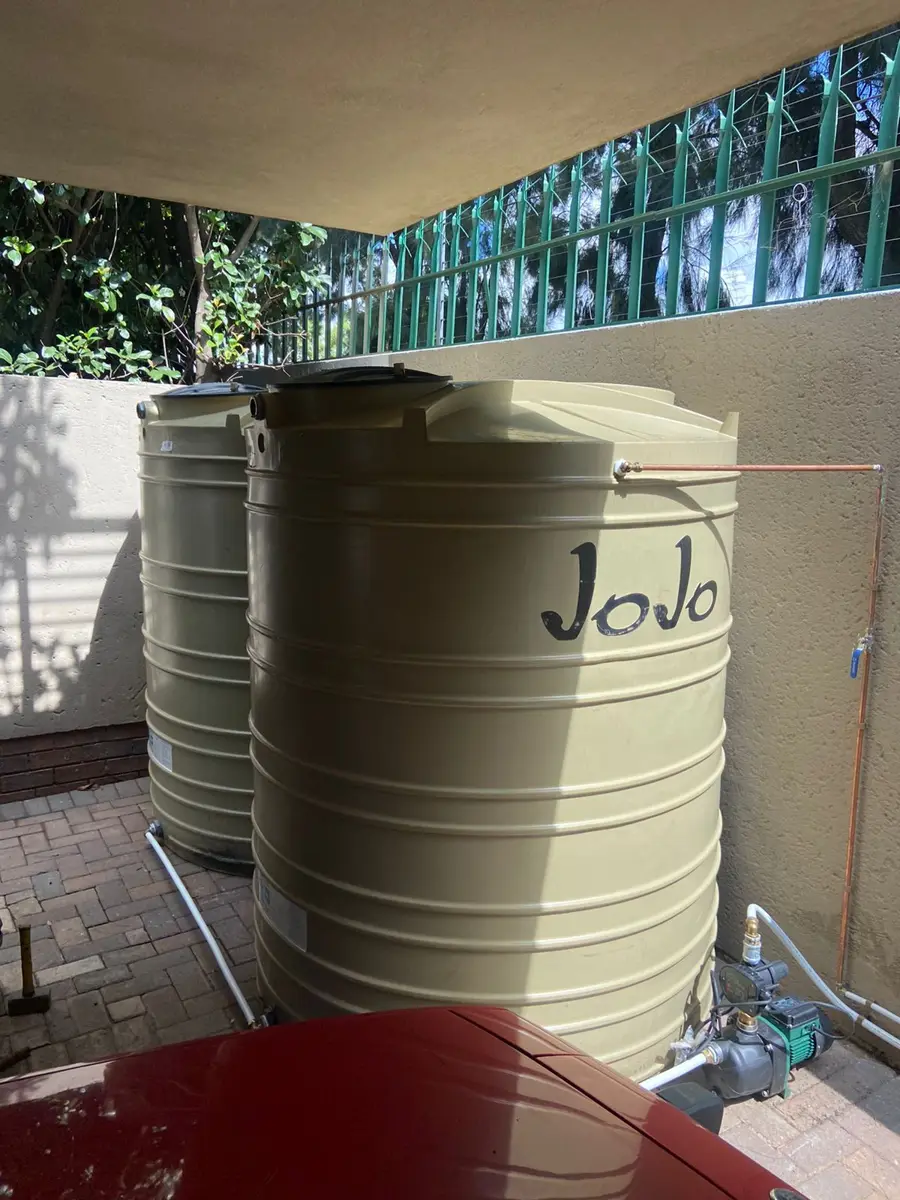
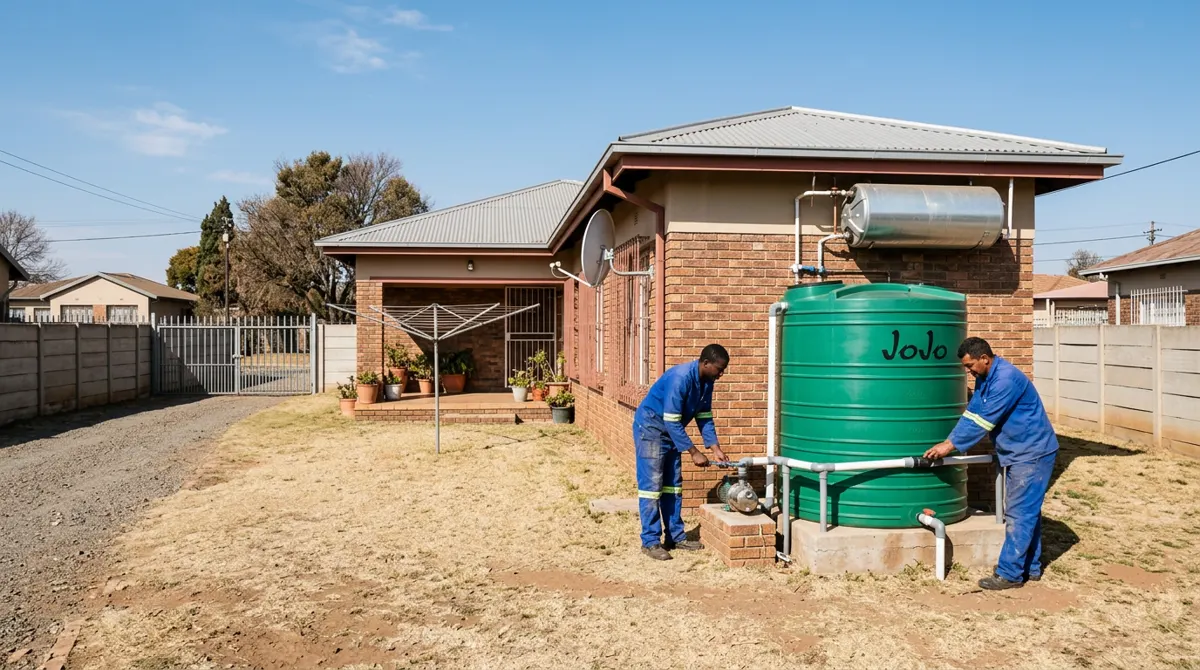
Tank capacity is only one part of the cost. A full tank needs a stable, level base suited to its weight and the manufacturer's requirements. Access through gates, distance from the incoming water line and the route to the fixtures being supplied also affect the work.
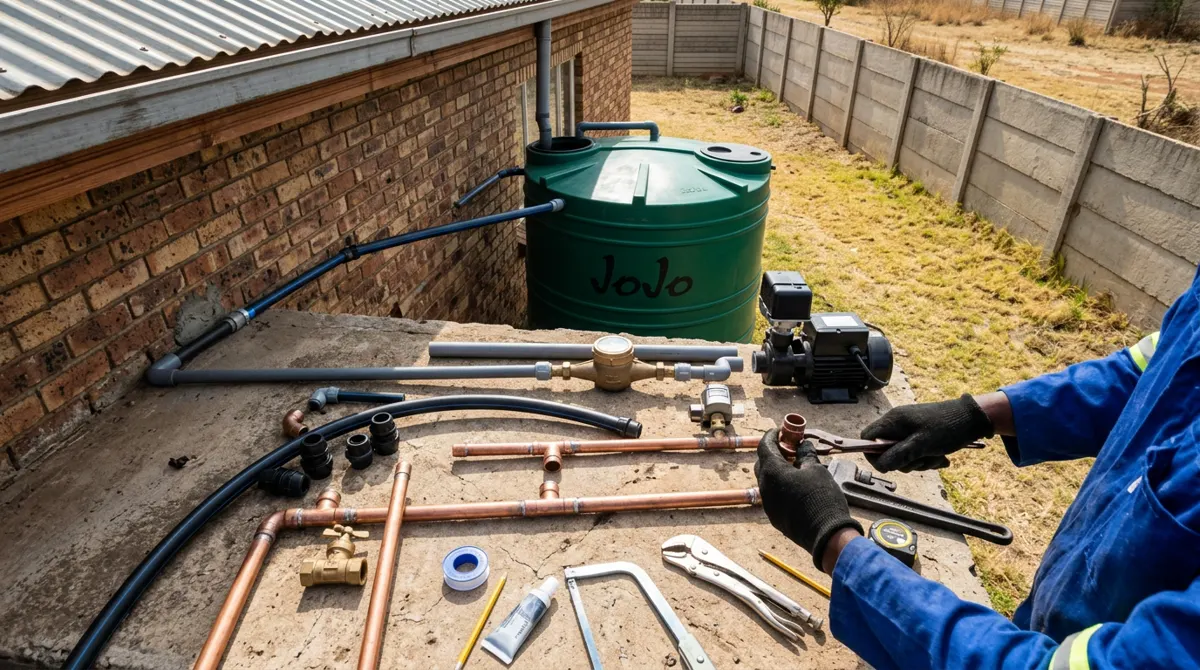
Pump selection depends on simultaneous demand, pipe lengths and changes in height—not simply the number of bathrooms. The agreed scope should identify plumbing work, controls, backflow protection and any electrical or building work that needs separate arrangements.
- Tank size, delivery access and base preparation.
- Pump duty, pressure controls and dry-run protection.
- Pipe routes, isolation valves, overflow drainage and a suitable bypass arrangement.
- Required backflow protection and any justified filtration.
- Electrical supply and compatibility with any proposed backup power.
Practical planning for a Benoni property
For a property in Benoni on the East Rand, plan for water availability and electricity availability separately. A full tank does not guarantee pressurised water if the pump has no power. If you want the pump connected to an inverter, have its running demand and starting requirements checked against the electrical system's capacity.
Stored municipal water and harvested rainwater are not interchangeable. Use a tank suitable for the intended water use, keep it closed against dirt and insects, and arrange the plumbing to prevent contamination of the municipal supply. Regular turnover helps manage storage, but does not by itself guarantee drinking-water safety.
- Choose a position with access for cleaning, valve checks and pump servicing.
- Keep overflow discharge away from foundations and neighbouring properties.
- Consider pump noise near bedrooms and boundary walls.
- Check applicable City of Ekurhuleni requirements and any complex or body corporate rules before work starts.
Discuss your backup supply with Fox Plumbing
Fox Plumbing is based in Benoni and serves the East Rand and greater Gauteng. Owner Evan Pretorius is a qualified registered plumber with more than 20 years of experience, membership of IOPSA and PIRB, and remains on the tools. Fox Plumbing issues Certificates of Compliance (COCs); confirm the certification applicable to your proposed work when agreeing the scope.
The price is agreed upfront, the call-out fee includes the first hour of work, pensioners receive a special rate and every job is insured. Phone 084 368 1879 to discuss your property and requirements. Hours are Monday to Friday, 08:00–17:00, with Saturdays by appointment.
- Have photos of the proposed tank position and incoming water connection ready.
- Explain which fixtures need backup and whether you already have backup electricity.
- Ask for a clear scope covering installation, testing and maintenance responsibilities.
How we do the job
- 1
Assess demand and the existing plumbing
Identify essential fixtures, expected consumption and the desired storage period. Check incoming supply conditions and investigate existing plumbing faults that could affect performance.
- 2
Plan the tank position and support
Choose an accessible location and specify a level, load-bearing base that meets the tank manufacturer's requirements. Plan overflow drainage and access for future cleaning.
- 3
Design the connections and protection
Specify the filling arrangement, isolation valves and appropriate backflow prevention. Where suitable, include a clearly labelled bypass that allows servicing without creating an unsafe cross-connection.
- 4
Match the pump and controls
Select a pump for the required flow and pressure, with suitable controls and protection against running dry. Arrange a safe electrical connection through an appropriately qualified electrical professional.
- 5
Install, test and explain operation
Test for leaks, confirm filling and overflow operation, and simulate a municipal interruption. Check pressure at the intended fixtures, then explain valve positions, pump behaviour, cleaning requirements and applicable compliance documentation.
Common questions
What size backup water tank do I need? +
Start with essential daily consumption multiplied by the number of days you want to cover, then discuss an appropriate reserve. Occupant numbers, toilet use, showers and business needs all matter. No tank can provide an unlimited supply, so reducing non-essential use extends the available storage.
Will the system work during a power cut? +
A conventional electric pressure pump needs electricity. Compatible backup power may keep it running, but its starting and running requirements must be checked. Gravity supply is only practical where the height and layout provide sufficient pressure; it should not be assumed to serve the whole property.
Can a backup tank supply my whole house? +
Yes, a system can be designed for whole-house supply, provided the storage, pump and pipework match the demand. Supplying only essential fixtures is another option. Existing appliances and hot-water equipment must remain within their specified operating pressures.
Is stored water safe to drink? +
That depends on the source water, tank suitability, hygienic installation and ongoing maintenance. A sediment filter alone does not disinfect water. If contamination is suspected or a water-quality advisory applies, follow the relevant public-health guidance and obtain advice on testing or treatment.
What maintenance does a backup system need? +
Follow the tank and pump manufacturers' maintenance instructions. Check for leaks, damaged lids or screens, faulty filling valves and unusual pump cycling. Inspect the tank for sediment, clean it when needed and service any filters according to their specifications.