
Quick answer
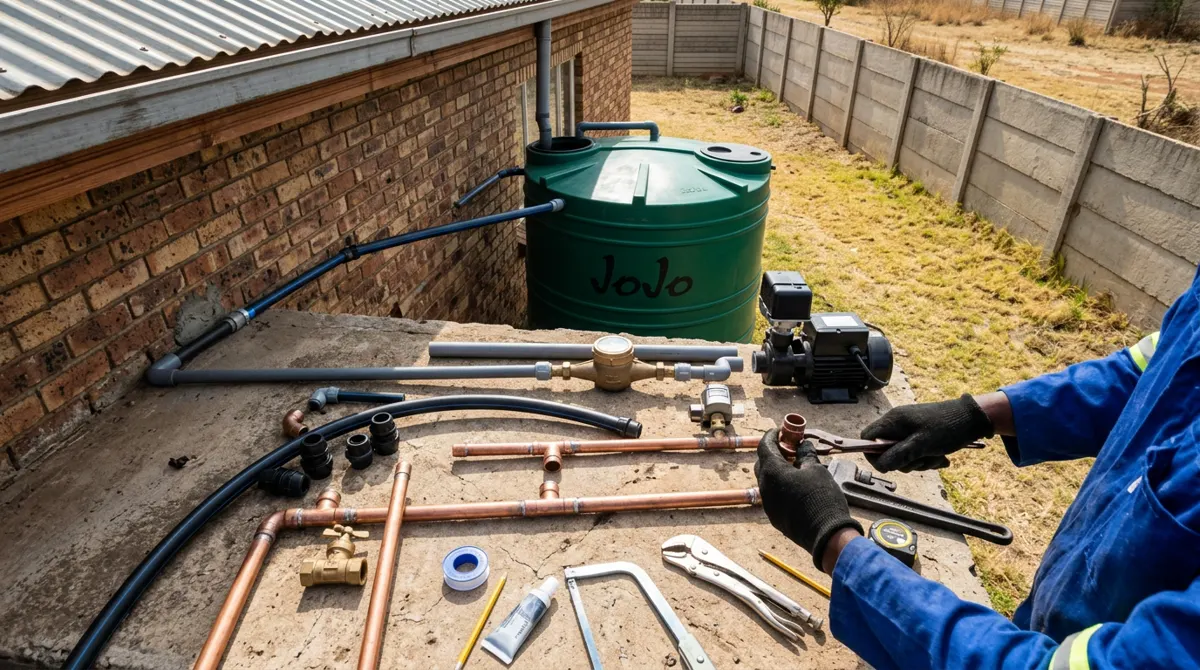
A backup water supply system stores water for use when the normal supply is interrupted. A plumbed-in system usually combines a storage tank, pump, controls and protective valves to supply selected fixtures or the whole property. For Gauteng homes and businesses, the right setup depends on water demand, available space, outage duration and whether the pump has electricity.
How backup water systems work — and when you need one
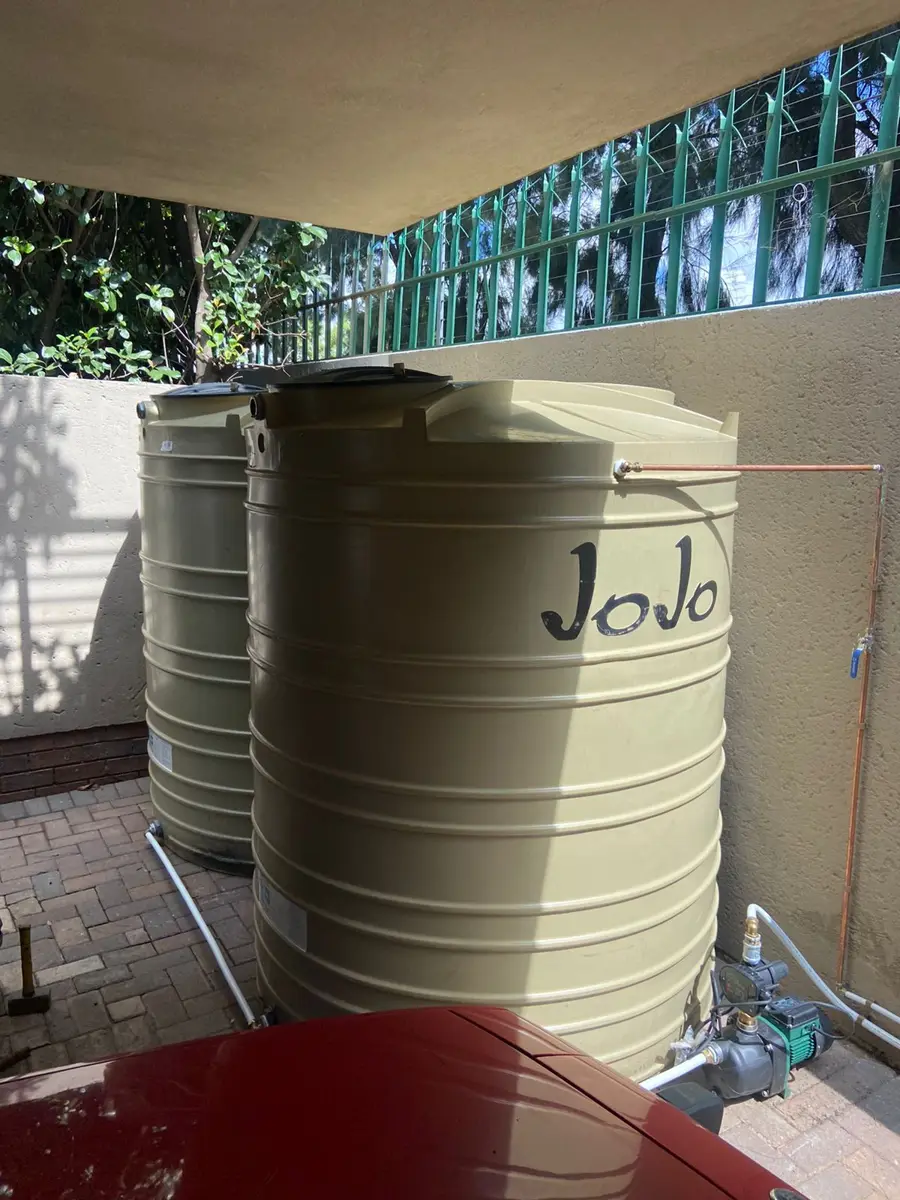
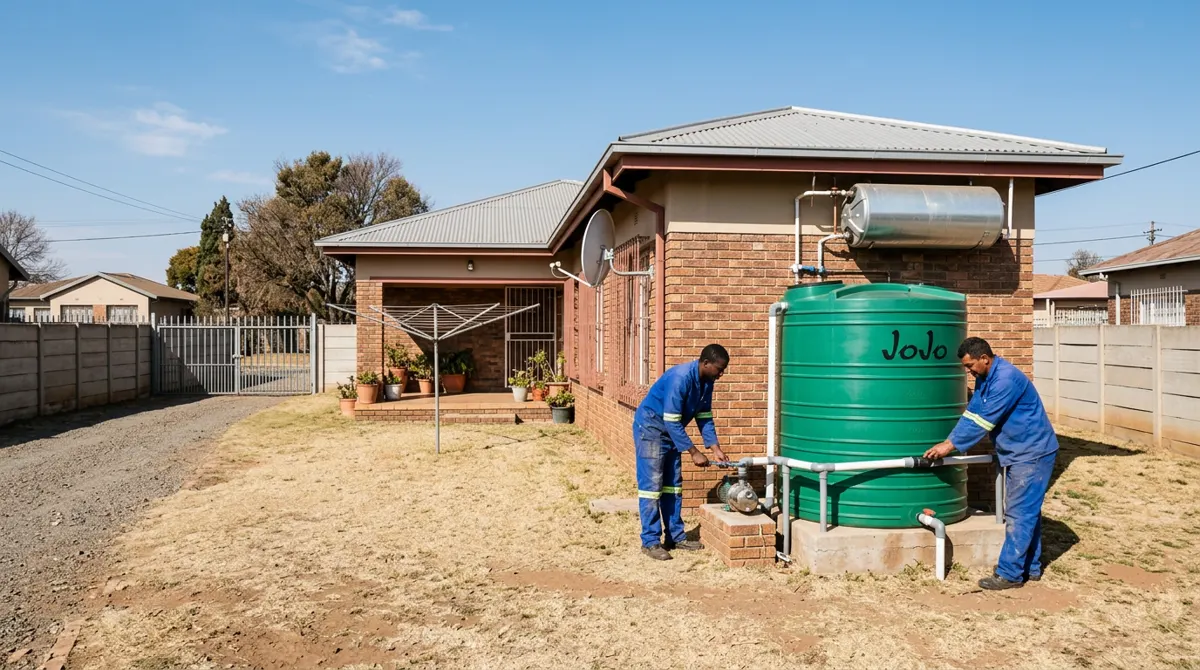
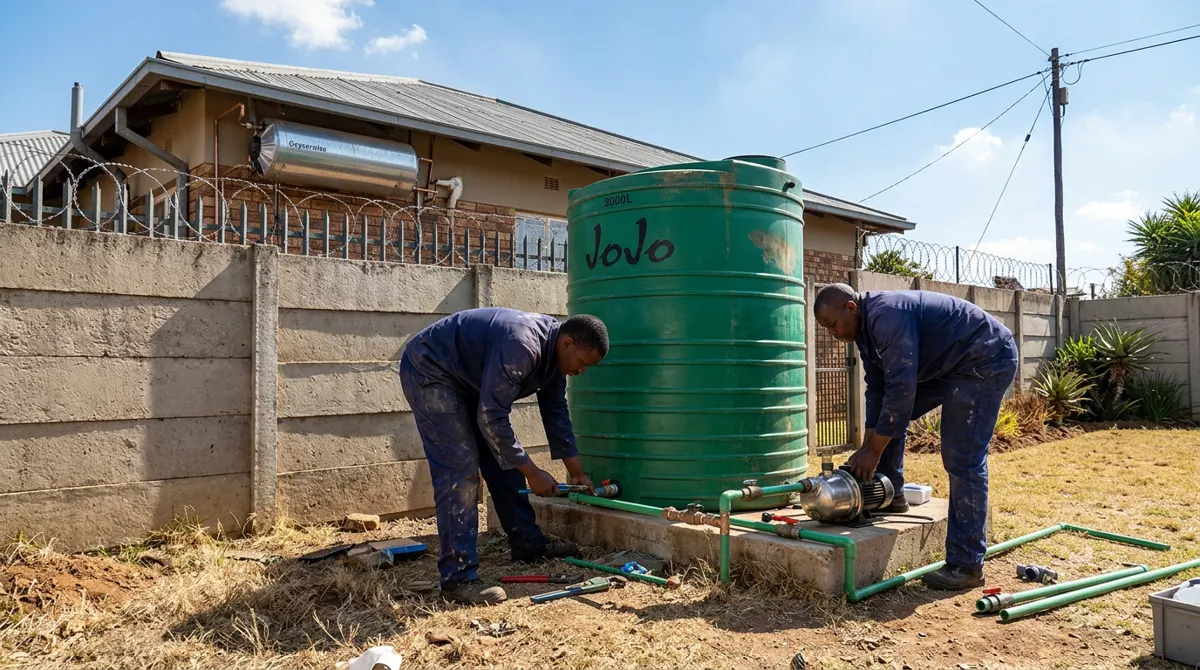
In a municipal-fed system, incoming water fills a tank through a controlled inlet that closes when the tank is full. A pump delivers stored water to the property at a suitable pressure. Some layouts draw through the tank during everyday use; others switch between municipal and stored water. Automatic operation depends on the controls and pipework design, not simply on fitting a pump.
A backup system is worth considering if interruptions leave you unable to flush toilets, wash hands or keep essential business activities running. However, poor pressure does not always mean you need storage: a leak, blocked strainer or faulty pressure-control valve should be investigated first.
- A standalone tank with a tap provides stored water, but does not automatically supply household plumbing.
- A ground-level tank generally needs a pump to provide useful pressure at showers and upstairs outlets.
- Automatic switching cannot create water once the tank is empty.
- Rainwater harvesting collects rainfall; municipal backup storage holds water from the normal supply. They need different water-quality safeguards.
What affects the cost and size of a backup system?
Start with the water you need to keep using during an interruption, rather than choosing a tank by appearance or capacity alone. Essential-use storage for toilets and handwashing is a different brief from maintaining showers, laundry and irrigation. Estimate daily essential demand, multiply it by the intended number of backup days, and allow for water the pump cannot draw from the bottom of the tank.
Pump selection depends on both flow and pressure: how many outlets may run together, how high water must travel and the resistance in the pipework. A larger pump is not automatically better; excessive pressure can affect fittings and appliances.
- Tank capacity, dimensions and access for delivery.
- A level, load-bearing base built to the tank manufacturer's requirements.
- Pipe lengths, routing and how much existing plumbing needs alteration.
- Pump duty, noise control, automatic controls and dry-run protection.
- Backflow protection, isolation valves, overflow routing and any necessary treatment.
- Electrical work and a compatible backup power supply if required.
Practical planning for Gauteng properties
Gauteng spans several municipal supply areas, so connection requirements must be checked for the property's municipality. Stored water must not be able to flow back into the public supply. The appropriate protection may involve an air gap or an approved backflow-prevention arrangement; do not assume that a basic non-return valve alone satisfies every installation.
Plan for electricity interruptions as well as water interruptions. A conventional electric pump stops without power, even when the tank is full. Position the tank where it remains accessible for inspection and cleaning, with a secure lid, protected openings and an overflow that drains safely without undermining the base or flooding a neighbour's property.
- Obtain any required landlord, body corporate or estate permission before installation.
- Check pump noise and vibration where equipment is close to bedrooms or neighbouring homes.
- Keep non-potable rainwater or borehole supplies separate from drinking-water plumbing unless professionally assessed and appropriately treated.
- Ask for a maintenance plan covering the tank, pump, inlet valve, strainers and protective devices.
- Do not assume stored water is safe to drink solely because it originally came from the municipality.
Discuss your requirements with Fox Plumbing
Fox Plumbing is based in Benoni and serves the East Rand and greater Gauteng. Owner Evan Pretorius is a qualified registered plumber with more than 20 years of experience, is a member of IOPSA and PIRB, and issues Certificates of Compliance (COCs). He remains on the tools, giving you a direct point of contact for discussing the plumbing requirements of your property.
The price is agreed upfront, the call-out fee includes the first hour of work, pensioners receive a special rate, and every job is insured. Phone 084 368 1879, Monday to Friday from 08:00 to 17:00; Saturdays are by appointment. Have your household size, essential water uses, available tank space and existing power arrangements ready when you enquire.
- Ask which outlets the proposed system will supply and which it will exclude.
- Confirm whether operation will be automatic or require manual valve changes.
- Clarify the plumbing scope, electrical requirements and applicable compliance documentation before work starts.
How we do the job
- 1
Assess demand and the existing plumbing
Identify essential fixtures, likely simultaneous use and the intended backup period. Check the incoming supply, existing pressure controls and any faults that could affect the system.
- 2
Select the storage and pump arrangement
Match usable tank capacity to expected demand. Select a pump for the required flow and pressure, and decide whether the property will normally draw through the tank or switch to it during interruptions.
- 3
Confirm the site and connection requirements
Check municipal requirements, permissions, delivery access and electrical provision. Plan the tank base, maintenance access, pump position and safe overflow route.
- 4
Install the tank and protective plumbing
Fit the inlet control, appropriate backflow protection, isolation valves and distribution pipework. Support the tank and pipes correctly, and prevent accidental cross-connections with non-potable supplies.
- 5
Connect and test the pump and controls
Have electrical work handled by a suitably qualified person. Test pressure, leaks, automatic operation and low-water protection, then simulate a municipal interruption to check the intended backup function.
- 6
Prepare for use and hand over
Clean, flush and disinfect as appropriate before use. Explain valve positions, power-loss behaviour, maintenance needs and how to shut the system down safely; provide applicable compliance documentation.
Common questions
How long will the stored water last? +
Divide usable stored litres by your expected daily consumption. The result is an estimate, not a guarantee: showers, washing machines, leaks and garden watering can shorten it substantially. Base your plan on essential use and remember that the tank may not be full when an interruption starts.
Can I drink water from a backup tank? +
It can be suitable for drinking if the source is potable, the tank and fittings are suitable for drinking water, and the system is protected and maintained correctly. Storage does not guarantee safety. Follow municipal water-quality notices and seek advice on testing or treatment if contamination is suspected; a basic sediment filter does not disinfect water.
Will the system work during a power cut? +
An electric pump needs a working power source. Backup power must be compatible with the pump's starting and running requirements. A gravity-fed arrangement may provide limited service if designed with sufficient elevation, but a tank standing at ground level will not provide normal household pressure on its own.
Does water moving through the tank keep it clean? +
Regular turnover reduces stagnation, but it does not replace cleaning or prevent every contamination risk. Keep the lid secure, inspect protected openings and follow a maintenance schedule suited to the tank, water source and operating conditions.
Can the system supply my geyser? +
It can if the plumbing design includes the geyser supply and provides suitable pressure and flow while preserving the geyser's required safety controls. Ask the plumber to check compatibility. Stored water alone does not keep water hot during an electricity interruption.