
Quick answer
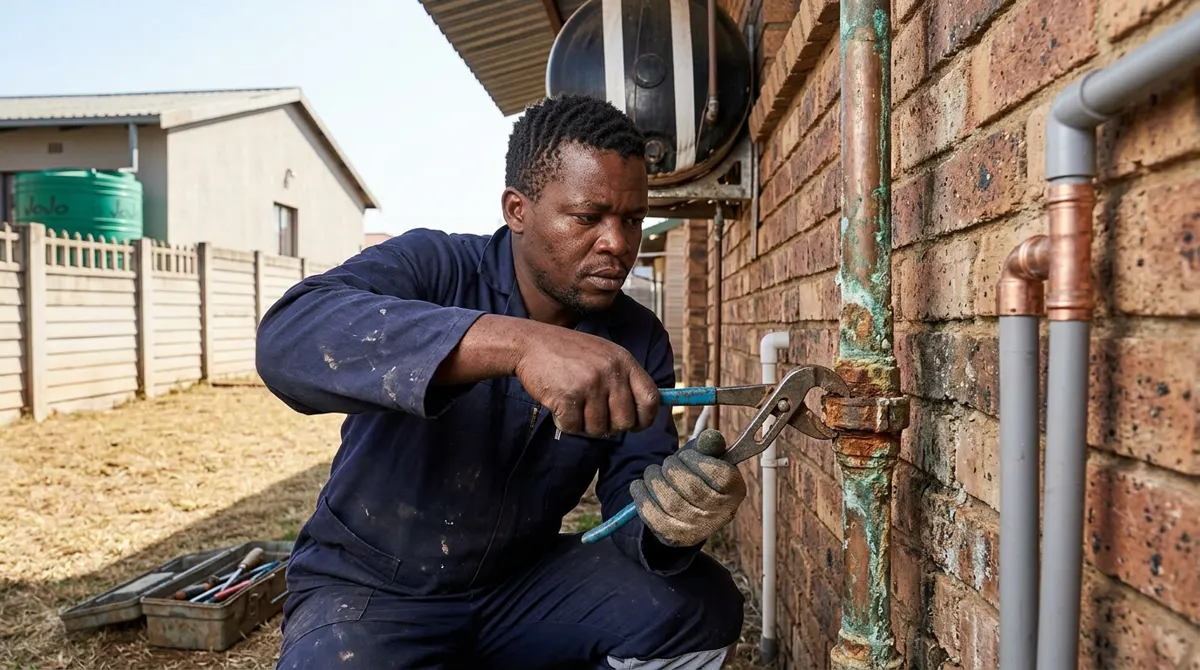
Corroded pipes usually need replacement where the metal has become pitted, thin, leaking or badly restricted inside. Light surface staining alone does not prove a pipe has failed, and one damaged section does not automatically mean the whole property needs repiping. An inspection helps establish whether a local replacement is enough or wider renewal is justified.
Signs your pipes may need replacing
Repeated pinhole leaks, rust flaking from steel pipes and damp joints are reasons to arrange an inspection. Brown water after a period of non-use can point to internal rust, while reduced flow may indicate deposits narrowing the pipe. These symptoms are clues, not a diagnosis: a blocked tap aerator, faulty valve or supply interruption can cause similar problems.
A repair clamp may contain a leak temporarily, but it cannot restore metal lost to corrosion. If neighbouring sections are also weakened, replacing only the leaking spot can leave you facing another repair nearby. Conversely, an isolated damaged fitting on otherwise sound pipework may need only a local replacement.
- Look for recurring damp patches, weeping joints and previous repairs clustered along the same pipe.
- Note whether discolouration affects one tap, all cold taps or only the hot water.
- Compare flow at several outlets rather than judging the entire system from one slow tap.
- Do not scrape, bend or tighten heavily corroded pipework yourself; weakened metal can break.
What affects the cost of replacing corroded pipes?
The main factors are how much pipe is unsound and how easily it can be reached. Replacing an exposed section is a different job from tracing a concealed line beneath paving or inside a tiled wall. Before work starts, clarify the replacement route, which fittings are included and who will handle any plaster, tile or paving reinstatement.
Material selection also matters. Replacement pipe must suit drinking water, operating pressure and, where relevant, hot-water temperatures. Copper can corrode under certain conditions; plastic does not rust, but not every plastic pipe is suitable for every application. Connections between different metals also need suitable detailing to limit galvanic corrosion.
- Length, diameter and condition of the affected pipework.
- Access through walls, floors, ceilings or outdoor surfaces.
- Number of branches, valves, fittings and transitions to existing pipes.
- Whether a new route can reduce disruption without compromising the installation.
- Testing, applicable compliance requirements and making good afterwards.
Practical checks for Gauteng homes
In an older Gauteng property with galvanised steel plumbing, internal rust can be present even where the outside looks fairly intact. Age alone is not a reason to replace every pipe, but recurring leaks and restricted flow make a broader assessment worthwhile. Check any accessible supply pipe as well as the plumbing near the geyser and under sinks.
If discoloured water starts after a municipal interruption, check whether neighbours are experiencing it too and follow any municipal water-quality advice. Do not assume your pipes are the cause, or that clear-looking water is necessarily safe. If contamination is suspected, use a known safe drinking-water source while the cause is investigated; appearance and taste cannot identify specific contaminants.
- Photograph staining or leaks and record when they occur.
- Locate your stopcock before a leak becomes urgent.
- For an active leak, close the water supply if it is safe to do so and keep clear of wet electrical fittings.
- Avoid DIY chemical flushing: removing deposits does not rebuild a weakened pipe wall.
Discuss the replacement scope with Fox Plumbing
Fox Plumbing is based in Benoni and serves the East Rand and greater Gauteng. Owner Evan Pretorius is a qualified registered plumber with more than 20 years of experience and remains on the tools. Fox Plumbing is a member of IOPSA and PIRB and issues Certificates of Compliance (COCs).
For hidden leaks, Fox uses non-invasive detection with harmless tracer gas and a detector. Most leaks are found within the hour, without digging during detection; accessing and replacing the damaged pipe may still require opening surfaces. The price is agreed upfront, the call-out fee includes the first hour of work, pensioners receive a special rate and every job is insured.
- Phone 084 368 1879 to discuss the symptoms and arrange a visit.
- Hours: Monday–Friday, 08:00–17:00; Saturday by appointment.
- Ask whether the findings support a single-section replacement or a wider repipe, and what the agreed scope includes.
How we do the job
- 1
Establish where the symptoms occur
Check which outlets are affected, review previous leaks and identify the existing pipe materials. This helps separate a local plumbing problem from a supply-side issue.
- 2
Inspect and locate any hidden leak
Assess accessible pipes and joints. Where a concealed leak is suspected, use suitable detection methods to narrow down its position; leak detection alone does not measure the condition of every pipe.
- 3
Agree on the replacement scope
Decide whether to replace a fitting, a pipe section or a larger run based on the findings. Confirm materials, access, the route, reinstatement responsibilities and the price before work begins.
- 4
Isolate and replace damaged pipework
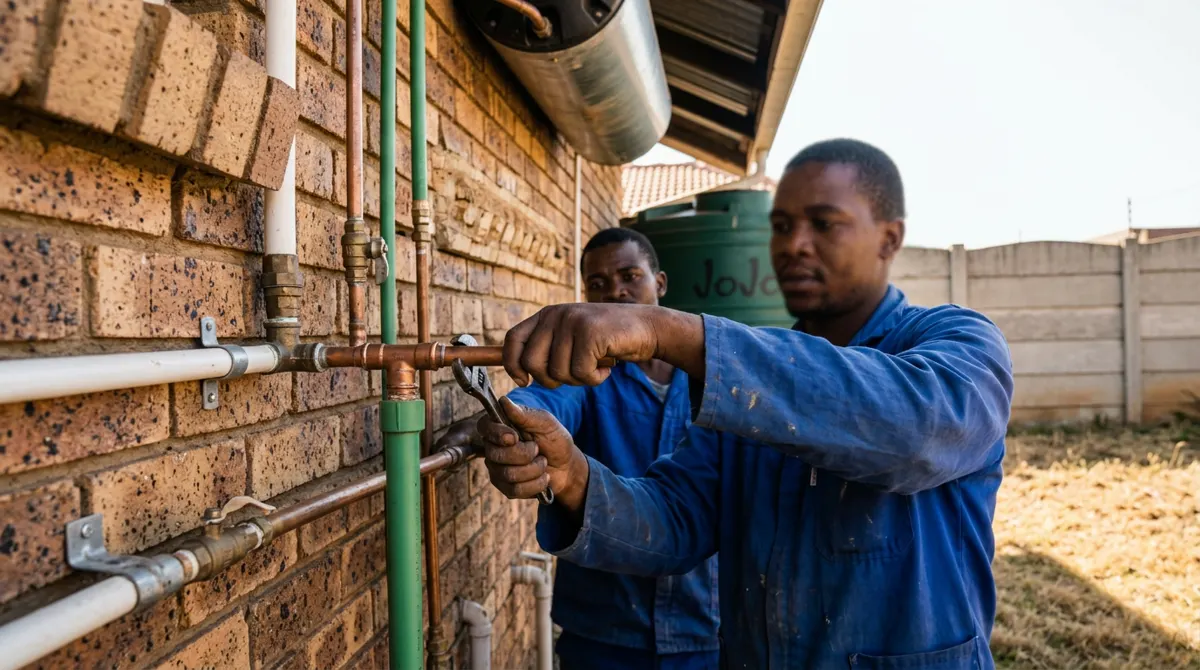
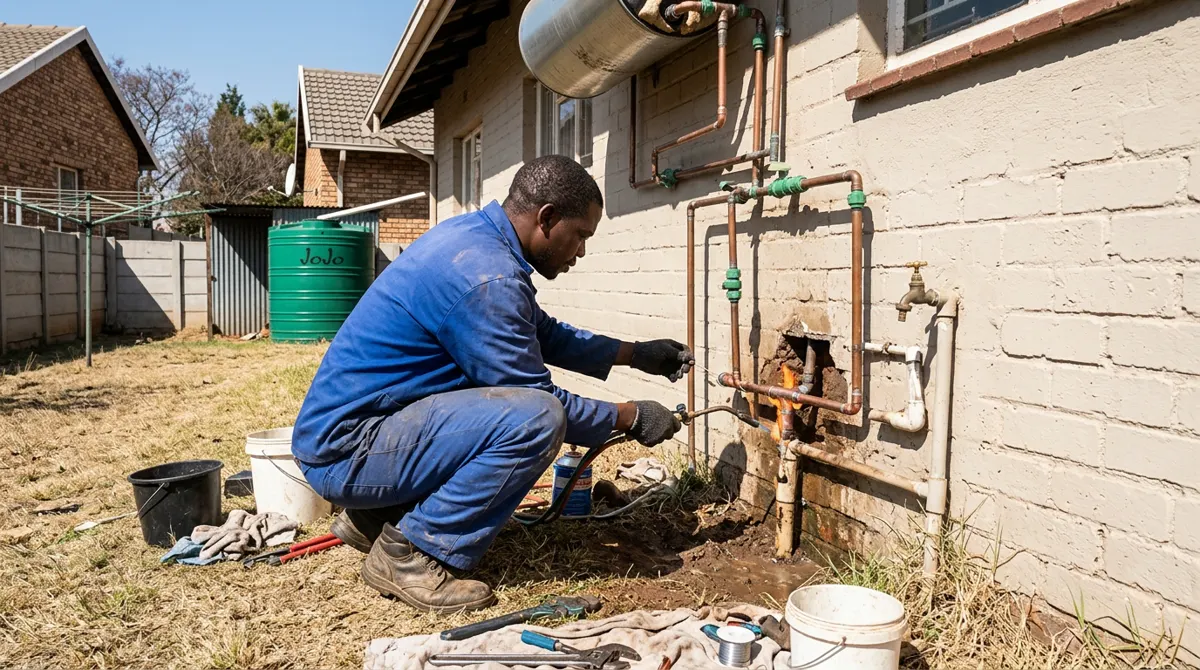
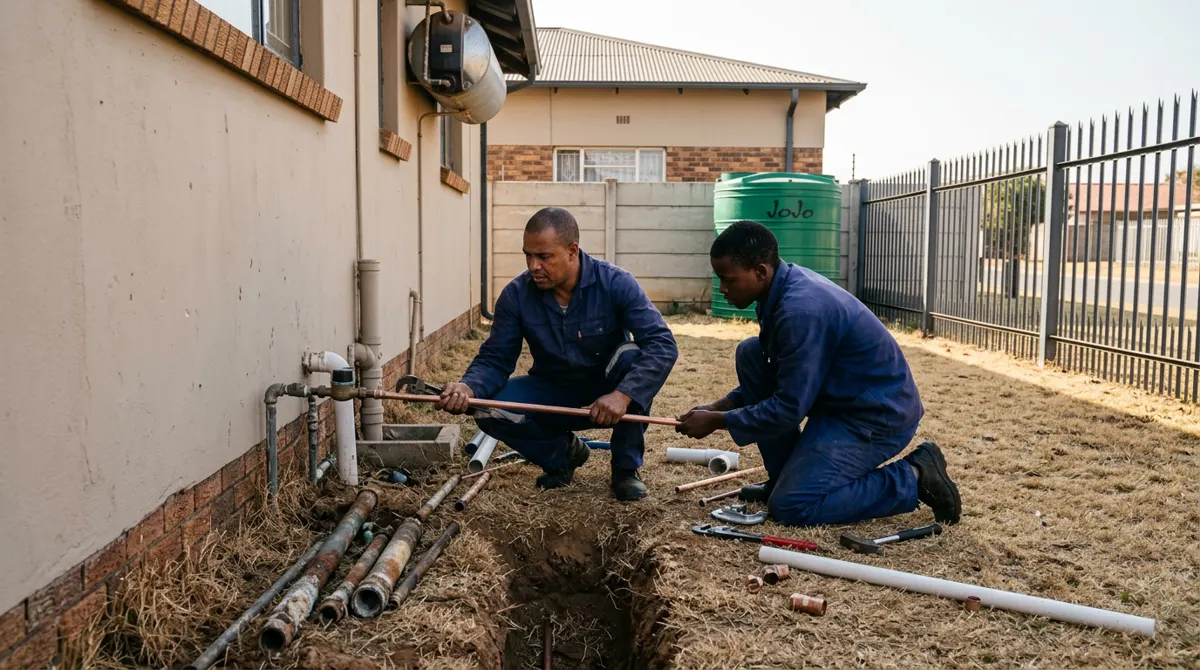
Shut off and drain the affected supply, remove unsound sections and connect suitable replacement pipework to sound existing plumbing using compatible fittings.
- 5
Test, flush and hand over
Test the completed work for leaks and proper operation, flush the affected lines and explain what was replaced. Confirm any remaining concerns and applicable COC requirements.
Common questions
Can surface rust be cleaned off instead of replacing the pipe? +
Sometimes, if it is genuinely superficial and the pipe beneath remains sound. Cleaning or painting does not fix pitting, thinning or internal corrosion. A plumber should assess heavily rusted areas before they are disturbed.
Does one corroded pipe mean the whole house needs repiping? +
No. A local replacement may be appropriate when surrounding pipework is sound. Widespread deterioration, repeated leaks on different runs or substantial internal restriction can justify a larger replacement.
Will flushing remove corrosion? +
Flushing may clear loose particles, but it cannot replace metal already lost. Aggressive cleaning can also expose leaks in weakened pipes, so it should not be treated as an alternative to replacing unsound pipework.
Does tracer-gas detection mean no walls or floors will be opened? +
No. Fox's tracer-gas leak detection does not require digging to locate the leak. Repair access is a separate matter: concealed pipework may still need to be exposed or replaced along another suitable route.
Can I keep using a pipe that is only leaking slightly? +
A small leak still needs prompt attention because the remaining metal may be weak and escaping water can damage surrounding materials. If water is actively escaping, isolate the supply where safe and arrange an assessment rather than relying on a temporary patch.