
Quick answer
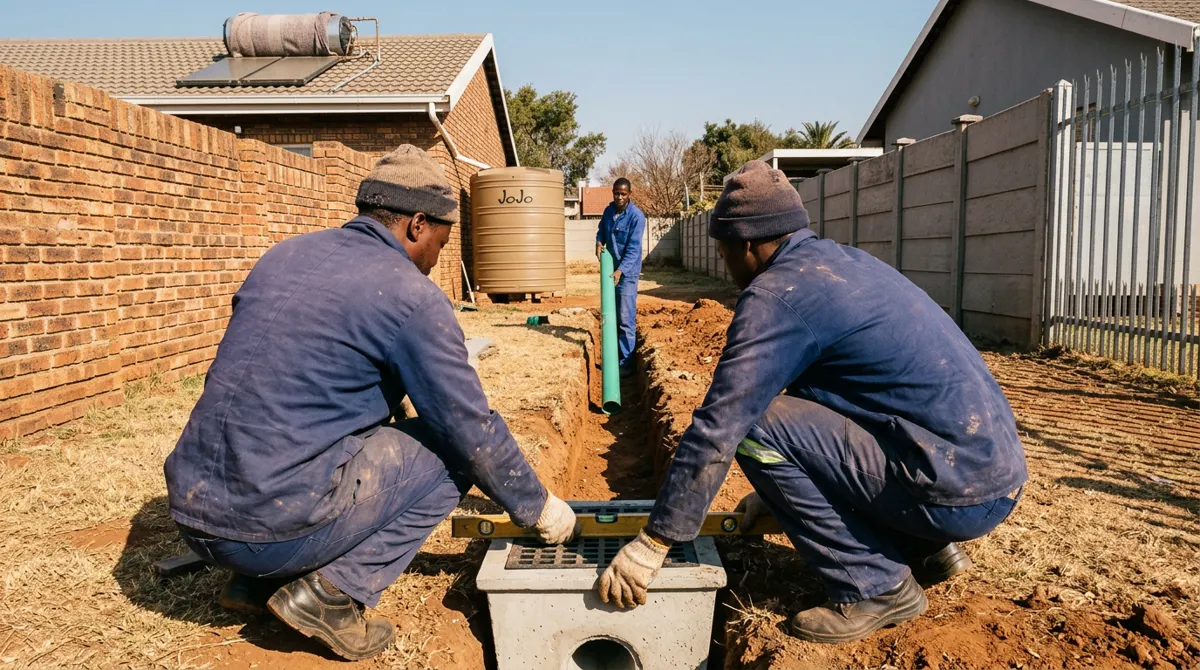
A new storm water drain installation in Springs should collect runoff where it builds up and carry it to a permitted discharge point, away from buildings and entrances. Fox Plumbing serves Springs from Benoni, with owner Evan Pretorius on the tools and the price agreed upfront. Start with a site assessment to establish the ground levels, drainage route and suitable outlet before any trenching begins.
Signs your property may need new storm water drains
Water gathering against outside walls, flowing into a garage or washing soil out of garden beds deserves attention. Adding paving, a roofed patio or an extension can also change where rainwater goes, leaving an existing drain with more runoff than it was designed to receive.
A puddle does not automatically mean you need a new installation. A blocked inlet, a damaged pipe or paving that slopes away from the drain may be the actual problem. Establishing the cause first helps avoid installing extra pipework that still leaves the same wet patch.
- Runoff crosses doorways or collects at the bottom of a sloping driveway.
- Downpipes empty beside foundations rather than into a suitable drainage route.
- Drains overflow repeatedly even after debris has been cleared.
- New paving has removed areas where rain previously soaked into the soil.
What affects the installation cost
The cost depends on the amount of water to collect, the available fall and the work needed to reach a suitable outlet. Pipe diameter should follow the drainage assessment, not a standard size chosen for every property.
Access and surface finishes matter too. Digging through an open lawn is different from opening a concrete driveway, working around buried services or lifting and relaying paving. Agree what excavation, rubble removal and reinstatement are included before work starts.
- Catchment area, including roofs, driveways and other hard surfaces.
- Number and type of inlets, channels, catchpits and access points.
- Pipe length, diameter, depth and bedding requirements.
- Ground conditions, buried services and access for excavation.
- Traffic-rated grates or covers where vehicles will pass over drains.
- Outlet permissions and the extent of surface reinstatement.
Planning drainage for Springs rainfall
Springs experiences Gauteng’s summer thunderstorms, so drainage planning needs to account for short, heavy bursts of rain as well as ordinary showers. The route water takes across the surface matters just as much as the underground pipes: an inlet cannot catch runoff that flows past it.
Confirm the permitted discharge arrangement with the City of Ekurhuleni where necessary. Do not connect storm water to the sewer or assume it can be discharged onto a road or neighbouring property. A soakaway is not suitable everywhere; soil infiltration, available space and its position relative to buildings must be assessed first.
- Photograph pooling and flowing water during rain, from a safe position.
- Show the plumber any known service routes and previous drainage alterations.
- Keep grates and catchpits accessible for leaf and silt removal.
- Consider where excess water would travel if an inlet became blocked.
Discuss your Springs installation with Fox Plumbing
Fox Plumbing is based in Benoni and serves the East Rand and greater Gauteng. Owner Evan Pretorius is a qualified registered plumber with more than 20 years’ experience and works on the tools. Fox Plumbing is a member of IOPSA and PIRB and issues Certificates of Compliance; ask which documentation applies to your proposed work.
The price is agreed upfront, the call-out fee includes the first hour of work, pensioners receive a special rate and every job is insured. Phone 084 368 1879 to discuss a site assessment in Springs. Hours are Monday to Friday, 08:00–17:00, with Saturdays by appointment.
How we do the job
- 1
Assess the runoff and existing drainage
Check roof outlets, paved areas, low spots and any existing drains. Identify whether the problem needs a new system, a targeted addition or a repair.
- 2
Check levels and establish the outlet
Measure the available fall and confirm a suitable, permitted discharge point. Identify known underground services and investigate possible conflicts before excavation.
- 3
Plan the system and agree the scope
Select inlet positions, pipe sizes, access points and suitable covers. Agree the price and clarify excavation, spoil removal, surface reinstatement and any required permissions.
- 4
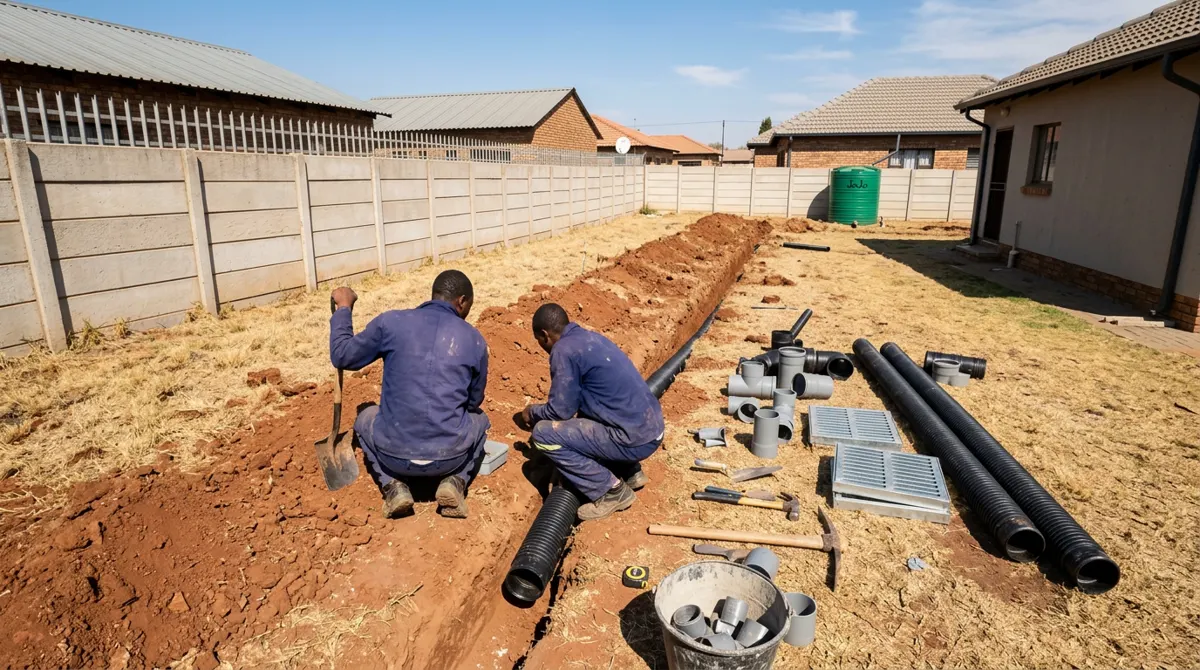
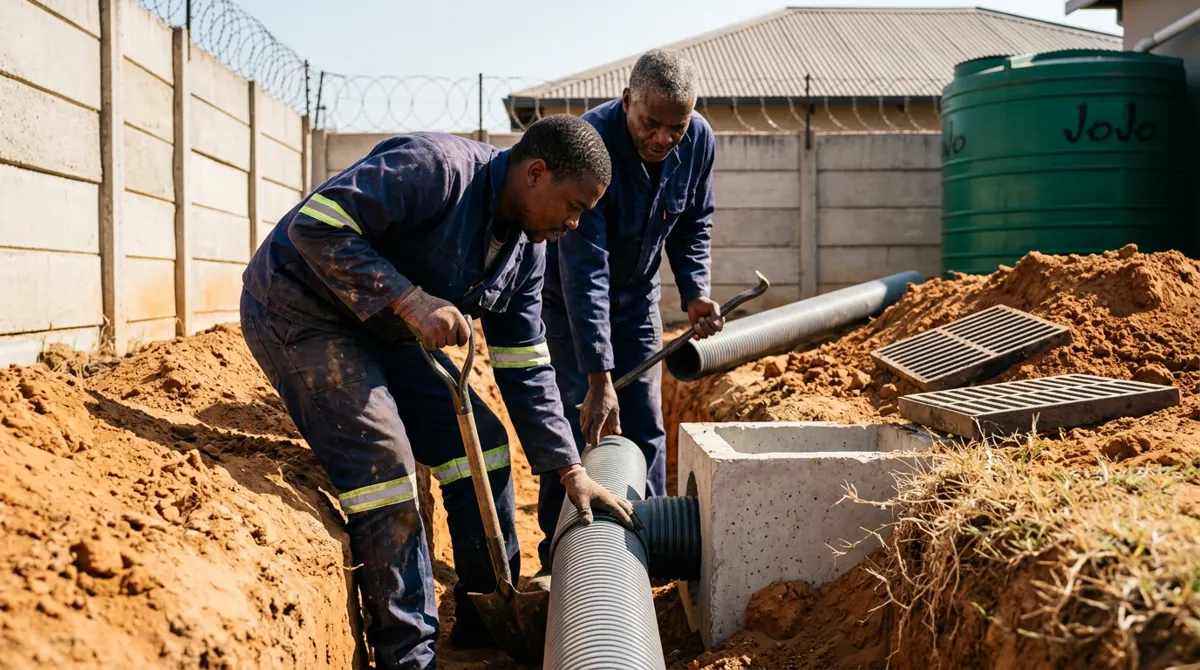
Excavate and install
Prepare trenches and bedding, then lay pipes to the planned gradient. Position collection points to receive surface runoff and provide appropriate support and protection where vehicles travel.
- 5
Inspect and test before backfilling
Check levels, joints and connections while they remain visible. Run water through the system to check flow and identify ponding or leaks; a hose test alone does not prove capacity for an intense storm.
- 6
Backfill and explain maintenance
Backfill with appropriate support and compaction, and complete the agreed reinstatement. Identify access points and explain how to clear leaves and sediment without pushing debris further into the pipes.
Common questions
Do I need a new drain or just an existing drain cleared? +
If a drain previously worked well and has recently started overflowing, a blockage or damaged section may be responsible. Persistent flooding after paving changes, or pooling where no inlet exists, may call for a new drainage layout. A site assessment helps distinguish these problems.
Can storm water go into my sewer drain? +
No. Keep storm water separate from sewage drainage. The installation needs a permitted storm water outlet or another suitable, approved arrangement; an existing sewer connection is not an alternative.
Can a new storm water system be installed without digging? +
New underground pipes generally require excavation, and channels may require paving or concrete to be opened. Fox Plumbing’s non-invasive leak detection is a separate service; it does not make new drain installation excavation-free.
Will a soakaway solve water pooling in my garden? +
Only if the ground can absorb the water and the location is suitable. Poor infiltration or an unsuitable position can leave the soakaway full and the garden still flooded. Assess soil conditions and siting before choosing this option.
How should I prepare for a drainage assessment? +
Send Fox Plumbing your Springs address, photographs of the affected area and a description of when flooding occurs. Mention recent building or paving work, any known buried services and whether water enters the building. Call 084 368 1879.