
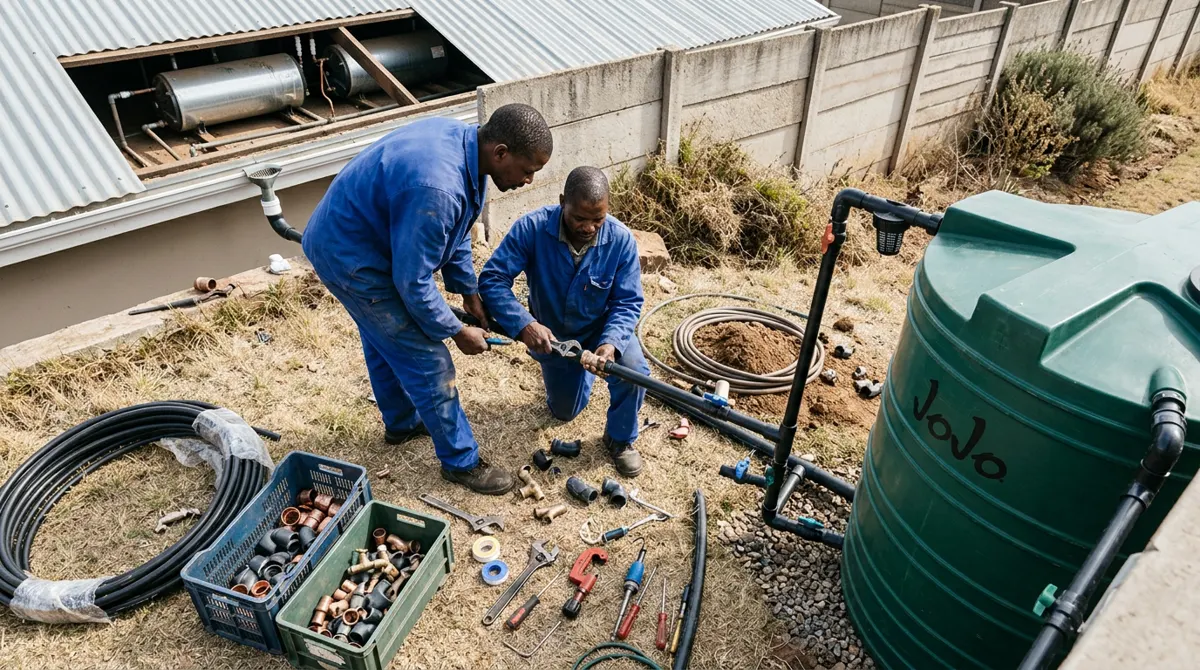
Quick answer
A rainwater harvesting system collects roof runoff, screens out debris and stores the water in a tank for suitable uses such as garden watering or toilet flushing. In Gauteng, the right setup depends on your roof area, available space and water demand, with safe separation from the municipal supply. Stored rainwater is not automatically safe to drink.
When a rainwater harvesting system makes sense
Consider harvesting rainwater if you regularly use drinking-quality municipal water for tasks that do not require it, such as watering a garden. Roof runoff currently flowing straight into stormwater drains may offer a useful supplementary supply, provided the roof material and condition are suitable for collection.
Start with a clear purpose rather than choosing a tank first. A dedicated garden supply is generally simpler than a system connected to toilets inside the building. Harvested rainwater can help during interruptions, but only while stored water remains available.
- You have recurring outdoor water demand and usable roof catchment.
- There is space for a tank on a stable, properly prepared base.
- You want a separate non-drinking water supply for selected uses.
- You can access gutters, screens and filters for regular cleaning.
What affects the cost of installation?
The scope depends on how much water you can collect, where it will be stored and how it will reach the points of use. A larger tank does not necessarily deliver better value if the connected roof area cannot fill it or your demand quickly exceeds the available rainfall.
Include maintenance and running requirements in the plan. Pumps need electricity, filters need servicing, and drinking-water treatment requires a much more rigorous approach than a basic garden system.
- Tank capacity, number of tanks and delivery access.
- Base preparation, ground conditions and tank positioning.
- Gutter repairs, downpipe alterations and pipe lengths.
- Leaf screening, first-flush diversion and treatment suited to the intended use.
- Pump pressure, flow requirements, controls and electrical work.
- Indoor pipework, municipal supply separation and compliant top-up arrangements.
- Overflow routing and access for future servicing.
Planning for Gauteng rain and dry spells
Gauteng receives most of its rain in summer, so plan for both heavy thunderstorms and extended dry winter periods. Tank overflow must have a suitable discharge route that does not undermine the base, flood the building or create problems for neighbouring properties. Storage should be sized around seasonal rainfall and actual demand, not an assumption of year-round supply.
After a dry spell, roofs can carry dust, leaves and bird droppings. Screens and a correctly sized first-flush diverter reduce what enters the tank, but they do not disinfect the water. Check your municipality’s current bylaws, restrictions and any approval requirements before installation; a rainwater tank is not a blanket exemption from water-use rules.
- Clean gutters and check the collection route before the summer rains.
- Keep tank lids secure and fit insect screens to openings without obstructing flow.
- Label non-potable outlets clearly and prevent cross-connections with drinking water.
- Allow maintenance access to the tank, pump, filters and diverter.
- Remember that a standard electric pump will not run during a power outage without a suitable backup.
Discuss your setup with Fox Plumbing
Fox Plumbing is based in Benoni and serves the East Rand and greater Gauteng. Owner Evan Pretorius is a qualified registered plumber with more than 20 years’ experience and remains on the tools. Fox Plumbing is a member of IOPSA and PIRB and issues Certificates of Compliance (COCs).
The price is agreed upfront, the call-out fee includes the first hour of work, and every job is insured. Pensioners receive a special rate. Phone 084 368 1879 to discuss your property and intended water use. Hours are Monday to Friday, 08:00–17:00, with Saturdays by appointment.
- Have photos of the roof, downpipes and proposed tank position ready.
- Explain whether you need garden water only or connections to selected indoor fixtures.
- Ask which compliance requirements and certification apply to the proposed work.
How we do the job
- 1
Assess the catchment and demand
Inspect the roof material, condition, gutters and downpipes. Identify the intended uses and estimate how collection potential compares with demand through wet and dry seasons.
- 2
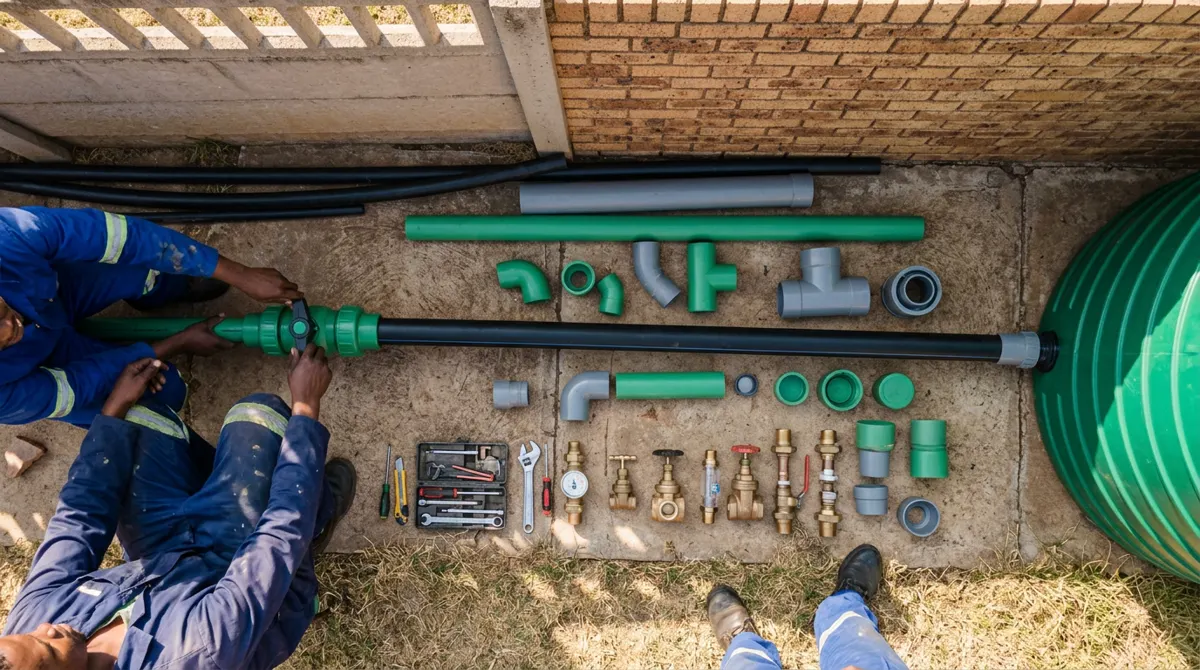
Plan storage and safe pipe routes
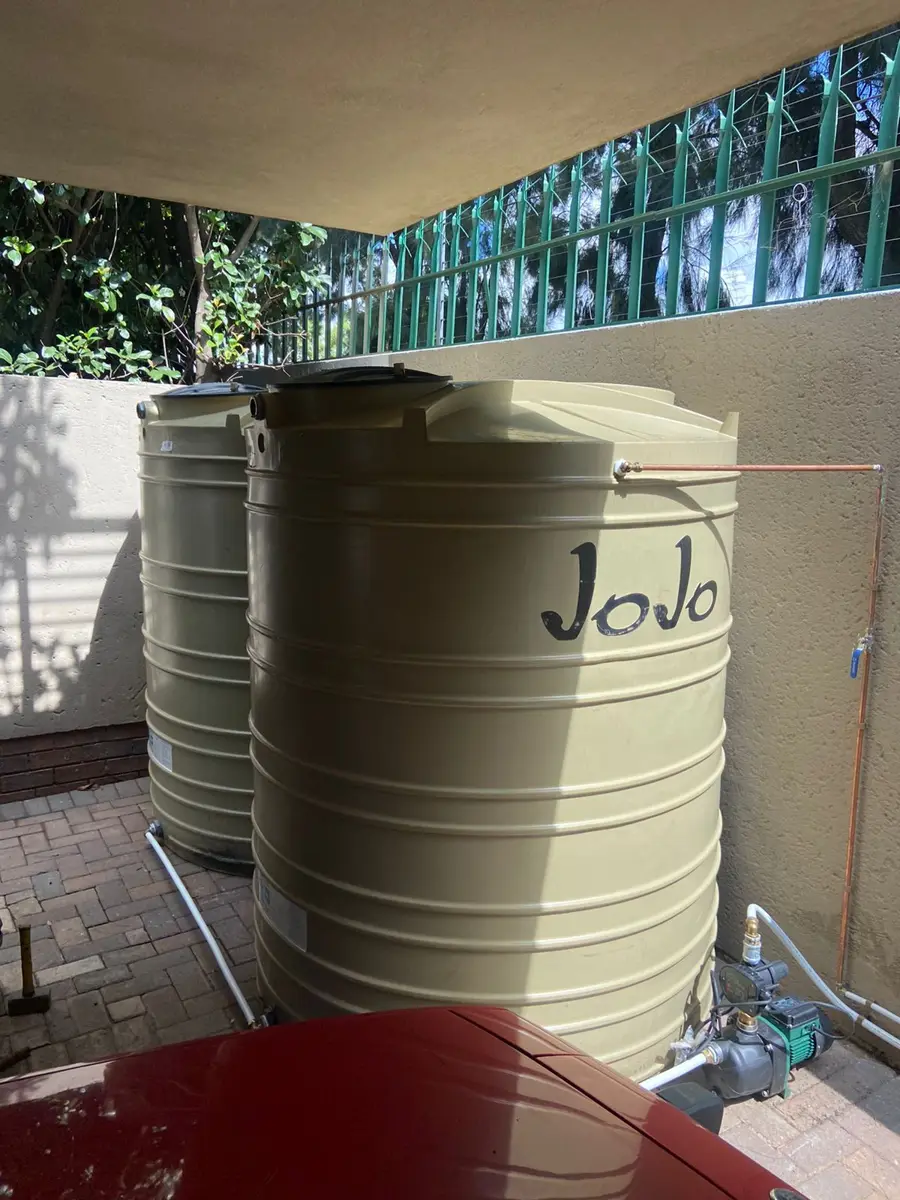
Choose a tank position with service access and a base that meets the tank manufacturer’s requirements. Plan the inlet, overflow and supply routes, including safe separation from municipal drinking water.
- 3
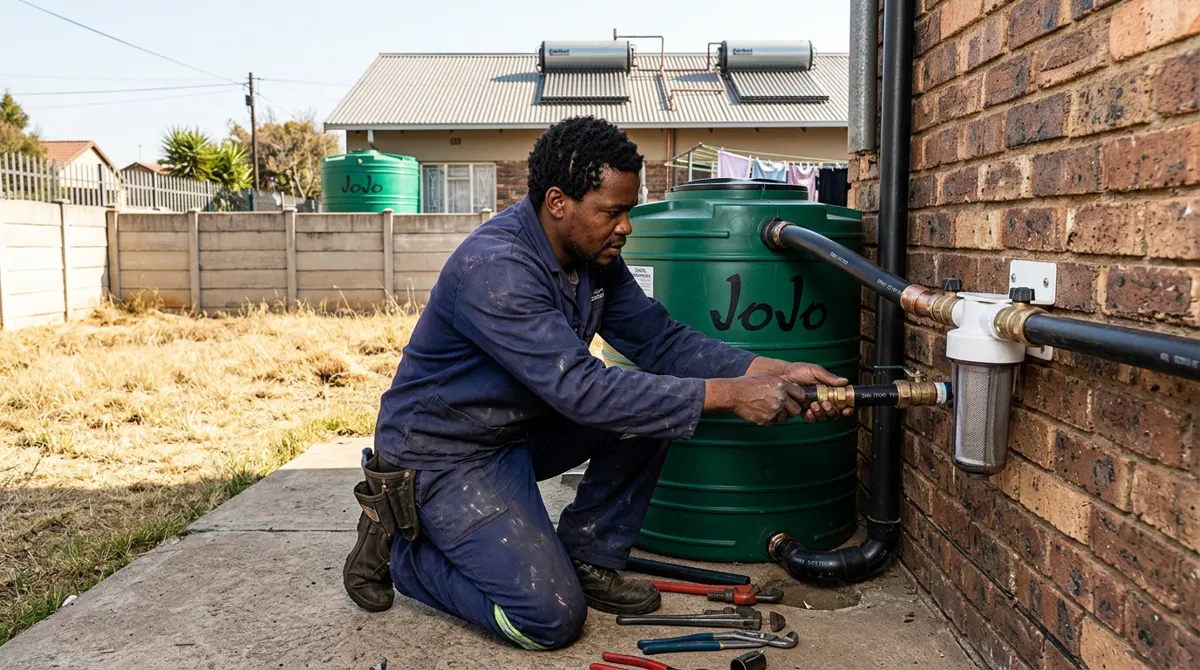
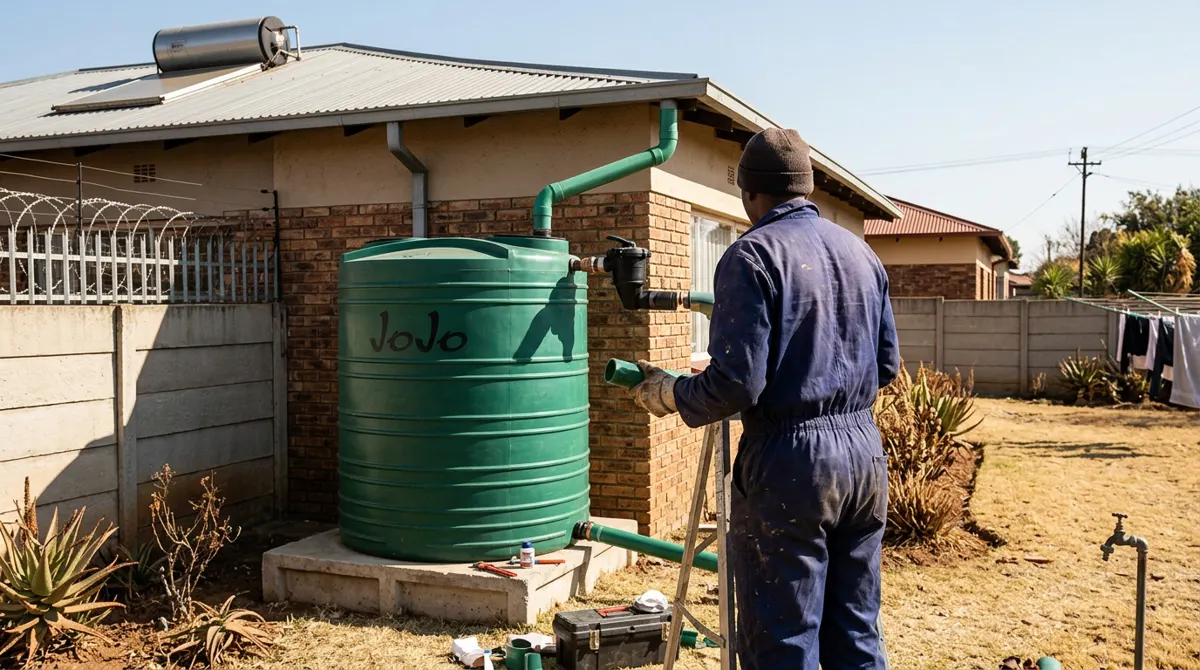
Install the collection components
Prepare the base, position the tank and connect the selected downpipes. Fit debris screens, first-flush diversion, secured covers and screened openings, with an appropriate overflow discharge.
- 4
Connect distribution and controls
Install a pump where gravity cannot provide sufficient pressure, along with suitable controls and dry-run protection. Add filtration or treatment appropriate to the use, and arrange any required electrical work through a qualified electrician.
- 5
Test and explain maintenance
Check for leaks, confirm pump operation and test the inlet and overflow routes. Verify supply separation, label non-potable outlets and explain cleaning, servicing and any applicable certification.
Common questions
Can I drink water straight from a rainwater tank? +
No. Roof runoff can contain microorganisms and other contaminants even when it looks clear. Drinking use needs an appropriately designed treatment system, water-quality testing and ongoing maintenance. A leaf screen or first-flush diverter alone does not make the water potable.
What size rainwater tank do I need? +
Tank size depends on connected roof area, seasonal rainfall, intended demand and available space. Compare likely collection with how quickly you will use the water. A large tank cannot compensate for insufficient rainfall or a small catchment.
Can the tank supply my toilets and have municipal top-up? +
This can be designed, but it requires dedicated non-potable pipework and protection against contamination of the municipal supply. Any top-up arrangement must meet local requirements, typically using an appropriate air gap or other approved protection. Do not join the two supplies with a simple valve connection.
How often does the system need attention? +
Inspect gutters, screens and the first-flush diverter before the rainy season and after storms that bring down debris. Follow manufacturer guidance for filters, pumps and treatment equipment. Check the tank periodically for sediment, damaged screens, leaks and unusual smells.