
Quick answer
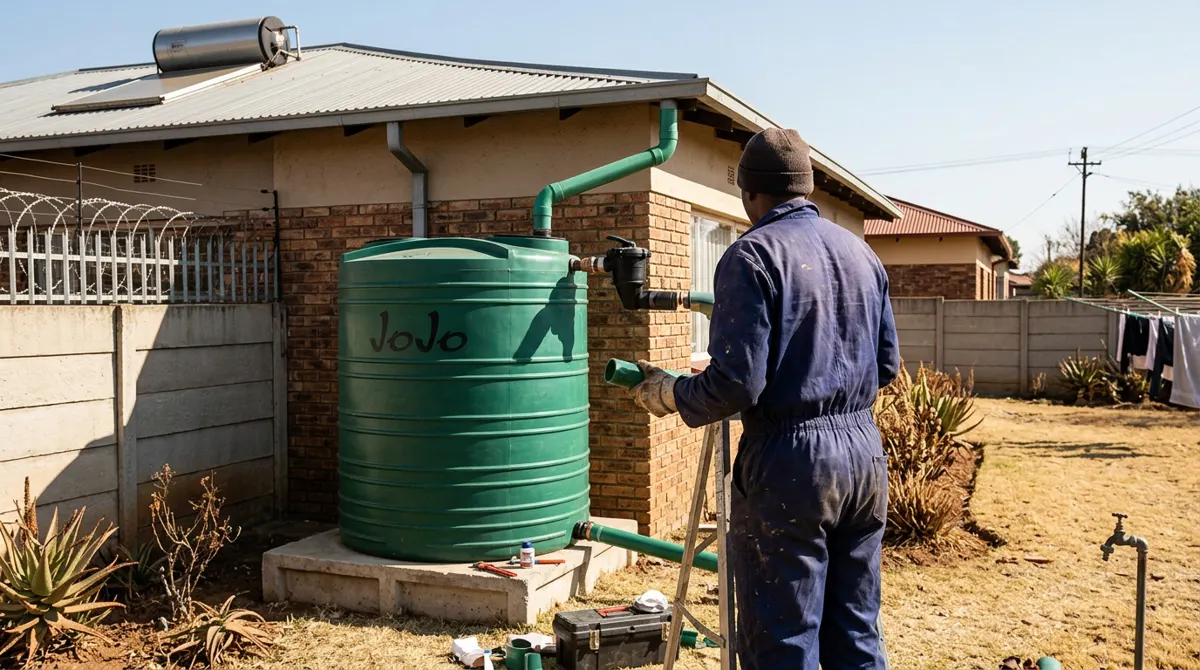
A rain water harvesting system in Brakpan collects roof runoff, screens out debris and stores the water for uses such as garden watering or toilet flushing. A useful setup needs more than a tank: storage capacity, a stable base, overflow drainage and safe separation from drinking-water plumbing all matter. Size it around your roof catchment and intended use, remembering that stored rainwater can run out during Gauteng’s dry winter months.
When rain water harvesting makes sense
If your gutters discharge usable roof runoff straight into the stormwater system while you use municipal water on the garden, harvesting is worth considering. Start with a clear purpose: supplying a garden tap is generally simpler than supplying toilets inside the house.
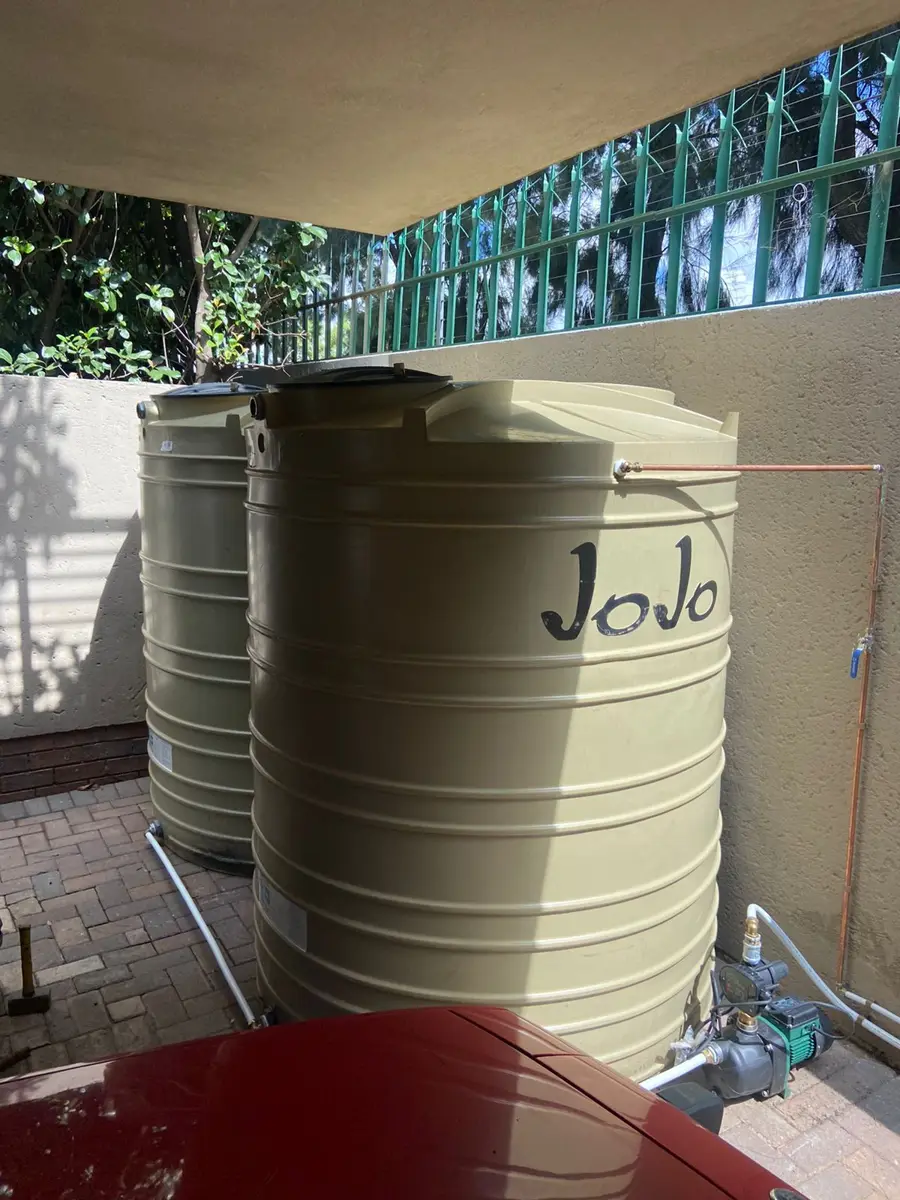
An existing tank that fills slowly, overflows beside a wall or delivers poor pressure may need a layout correction rather than replacement. Check the collection route and water demand before deciding that a bigger tank is the answer.
- You regularly need water for garden irrigation or outdoor cleaning.
- Your roof has accessible gutters and downpipes that can feed a tank.
- You have space for a suitable base, maintenance access and a safe overflow route.
- Your current tank has blocked inlets, leaking connections or unreliable delivery.
What affects the cost of a system?
The main cost drivers are how much water you want to store and how far it must travel. A tank supplying a nearby garden tap needs a different arrangement from a pumped system feeding several fixtures indoors.
Allow for the supporting work as well as the tank. Difficult access, gutter repairs, base preparation and overflow drainage can all change the scope. Agree on the intended water uses before choosing a pump or treatment equipment.
- Tank capacity, shape and access for delivery.
- Ground preparation and a level base built to the tank manufacturer’s requirements.
- Gutter condition, collection pipework, leaf screens and first-flush diversion.
- Pump flow, pressure, controls, dry-run protection and any electrical work.
- Filtration or treatment matched to the intended use.
- Pipe routes, backflow protection, commissioning and applicable compliance requirements.
Planning for Brakpan’s summer rain and dry winters
Brakpan’s summer rainfall can arrive in heavy bursts. Inlets and overflow pipes need to handle incoming water without backing up the gutters or sending water towards foundations. Overflow should discharge to an appropriate drainage point, not onto a neighbour’s property.
Winter storage needs realistic expectations. A larger tank cannot collect water that does not fall, and roof area limits how much you can capture. After a dry spell, roof dust and bird droppings also make screening, first-flush diversion and maintenance important. These measures reduce contamination; they do not make the water safe to drink.
- Assess roof materials and condition before collecting water for reuse.
- Keep tank lids secure and screen openings against insects.
- Leave room to clean filters, service the pump and inspect connections.
- Keep harvested-water pipes separate from drinking-water pipes and label outlets.
- Confirm current City of Ekurhuleni requirements before connecting to building plumbing.
Speak to Fox Plumbing about your Brakpan property
Fox Plumbing is based in Benoni and serves the East Rand and greater Gauteng. Owner Evan Pretorius is a qualified registered plumber with more than 20 years’ experience and remains on the tools. Fox Plumbing is a member of IOPSA and PIRB and issues Certificates of Compliance (COCs); discuss the applicable compliance requirements for your proposed work.
The price is agreed upfront, the call-out fee includes the first hour of work, pensioners receive a special rate and every job is insured. Phone 084 368 1879 to discuss your roof layout, available tank space and intended water use. Hours are Monday to Friday, 08:00–17:00, with Saturdays by appointment.
- Have photographs of the gutters, downpipes and proposed tank position ready.
- Explain whether you want garden water only or connections to indoor fixtures.
- Ask what is included in the proposed scope, including drainage and maintenance access.
How we do the job
- 1
Assess the catchment and water demand
Inspect the roof, gutters and downpipes, identify suitable collection areas and establish what the stored water will supply. Check space, access and local requirements before settling on a layout.
- 2
Choose storage and delivery equipment
Match tank capacity to the available catchment, intended use and space. Decide whether gravity delivery is adequate or whether a pump is needed, then specify screening and treatment for the intended use.
- 3
Prepare the base and overflow route
Provide a level, load-bearing base that meets the tank manufacturer’s requirements. Plan overflow drainage away from buildings and neighbouring properties before positioning the tank.
- 4
Fit collection and supply pipework
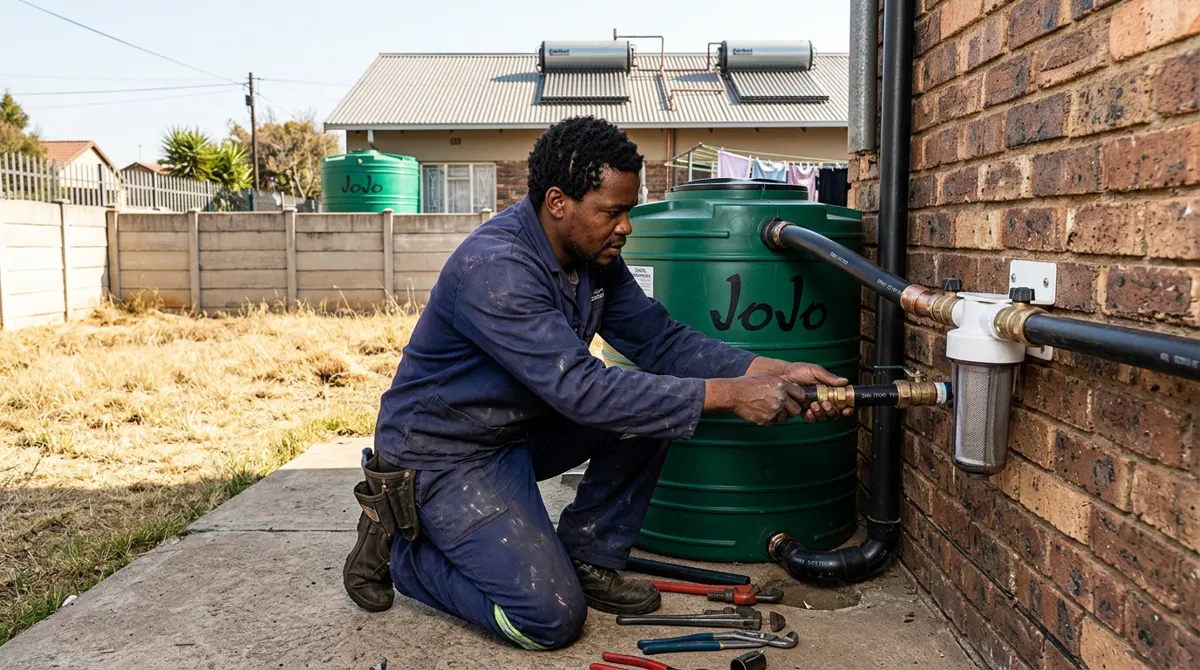
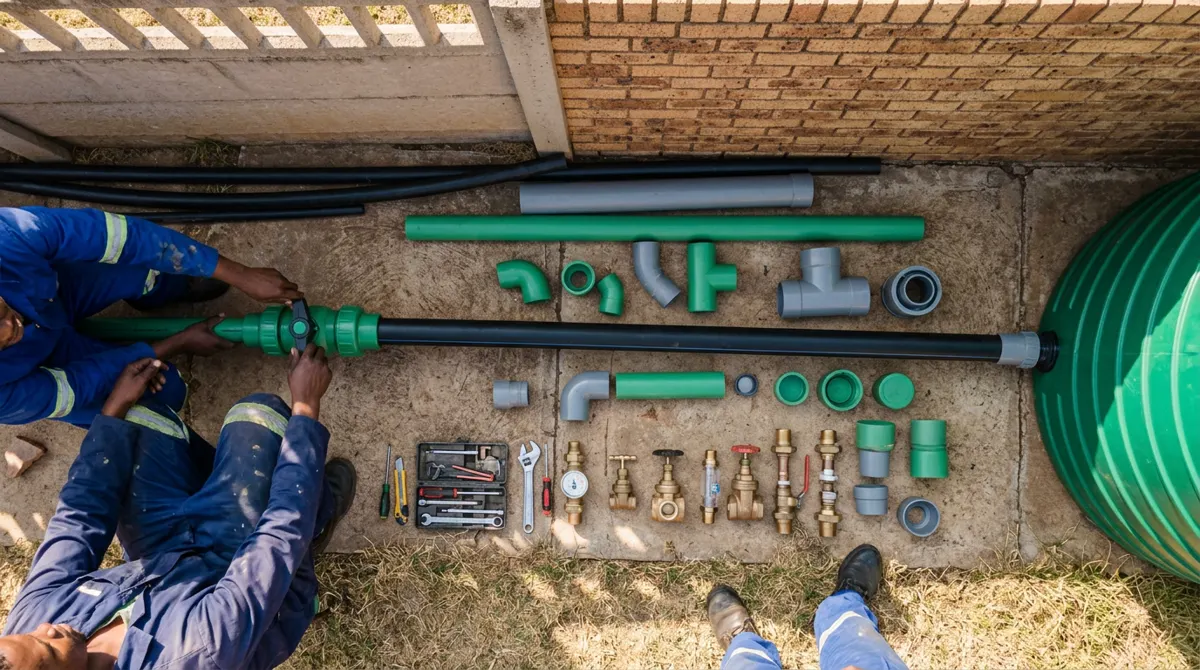
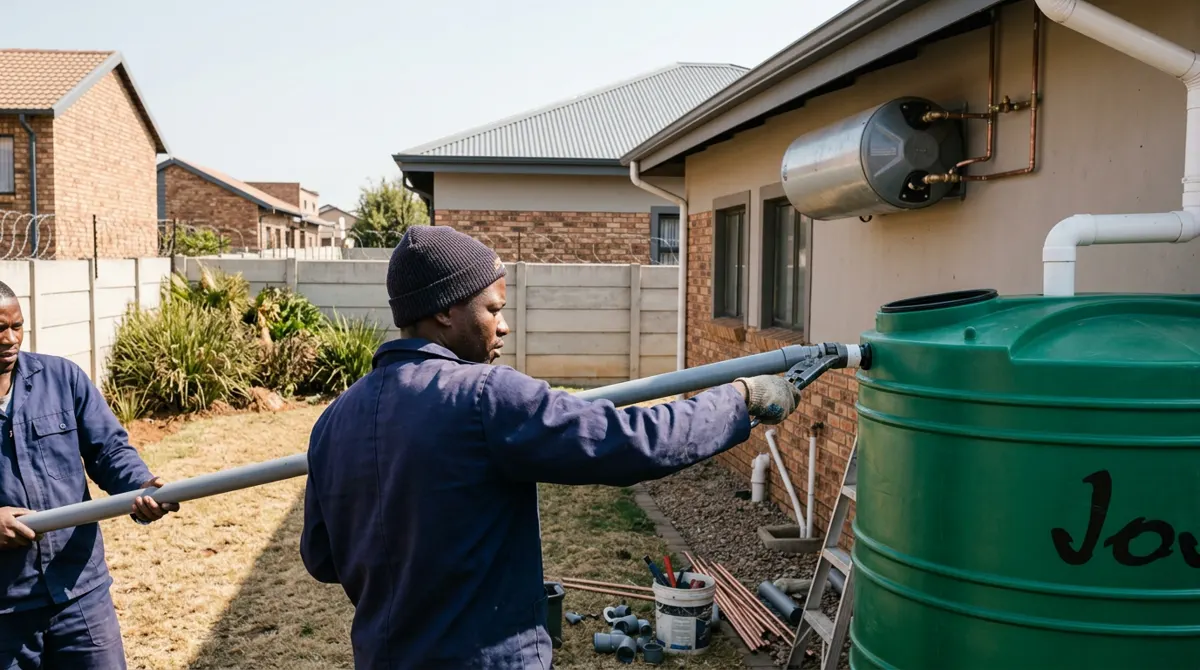
Install the tank connections, debris screening, first-flush arrangement and delivery pipework. Where building plumbing is involved, provide appropriate separation and backflow protection; arrange any electrical work through a suitably qualified person.
- 5
Test and hand over
Check for leaks, confirm delivery pressure where applicable and test pump controls and overflow flow paths. Explain cleaning and servicing tasks, label non-potable outlets and address any applicable certification.
Common questions
Can I drink water collected from my roof? +
Do not assume roof water is drinkable, even if it looks clear. Drinking-water use requires a treatment system suited to the contaminants present, appropriate water-quality testing and ongoing maintenance. A leaf screen, first-flush diverter or basic filter alone is not enough.
Can harvested rainwater supply toilets or a washing machine? +
It can be considered for these uses, but water quality, appliance requirements and plumbing safeguards must be assessed. Keep the supply separate from drinking-water plumbing, with appropriate backflow protection and clear identification. Any municipal top-up arrangement also needs a compliant design.
Will a rainwater tank keep supplying water during an outage? +
Only while it contains usable water. A pumped system also needs electricity unless an alternative power arrangement is provided. Rainwater storage is not the same as a municipal-water backup tank, and neither guarantees an unlimited supply.
How much maintenance does the system need? +
Inspect gutters, screens and first-flush devices regularly, particularly after storms and long dry spells. Check lids, insect screens, overflow outlets and visible connections, and service filters and pumps according to their manufacturers’ instructions. Arrange safe cleaning if sediment builds up; do not climb into a tank.