
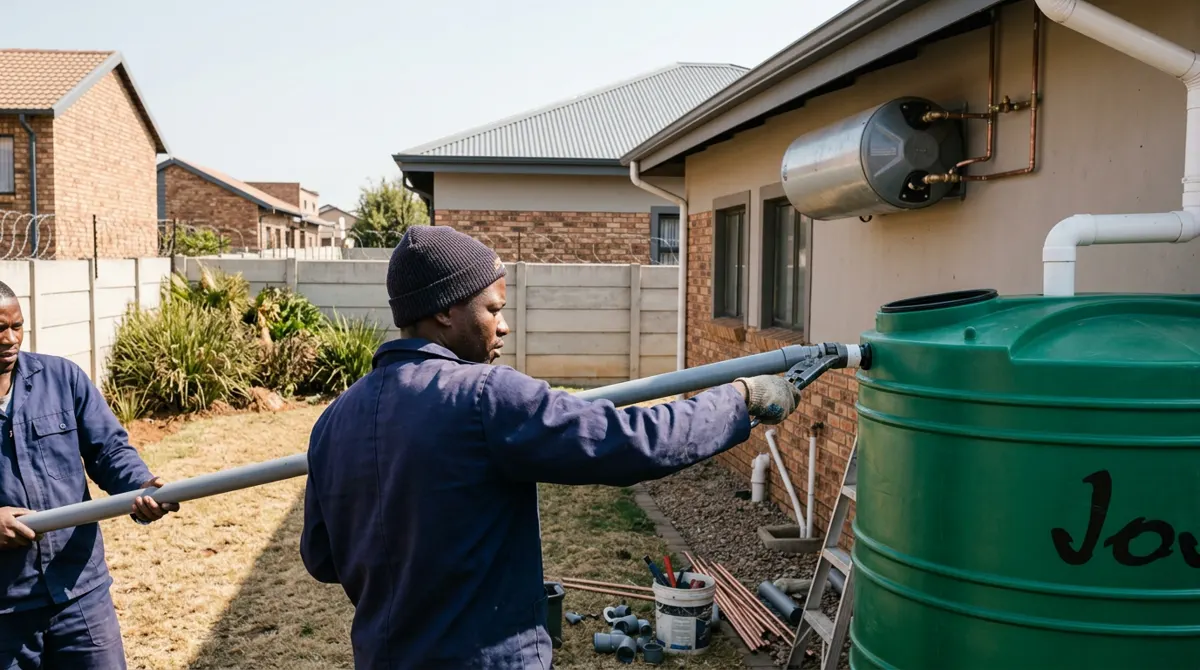
Quick answer
Rainwater harvesting systems collect rain from a roof, carry it through gutters and filters, and store it in a tank for later use. A basic system supplies a garden tap; a more involved installation can supply toilets or other suitable household uses through separate plumbing and a pump. Collected rainwater is not automatically safe to drink, and it must not be allowed to contaminate the municipal supply.
When is rainwater harvesting worth considering?
A system is worth considering when you have useful roof space and a regular demand for water that does not need to be drinking quality. Garden irrigation and toilet flushing are practical starting points. Laundry use needs closer attention to water quality, filtration and appliance requirements.
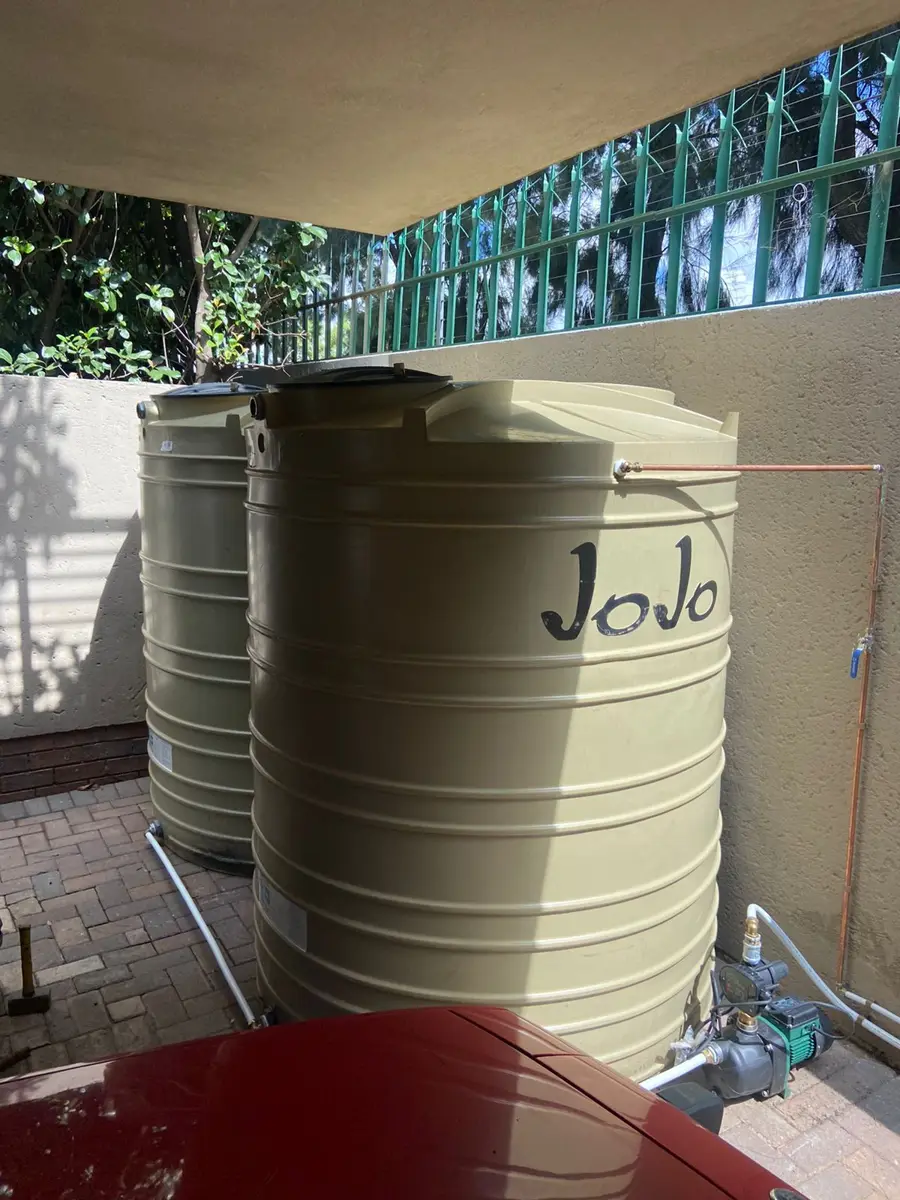
Start with the intended use rather than the biggest tank that will fit. A garden tank may work with gravity if its height provides enough pressure, but sprinklers and household fixtures usually need a properly selected pump. Rainwater harvesting collects rainfall; a municipal backup tank stores mains water. One does not automatically do the job of the other.
- You regularly use treated municipal water for watering or flushing.
- Roof runoff currently goes to waste, and suitable downpipes are accessible.
- You have space for a supported tank, safe overflow drainage and maintenance access.
- You want an additional water source while accepting that its availability depends on rainfall and stored volume.
What affects the cost of a harvesting system?
Cost depends on the complete installation, not just the tank. A simple outdoor supply needs less equipment and pipework than a system feeding selected fixtures inside a house. Drinking-water use adds treatment, testing and ongoing maintenance requirements.
Ask for a scope that identifies the tank, base, filters, pump, electrical work, pipe routes and overflow arrangements. Check whether the quotation includes commissioning and any necessary compliance documentation. Running costs include pump electricity, filter replacements, cleaning and servicing.
- Storage capacity, tank material and above-ground or underground placement.
- Ground preparation, structural support and delivery access.
- Gutter repairs, roof suitability and the distance between collection points and storage.
- Pump pressure and flow requirements, controls and electrical installation.
- Filtration, treatment, separate household pipework and municipal-supply protection.
- Excavation, reinstatement and site-specific approval requirements.
Planning for Gauteng rain, dry winters and water safety
Gauteng generally receives summer rainfall, with drier winters. Size storage against both expected collection and daily use: a larger tank cannot compensate for too little roof catchment or an extended rainless period. As a calculation guide, each millimetre of rain falling on a square metre of roof represents one litre before losses from diversion, splashing, leaks and overflow. Heavy storms also make adequately sized gutters and a safe overflow route important.
Roof dirt, bird droppings and unsuitable roofing materials can affect stored water. Leaf screens and a first-flush diverter reduce contamination, but they do not make water potable. Drinking-water use requires assessment, appropriate treatment and testing against applicable drinking-water standards. Confirm your municipality’s current requirements before connecting a system to household plumbing; a simple non-return valve should not be assumed to provide sufficient protection.
- Keep tanks closed and screen vents and overflows to limit insects and debris.
- Provide a level base designed for the full tank load; do not assume a deck or balcony is suitable.
- Direct overflow away from foundations without creating erosion or flooding neighbouring properties.
- Keep non-potable pipework clearly identified and safely separated from drinking-water supplies.
- Plan for power interruptions if the system depends on a pump.
- Rainwater is not greywater: used bath, shower and laundry water needs a different collection and treatment approach.
Discuss your plumbing requirements with Fox Plumbing
Fox Plumbing is based in Benoni and serves the East Rand and greater Gauteng. Owner Evan Pretorius is a qualified registered plumber with more than 20 years’ experience, is a member of IOPSA and PIRB, and issues Certificates of Compliance (COCs). He remains on the tools, giving you direct access to the person doing the work.
The price is agreed upfront, the call-out fee includes the first hour of work, pensioners receive a special rate, and every job is insured. Phone 084 368 1879 to discuss your property, intended water use and plumbing requirements. Hours are Monday to Friday, 08:00–17:00, with Saturdays by appointment.
- Have photos of the roof, gutters, downpipes and proposed tank position ready.
- Explain whether you want garden water, toilet flushing or a wider household supply.
- Ask which compliance requirements and COCs apply to the proposed work.
How we do the job
- 1
1. Assess the roof and water demand
Check roof materials, condition, catchment area and gutter layout. Identify the outlets the system will supply and estimate their demand before choosing storage capacity.
- 2
2. Plan the tank position and support
Choose a location with suitable support, delivery access and room to clean filters and service equipment. Plan pipe routes and an overflow discharge point that will not damage the property.
- 3
3. Prepare collection and pre-filtration
Repair or clean gutters as needed, then route suitable downpipes through leaf screening and an appropriately sized first-flush diverter. Provide access to empty and clean these components.
- 4
4. Install secure storage
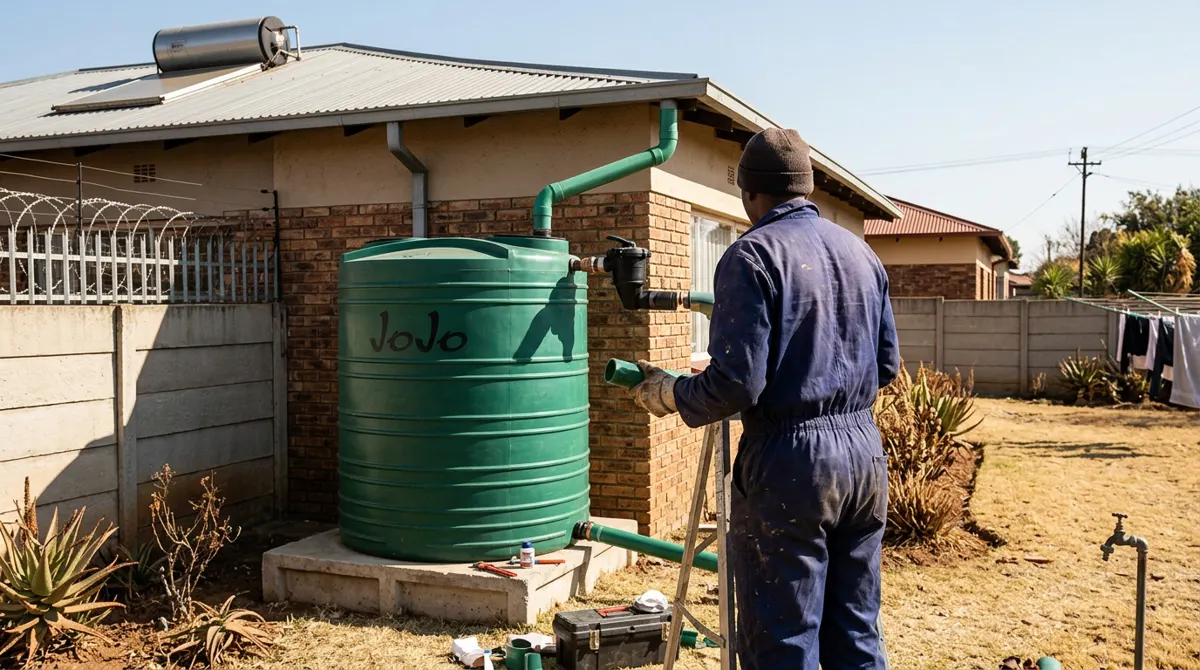
Install the tank on its specified base with a secure lid, screened openings, outlet and overflow. Follow the tank manufacturer’s installation requirements, including any anchoring provisions.
- 5
5. Fit distribution and supply protection
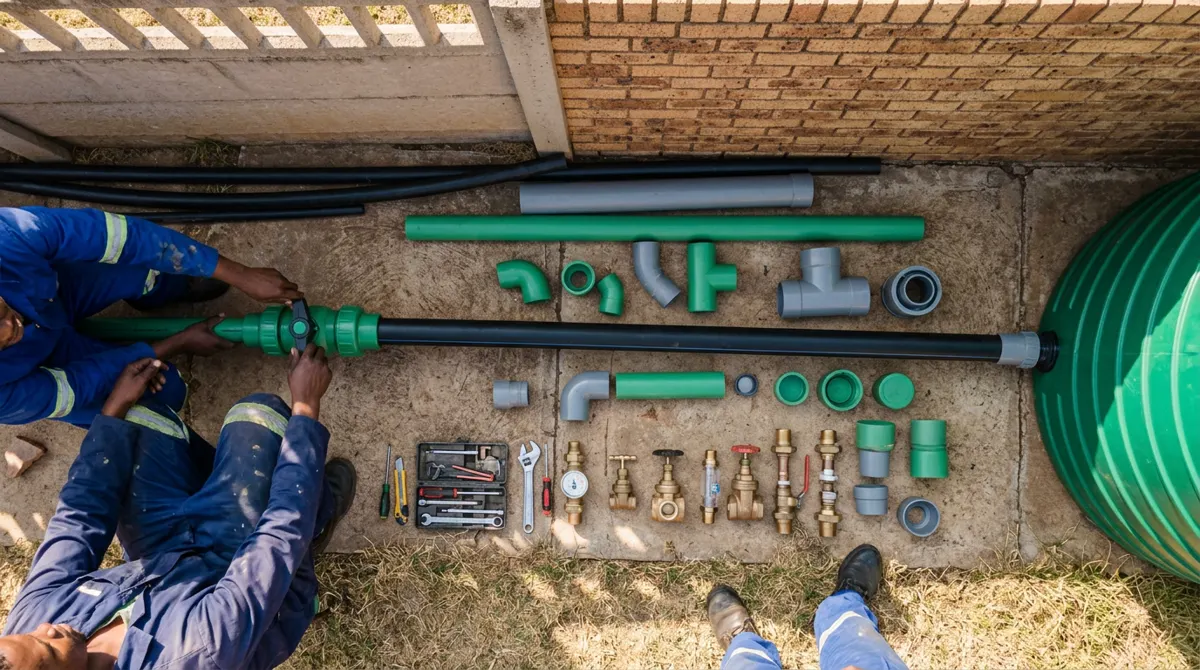
Where needed, fit a pump matched to the required flow and pressure, with suitable controls and dry-run protection. Install filtration appropriate to the intended use, separate non-potable plumbing, and compliant protection wherever municipal top-up or supply arrangements are involved. Have electrical work completed by an appropriately qualified person.
- 6
6. Test and explain maintenance
Check for leaks, verify pump operation and confirm overflow and supply-protection arrangements. Label non-potable outlets and provide a maintenance schedule covering gutters, screens, the diverter, tank sediment, filters and any treatment equipment.
Common questions
Can I drink rainwater straight from the tank? +
No. Clear water can still contain harmful microorganisms or dissolved contaminants. Drinking-water use requires treatment selected for the actual water quality, ongoing maintenance and appropriate testing. A basic sediment filter or a UV unit alone does not address every possible contaminant.
Will a rainwater tank keep my house supplied during an outage? +
Only if it contains enough usable water and is designed to supply the relevant fixtures safely. A garden-only tank will not supply household taps automatically, and an electrically powered pump may stop during a power interruption. Do not assume a rainwater system provides drinking water.
How do I choose the right tank size? +
Balance roof catchment, local rainfall patterns, intended demand and available space. Estimate collection from roof area and rainfall, then allow for losses. Consider how quickly you will empty the tank between storms rather than choosing capacity on space alone.
Can the municipality’s water supply top up my rainwater tank? +
A top-up arrangement may be possible, subject to local requirements and a correctly designed separation method, such as an appropriate air gap. Never join the supplies with an improvised pipe connection. A qualified plumber should assess the arrangement and applicable municipal rules.
How often does the system need cleaning? +
Inspect gutters, screens and the first-flush diverter before the rainy season and after storms that deposit debris. Follow manufacturer instructions for filters, pumps and treatment equipment, and inspect for sediment, insects, odours and leaks. Arrange safe tank cleaning when needed; do not climb inside a tank.