
Quick answer
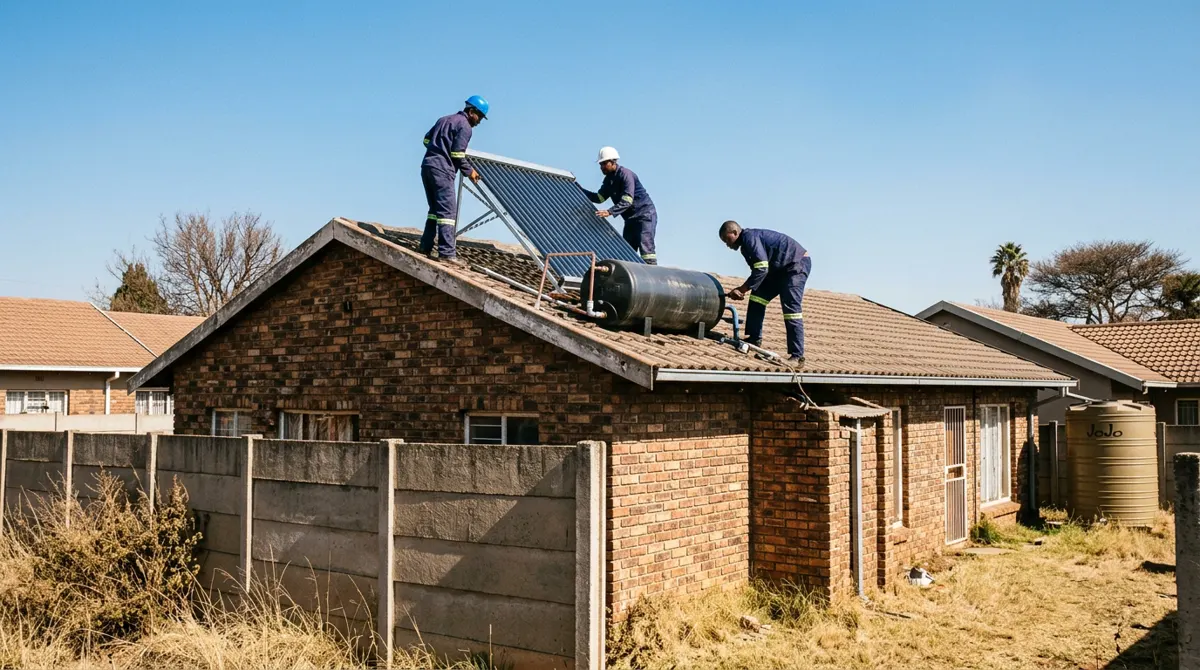
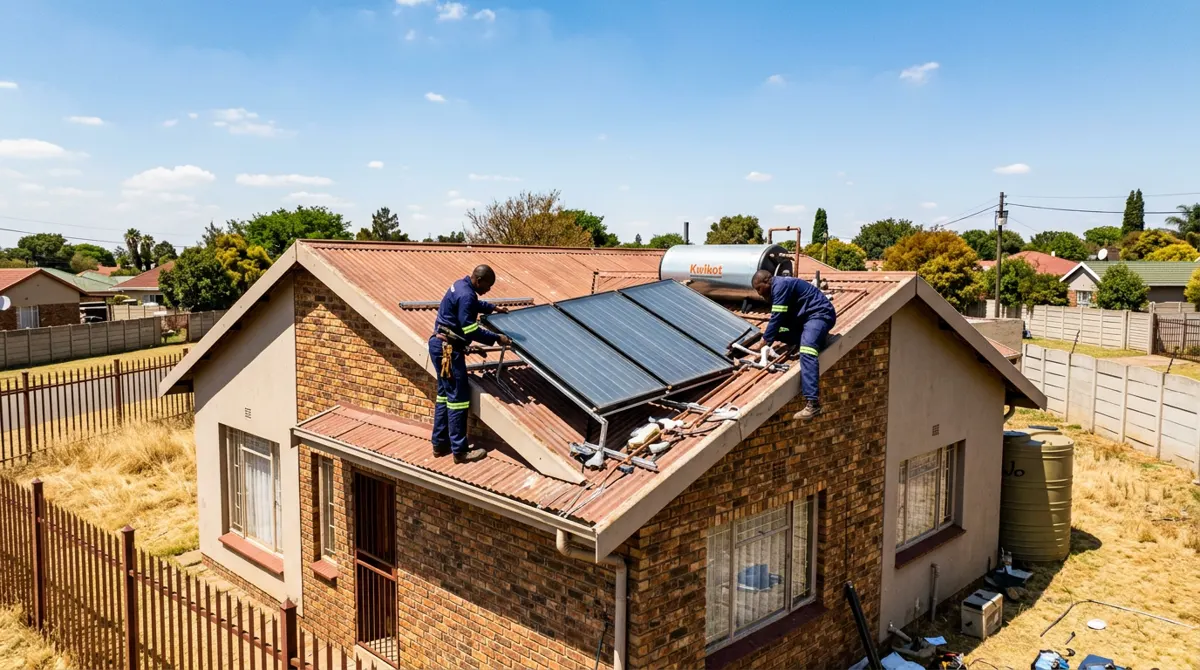
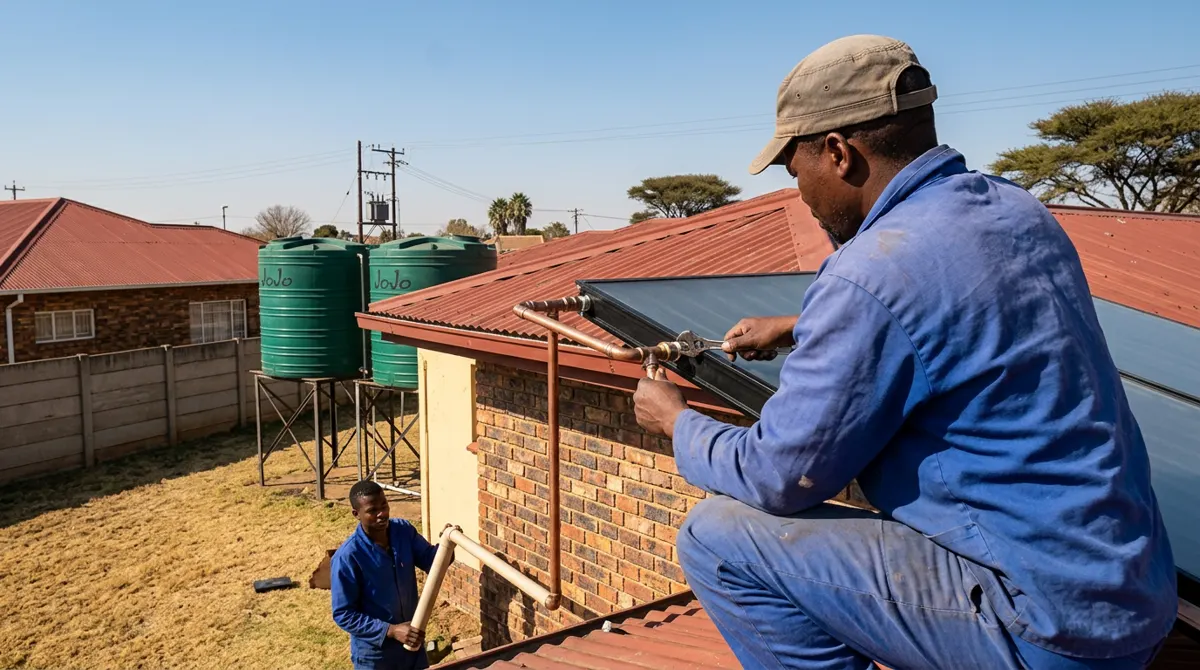
A solar geyser installation in Brakpan needs to match your hot-water demand, roof conditions and winter frost risk. It can reduce electricity used for water heating, but savings and backup requirements depend on the system and how you use it. Fox Plumbing serves Brakpan from Benoni, with owner Evan Pretorius on the tools and the price agreed upfront.
When it makes sense to consider a solar geyser
A failing electric geyser, a renovation or a change in household size is a useful time to assess solar water heating. Compare the complete installation with a conventional replacement rather than choosing a tank on capacity alone.
If your current geyser produces too little hot water, first establish why. A faulty thermostat, a leak or unsuitable settings may need a repair rather than a new system. Solar heating will not fix an unresolved plumbing fault.
- Your existing geyser is nearing replacement and you want to reduce reliance on electrical water heating.
- Your household regularly runs short of hot water and needs a fresh demand assessment.
- You have usable, relatively unshaded roof space and want to check its suitability.
- You are renovating and can plan pipe routes and equipment positions before finishes are completed.
What affects the installation cost?
The total depends on more than the collector and tank. Roof access, mounting requirements, pipework and the condition of the existing plumbing all affect the scope. Retrofitting solar equipment to an existing geyser is only an option if that geyser and the proposed system are compatible.
Ask for a clearly defined scope covering installation, safety components, backup arrangements and compliance documentation. Fox Plumbing agrees the price upfront; its call-out fee includes the first hour of work, and pensioners get a special rate.
- Hot-water demand, storage capacity and collector size.
- System design, including frost protection and whether circulation needs a pump.
- Roof condition, safe access and any necessary structural assessment or reinforcement.
- Pipe length, insulation, mounting hardware and weatherproofing.
- Replacement of unsuitable valves or existing plumbing components.
- Electrical backup work and the documentation required for the agreed installation.
Brakpan conditions: frost, roof space and backup
Brakpan's cold winter nights make frost protection a design requirement, not an afterthought. Check the chosen system's stated freeze protection and maintenance requirements. An indirect system can separate the collector circuit from household water, but its protection still depends on correct installation and the specified heat-transfer fluid.
A north-facing collector position is generally favourable, but shade, roof angle and available space also matter. Check the roof's ability to carry the proposed equipment, including a full tank where roof-mounted storage is planned. Long hot-water pipe runs can increase heat loss and the wait at the tap.
- Assess shading from trees, neighbouring buildings and roof features, including in winter.
- Use pipework and insulation suitable for solar temperatures and outdoor exposure.
- Choose backup arrangements for cloudy weather and periods of high demand.
- Do not assume power-cut operation: electrical backup needs power, and some solar systems also need powered circulation.
- Check the manufacturer's hail-related specifications and your insurer's cover rather than assuming all systems have equal protection.
Discuss your Brakpan installation with Fox Plumbing
Fox Plumbing is based in Benoni and serves the East Rand and greater Gauteng. Owner Evan Pretorius is a qualified registered plumber with more than 20 years of experience. He remains on the tools; Fox Plumbing is a member of IOPSA and PIRB, issues Certificates of Compliance (COCs), and every job is insured.
Phone or call 084 368 1879 to discuss your installation. Have your existing geyser details, household hot-water needs and photographs of the roof and geyser position ready if possible. Hours are Monday to Friday, 08:00–17:00, with Saturdays by appointment.
- Owner on the tools.
- Price agreed upfront.
- Call-out fee includes the first hour of work.
- Special rate for pensioners.
How we do the job
- 1
Assess hot-water use and the existing plumbing
Establish how many people use hot water, when demand is highest and whether the existing geyser can be retained. Inspect the supply, pressure arrangements and current installation.
- 2
Check the roof and choose a suitable system
Review collector orientation, shading, access, pipe routes and frost protection. Establish whether structural input is needed before adding roof-mounted equipment.
- 3
Agree the scope and price
Confirm the proposed equipment, mounting position, plumbing changes, backup requirements and compliance documentation. Identify any electrical work that needs an appropriately qualified electrical contractor.
- 4
Mount equipment and connect the plumbing
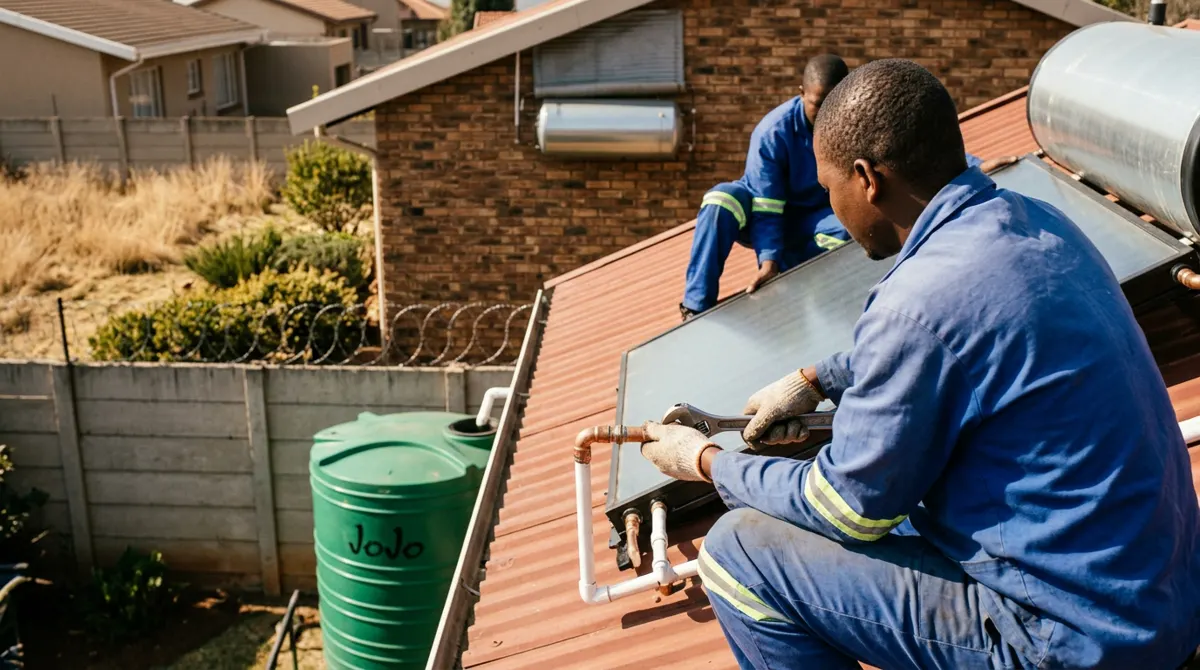
Secure the equipment using suitable mounting methods and weatherproof roof penetrations. Install temperature-rated pipework, insulation and the required pressure, temperature and other safety components to applicable standards and manufacturer instructions.
- 5
Commission and test
Fill and purge the relevant circuits, check for leaks and verify circulation and controls where fitted. Check safe hot-water delivery and backup operation where included.
- 6
Hand over operating guidance and documentation
Explain controls, backup settings, routine checks and the manufacturer's servicing requirements. Provide the applicable plumbing COC and clarify any separate electrical certification.
Common questions
Can I convert my existing electric geyser to solar? +
Possibly, but not every geyser is suitable. Its condition, compatibility with the proposed solar equipment and the existing plumbing must be assessed. Compare a compatible retrofit with a complete replacement before deciding.
Will a solar geyser provide hot water at night? +
An insulated tank stores water heated during the day for later use. Whether it lasts through the night depends on storage capacity, temperature, heat loss and consumption. Backup may be needed after heavy use or limited sunshine.
Will it work during a power cut? +
That depends on the design. A thermosiphon system circulates water without an electric pump, while a pumped system needs power for circulation unless a suitable alternative supply is provided. Normal electrical backup heating will not operate without power.
How much electricity will I save? +
There is no reliable fixed saving for every home. Solar exposure, system sizing, hot-water use, weather and backup settings all affect electricity consumption. Compare electricity use over time while allowing for seasonal and household changes.
Does a plumbing COC cover electrical changes too? +
No. Plumbing and electrical compliance are separate. Fox Plumbing issues plumbing COCs; electrical alterations need an appropriately qualified electrical contractor and the applicable electrical certification. Confirm the documentation included in your installation scope.