
Quick answer
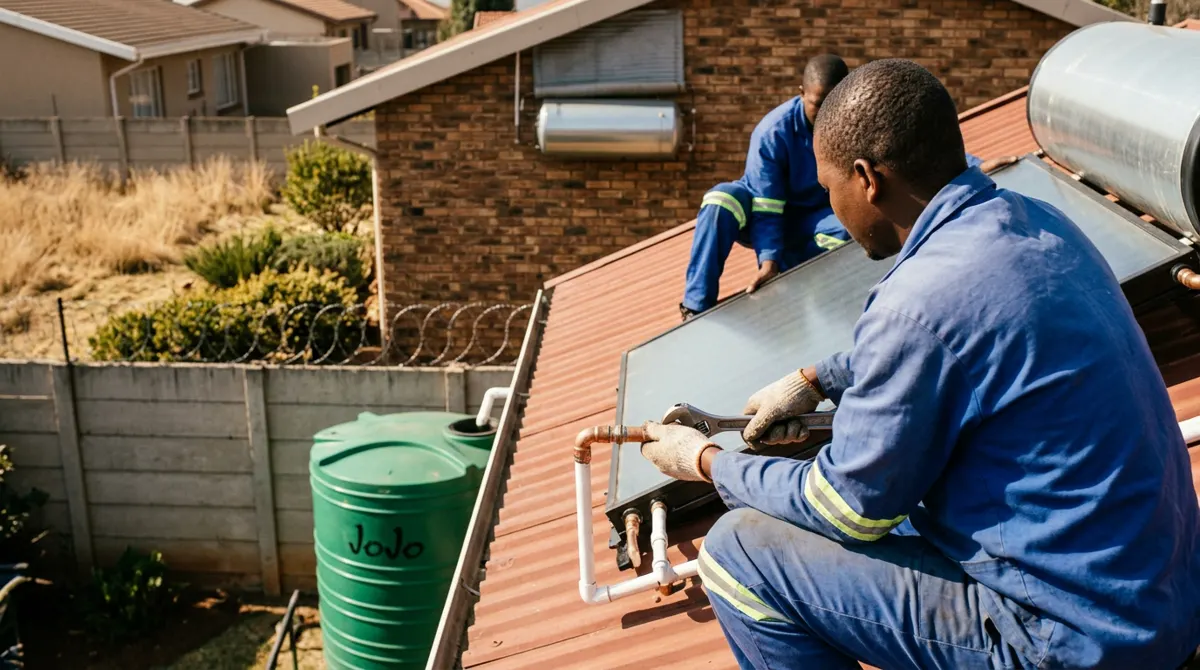
Solar geyser installations combine solar collectors, an insulated hot-water cylinder and plumbing controls to heat and store water using sunlight. Installation involves assessing the property, fitting compatible equipment, connecting safety devices and testing the system, with backup heating available when solar heat is insufficient. In Gauteng, roof suitability, winter frost and household hot-water demand are important design considerations.
When should you consider a solar geyser?
A solar geyser is worth assessing when your electric geyser needs replacement, you are planning a renovation, or you want to reduce the electricity used for water heating. It is not automatically the right choice for every property: a heavily shaded roof or limited installation space can make another option more practical.
Solar thermal collectors heat water rather than generate electricity. They differ from solar PV panels, which produce electricity, and heat pumps, which use electricity to transfer heat from the surrounding air into water. Compare these options against your usage, available space and existing equipment rather than assuming one always costs less.
- Your existing geyser is ageing or needs replacement: assess solar compatibility before buying another cylinder.
- Your household regularly uses substantial hot water: size the system around occupants, bathing habits and peak demand.
- You have an unshaded roof area: check its orientation and seasonal shading before choosing collectors.
- You want hot water during power cuts: stored heat helps, but electrically pumped systems and backup elements still need power.
What affects solar geyser installation cost?
The installation cost depends on the complete system, not just the collector or tank. Cylinder capacity, collector type, pipe routes, roof access and the condition of existing plumbing all affect the work required. An existing electric geyser can only be reused if its condition, specifications and manufacturer-approved connections suit the proposed conversion.
System layout also matters. A thermosiphon system circulates water or heat-transfer fluid naturally and needs a suitable height relationship between collector and cylinder. A pumped split system allows more flexibility in cylinder placement but adds a pump and controls.
- Flat-plate or evacuated-tube collectors and their specified performance.
- A new solar-compatible cylinder versus an approved retrofit.
- Direct or indirect heating, including the chosen frost-protection arrangement.
- Roof supports, mounting hardware, waterproofing and safe access.
- Pipe length, insulation, pressure controls, tempering valves and electrical work.
- Removal of old equipment, commissioning and applicable compliance documentation.
Gauteng conditions: frost, roof loads and safe hot water
Gauteng's cold winter nights make frost protection a design requirement to assess, even where daytime sunshine is good. In a direct system, household water passes through the collectors. An indirect system separates the collector circuit from household water using a heat exchanger; where specified, a suitable heat-transfer fluid provides freeze protection. The equipment's frost rating and maintenance requirements matter more than a general promise that it is 'winter-ready'.
North-facing collectors generally offer favourable solar exposure in South Africa, but roof angle, nearby trees and buildings also affect output. Roof-mounted cylinders add substantial weight when full, so the supporting structure must be assessed. Solar-heated water can reach scalding temperatures: suitable temperature control, pressure relief and correctly routed discharge pipes are essential.
- Check winter shading as well as summer exposure.
- Use insulation and external pipe protection suitable for heat, weather and sunlight.
- Allow safe access for servicing collectors, valves and the cylinder.
- Confirm applicable municipal, building and SANS requirements for the actual project.
- Ask what plumbing and electrical certificates are required, and check your insurer's conditions separately.
Speak to Fox Plumbing about your Gauteng property
Fox Plumbing is based in Benoni and serves the East Rand and greater Gauteng. Owner Evan Pretorius is a qualified registered plumber with more than 20 years' experience, is a member of IOPSA and PIRB, and issues Certificates of Compliance (COCs). The owner works on the tools, the price is agreed upfront and every job is insured.
For advice on your proposed solar geyser installation, phone 084 368 1879. Share your location, household size, existing geyser details and photographs of the roof and cylinder where safely accessible. Fox Plumbing operates Monday to Friday, 08:00–17:00, with Saturdays by appointment. The call-out fee includes the first hour of work, and pensioners receive a special rate.
- Discuss whether a replacement system or compatible retrofit is appropriate.
- Ask for the proposed equipment, backup arrangement and exclusions to be explained.
- Confirm the compliance documentation and maintenance requirements before work begins.
How we do the job
- 1
1. Assess hot-water demand and the property
Review household usage, existing water pressure, cylinder condition, roof exposure and access. Check structural suitability where equipment will be roof-mounted; obtain specialist structural input if needed.
- 2
2. Select the system and agree the scope
Choose cylinder capacity, collector type, circulation method and frost protection. Identify plumbing alterations, electrical work, backup heating and documentation before agreeing the price.
- 3
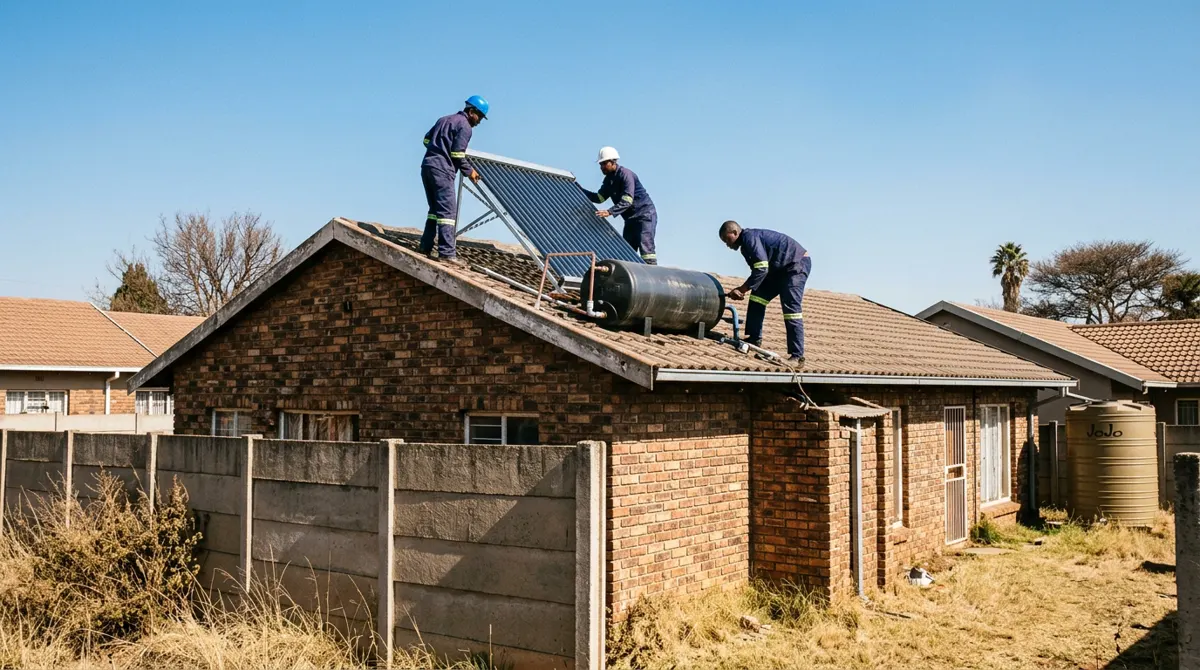
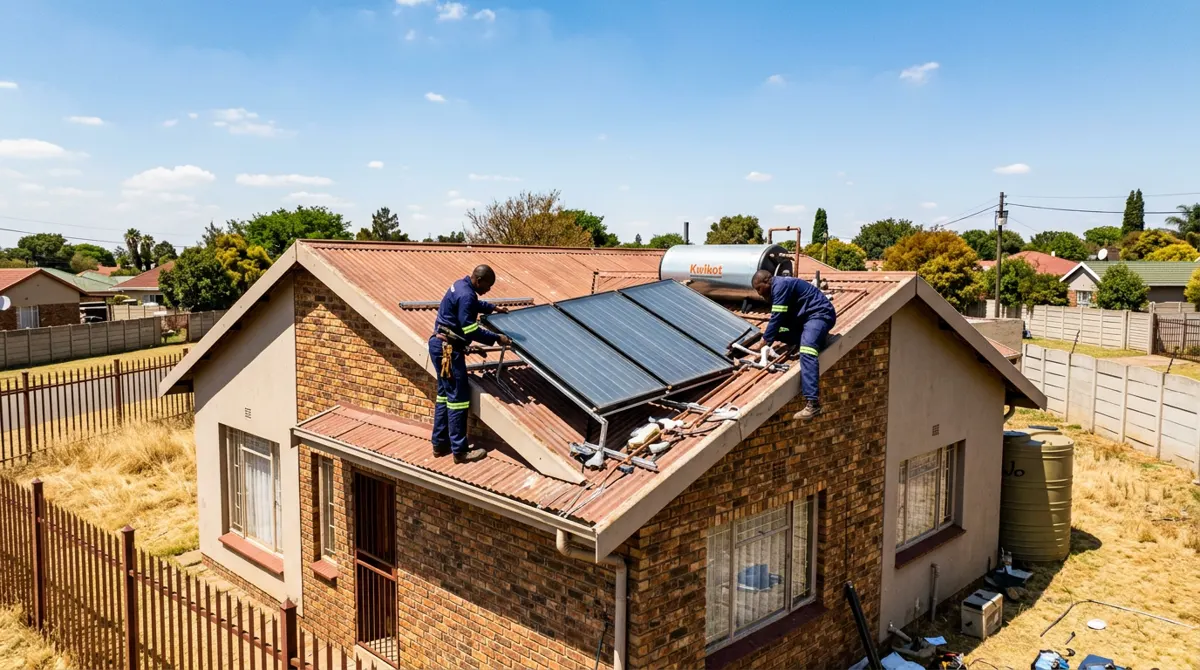
3. Install mountings, collectors and the cylinder
Secure equipment using suitable supports and the manufacturer's specified layout. Protect roof penetrations against water entry and preserve access for future maintenance.
- 4
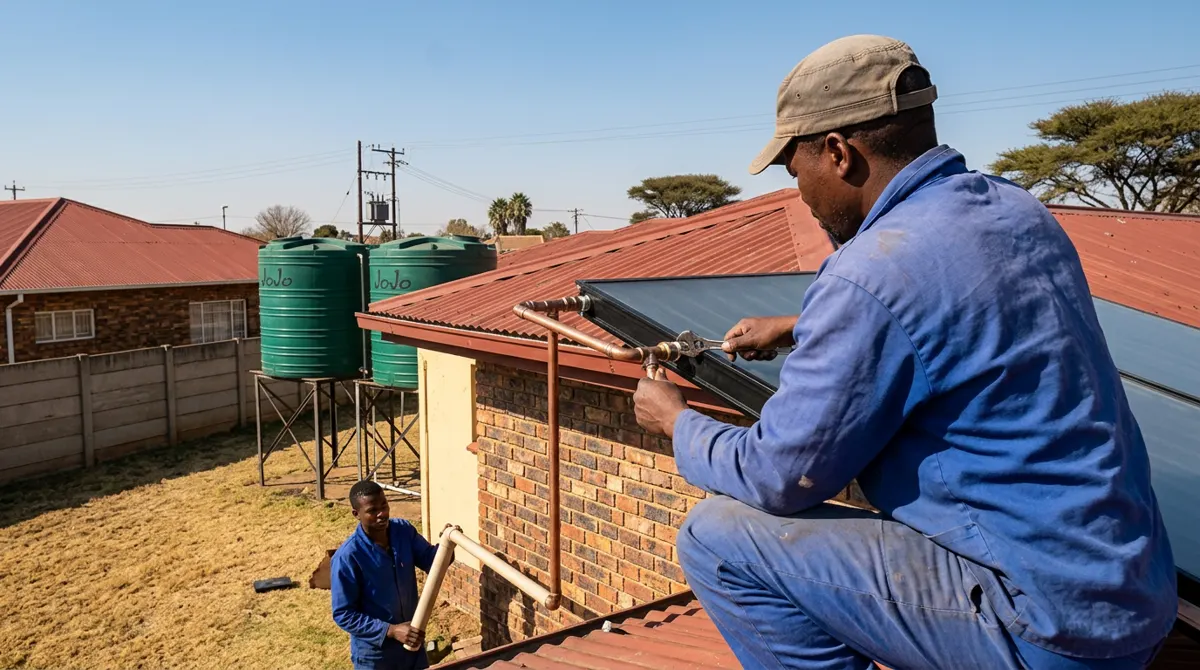
4. Connect plumbing and safety controls
Fit compatible pipework, insulation, pressure and expansion controls, and appropriate protection against scalding. Keep relief discharge routes safe and unobstructed.
- 5
5. Arrange electrical connections and commission
Have a qualified electrician handle any required electrical alterations. Fill and purge the system, check for leaks, verify circulation and test controls and backup operation according to the equipment instructions.
- 6
6. Explain operation and hand over documents
Explain backup settings, isolation points, warning signs and servicing requirements. Provide applicable compliance documents and equipment information, including warranty conditions.
Common questions
Will a solar geyser provide hot water on cloudy days? +
It can still collect some heat, but output drops when sunlight is limited. Available hot water depends on stored heat, cylinder insulation and usage. Backup heating may be needed during cloudy weather or periods of high demand.
Does a solar geyser work during load shedding? +
A thermosiphon system can collect heat without an electric circulation pump, and stored hot water remains available while the water supply is maintained. A pumped system needs power for circulation, and an electric backup element cannot heat during an outage without a suitable alternative supply.
Can my existing electric geyser be converted to solar? +
Possibly, but not every cylinder is suitable. A plumber needs to check its condition, connections, pressure rating and compatibility with an approved solar conversion. Compare the complete retrofit scope with a purpose-built replacement before deciding.
What maintenance does a solar geyser need? +
Follow the manufacturer's service schedule. Checks can include valves, insulation, mounting points, leaks, pump operation and collector condition. Indirect systems may also need heat-transfer fluid checks, while cylinders with sacrificial anodes need those inspected as specified.
Will solar eliminate my water-heating electricity use? +
Not necessarily. Solar heat can reduce reliance on the electric element, but savings depend on sunlight, system sizing, heat losses, usage and backup settings. Ask for a property-specific assessment rather than a guaranteed saving.