
Quick answer
To waterproof a commercial property effectively, first establish whether the water comes from rain, a plumbing leak or another moisture source. Repair the cause, then have a suitable waterproofing system installed on properly prepared surfaces, with particular attention to outlets, joints and pipe penetrations. Fox Plumbing serves the East Rand and greater Gauteng and can help investigate plumbing leaks before you commit to waterproofing work.
Signs your commercial property needs investigation
Peeling paint, damp ceiling tiles and recurring wet patches need investigation, not just repainting. A stain may appear some distance from the entry point because water can travel along roof sheets, pipes or structural elements.
Record when the damp appears. Water after rain suggests checking roof drainage, flashings and waterproofing details; moisture during dry weather warrants checking plumbing and other possible sources. These patterns help guide an inspection, but do not prove the cause.
- Photograph affected areas and note the date, weather and nearby water use.
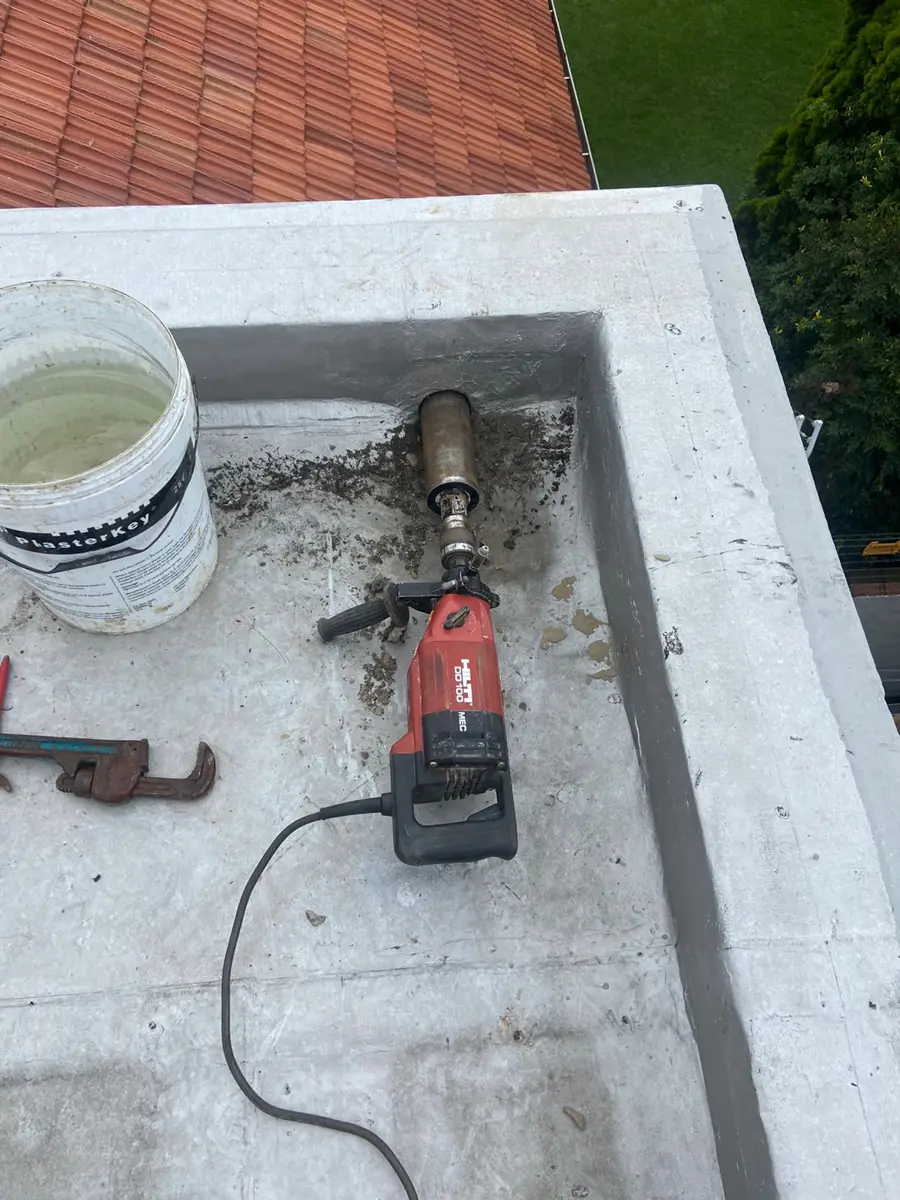
- Look for pooling around roof outlets, lifting membrane edges and damp around pipe penetrations from a safe position.
- Check storerooms, ablutions and service ducts as well as customer-facing areas.
- Restrict access where wet floors, sagging ceilings or water near electrical equipment create a hazard.
What affects the cost of commercial waterproofing?
The scope depends on the source of the water and the condition of the existing construction. A localised defect may need a targeted repair, while widespread failure may require removal of old material and preparation of the underlying surface.
Ask for a written scope that separates leak investigation, plumbing repairs, surface repairs and waterproofing. Confirm who is responsible for each part, what testing is included and how work will affect tenants or trading hours.
- The size, location and accessibility of the affected area.
- The condition of existing coatings, membranes and underlying surfaces.
- Repairs needed to cracks, joints, drainage falls or outlets.
- Compatibility of the proposed system with the surface and existing materials.
- Safe access equipment, drying time and restrictions on working hours.
Planning around Gauteng weather and business operations
Gauteng's summer thunderstorms make clear gutters and unobstructed roof outlets important. Arrange safe inspections before the rainy season and after severe storms, particularly where leaves or debris collect. Do not send staff onto roofs without suitable access and fall protection.
Waterproofing products have specific surface-moisture, temperature and curing requirements. Plan the work around the weather forecast and the manufacturer's instructions, and allow for restricted access while materials cure. Protect stock and equipment below the work area, and agree on any water shutdowns with affected tenants.
- Keep a maintenance log showing repairs, inspections and recurring damp areas.
- Identify who will clear outlets and check drainage after storms.
- Avoid drilling through completed waterproofing for new services without an approved sealing detail.
Why involve Fox Plumbing before covering a damp area?
Fox Plumbing is based in Benoni and serves the East Rand and greater Gauteng. Owner Evan Pretorius is a qualified registered plumber with more than 20 years' experience and remains on the tools. Fox Plumbing is a member of IOPSA and PIRB and issues Certificates of Compliance for applicable plumbing work; a plumbing COC is not a waterproofing guarantee.
For suspected hidden plumbing leaks, Fox uses harmless tracer gas and a detector for non-invasive leak detection. Most leaks are found within the hour without digging during detection; access may still be needed for the repair. The price is agreed upfront, the call-out fee includes the first hour of work, and every job is insured. Call 084 368 1879 to discuss the plumbing investigation and confirm the scope Fox can undertake.
- Monday to Friday: 08:00–17:00.
- Saturday: by appointment.
- Confirm any separate roof or waterproofing specialist work before booking.
How we do the job
- 1
1. Trace the water source
Inspect the affected area and likely entry points. Compare rainfall and water-use patterns, and investigate suspected plumbing leaks before specifying a waterproofing treatment.
- 2
2. Agree on the repair scope
Identify plumbing repairs, drainage defects and failed waterproofing separately. Assign responsibility for each task and agree on access, tenant notices, pricing and testing before work starts.
- 3
3. Repair and prepare the surface
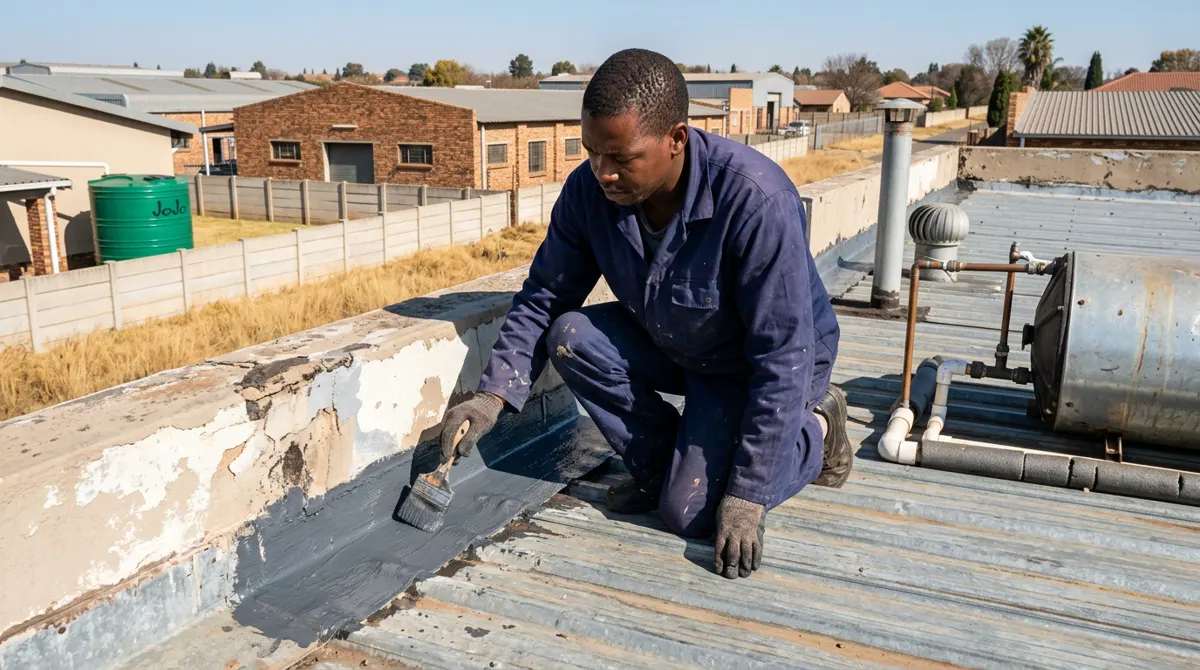
Fix the source of leakage and address defective drainage or damaged material as required. Remove loose coatings and contamination, repair suitable cracks and allow the surface to reach the condition required by the chosen system.
- 4
4. Select a compatible waterproofing system
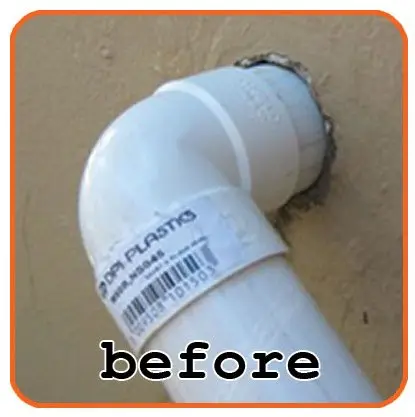
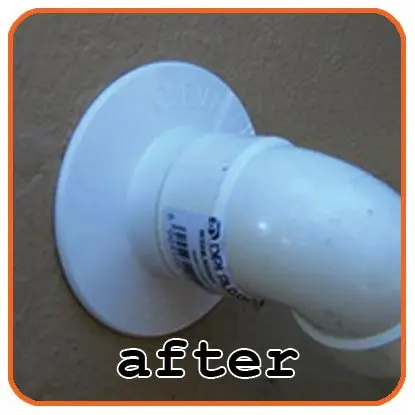
Have the installer match the system to the substrate, exposure, movement and expected foot traffic. Confirm the specified details for corners, joints, upstands and pipe penetrations rather than relying on a general coating alone.
- 5
5. Install and allow proper curing
The installer should follow the manufacturer's requirements for primers, coverage, reinforcement, overlaps and curing. Keep outlets clear and protect the work from rain, traffic and subsequent trades as required.
- 6
6. Check the work and document maintenance
Inspect vulnerable details and use a test appropriate to the system and building. Do not improvise a roof flood test: loading and drainage risks need assessment. Keep product details, completion photographs and maintenance instructions.
Common questions
Will waterproofing fix a leaking pipe inside a wall? +
No. A leaking pipe needs repair at its source. Coating the visible damp area can conceal the symptom while water continues entering the wall. Investigate the leak before repairing finishes.
Can an existing commercial roof be waterproofed? +
Often, but its condition must be assessed first. Loose material, trapped moisture, damaged surfaces and poor drainage may need attention before a new system can perform properly. Applying another layer is not always the right solution.
Does tracer-gas leak detection mean no digging at all? +
Fox Plumbing's tracer-gas detection process locates leaks non-invasively, without digging during detection. Repairing the identified pipe may still require opening a wall, floor or ground surface.
How often should commercial waterproofing be checked? +
Follow the system's maintenance requirements and arrange checks before the rainy season and after severe storms. Investigate new damp promptly, and check areas disturbed by roof maintenance or installation of new services.
Does a plumbing COC cover waterproofing? +
A plumbing Certificate of Compliance relates to the applicable plumbing work, not the performance of a roof waterproofing system. Ask the waterproofing installer separately for the agreed scope, product documentation and any written warranty terms.