
Quick answer
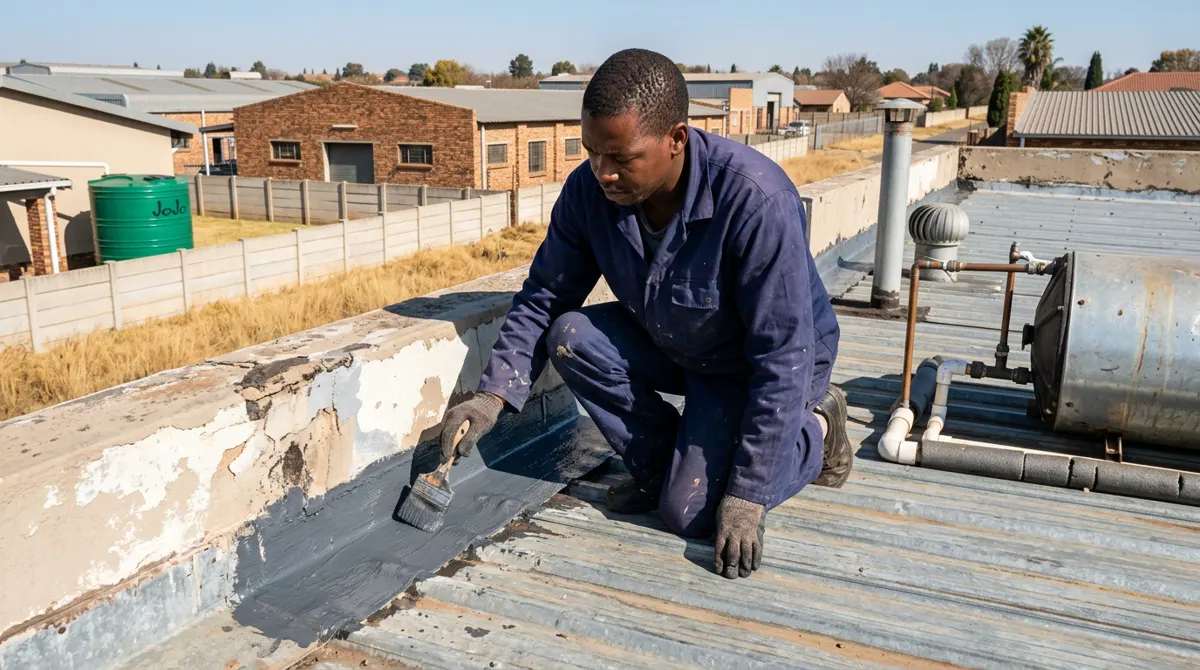
Waterproofing safeguards Benoni’s commercial properties by keeping rainwater out of vulnerable roof joints, walls and other exposed surfaces. Effective protection starts with identifying the source: failed waterproofing, overflowing gutters and leaking pipes need different repairs, not simply another coat of sealant.
Signs your commercial building needs attention
Stained ceiling boards, bubbling paint and damp patches are reasons to investigate before stock, equipment or tenant spaces are affected. Note when the damage appears: damp that worsens after rain suggests an external entry point, while moisture that persists through dry weather may indicate a plumbing leak or another source.
Water can travel along roof members or inside walls before becoming visible, so the stain is not necessarily directly below the fault. Keep people away from sagging ceilings and wet electrical fittings; arrange qualified electrical assistance where water threatens electrical equipment.
- Look for cracked or lifting waterproofing around roof outlets, parapets and service penetrations.
- Check for gutter overflow, blocked downpipes and water remaining on flat roof areas after rain.
- Record musty smells, recurring mould and damp skirtings rather than repeatedly painting over them.
- Photograph affected areas and note the date, weather and any nearby plumbing use.
What affects commercial waterproofing costs?
The repair scope depends on the cause, the condition of the surface beneath the waterproofing and how much of the existing system has failed. A sound surface with one defective joint needs a different approach from a roof with widespread lifting membranes or trapped moisture.
Ask for a clearly defined scope covering preparation, drainage defects, the proposed waterproofing system and any separate reinstatement work. Internal paintwork and ceiling repairs should follow source repairs and adequate drying, not hide unresolved damp.
- The size, location and number of affected areas.
- Safe roof access, working height and access equipment requirements.
- Removal of failed material and repairs to damaged underlying surfaces.
- Compatibility with existing coatings, membranes and roof materials.
- Drainage corrections, drying time and weather-dependent curing periods.
- Tenant access arrangements and protection of stock or equipment.
Practical waterproofing planning for Benoni properties
Benoni’s summer thunderstorms make clear gutters, downpipes and roof outlets important maintenance priorities. Arrange checks before the rainy season and after severe storms, with closer attention to known trouble spots. Roof access should be left to people equipped to work safely at height.
For occupied shops, offices and warehouses, plan around deliveries, customer entrances and sensitive equipment. Keep a maintenance record showing repaired areas and new roof penetrations: later installation of signage, cabling or equipment can disturb previously watertight details.
- Keep outlets accessible for cleaning rather than covering them with stored materials.
- Check where downpipes discharge; water should not be directed towards entrances or allowed to collect against walls.
- Allow for the chosen system’s dry-weather application and curing requirements.
- Investigate persistent ponding instead of assuming a coating will correct poor drainage.
Fox Plumbing: establish whether plumbing is the cause
Fox Plumbing is based in Benoni and serves the East Rand and greater Gauteng. Owner Evan Pretorius is a qualified registered plumber with more than 20 years’ experience and remains on the tools. Fox Plumbing is a member of IOPSA and PIRB and issues plumbing Certificates of Compliance (COCs); a plumbing COC is not a waterproofing warranty.
Where a concealed pipe leak is suspected, Fox uses harmless tracer gas and a detector for non-invasive leak detection, with no digging during detection. Most leaks are found within the hour, although finding a leak and repairing it are separate tasks. The price is agreed upfront, the call-out fee includes the first hour of work, and every job is insured. Phone 084 368 1879 to discuss the problem and confirm the appropriate scope.
- Opening hours: Monday–Friday, 08:00–17:00; Saturday by appointment.
- Identify plumbing faults before committing to surface waterproofing.
- Confirm whether specialist roofing or waterproofing work is also needed.
How we do the job
- 1
Record the water ingress
Mark affected rooms, photograph damage and record whether it follows rainfall or occurs during dry weather. Protect stock and restrict access to unsafe areas.
- 2
Trace the source
Have gutters, outlets, joints and penetrations checked safely. If plumbing is suspected, arrange appropriate leak detection rather than opening surfaces at random.
- 3
Agree the repair scope
Separate plumbing repairs, drainage corrections and waterproofing work. Confirm preparation, materials, access arrangements and responsibility for internal reinstatement.
- 4
Repair and prepare
Address the identified source and remove unsound material where required. Prepare the surface to the selected system’s requirements; coating over loose material or unresolved damp can undermine the repair.
- 5
Apply, check and maintain
Have the appropriate waterproofing system installed and allowed to cure as specified. Arrange suitable checks without overloading the roof, then monitor repaired areas after rain and keep drainage routes clear.
Common questions
Will waterproofing stop damp caused by a leaking pipe? +
No. The pipe needs repair first. Applying a surface coating does not remove the source and may conceal continuing damage.
Can an existing commercial roof be waterproofed? +
Often, but its condition must be assessed first. Loose coatings, damaged substrates, trapped moisture and drainage defects may need attention before a compatible system can be installed.
Does tracer gas detection find every type of water ingress? +
No. Fox Plumbing’s tracer gas service is used to locate leaks in pipework. Rain entering through roof joints, flashings or walls requires a building-envelope investigation.
How often should a Benoni commercial property be checked? +
Plan routine checks before the summer rains and after severe storms or roof alterations. Follow the installed system’s maintenance requirements and investigate new stains promptly.
Can tenants remain in the building during repairs? +
That depends on the affected areas, access requirements and proposed materials. Agree safe work zones and any necessary closures beforehand; do not keep an area occupied beneath an unsafe ceiling.