
Quick answer
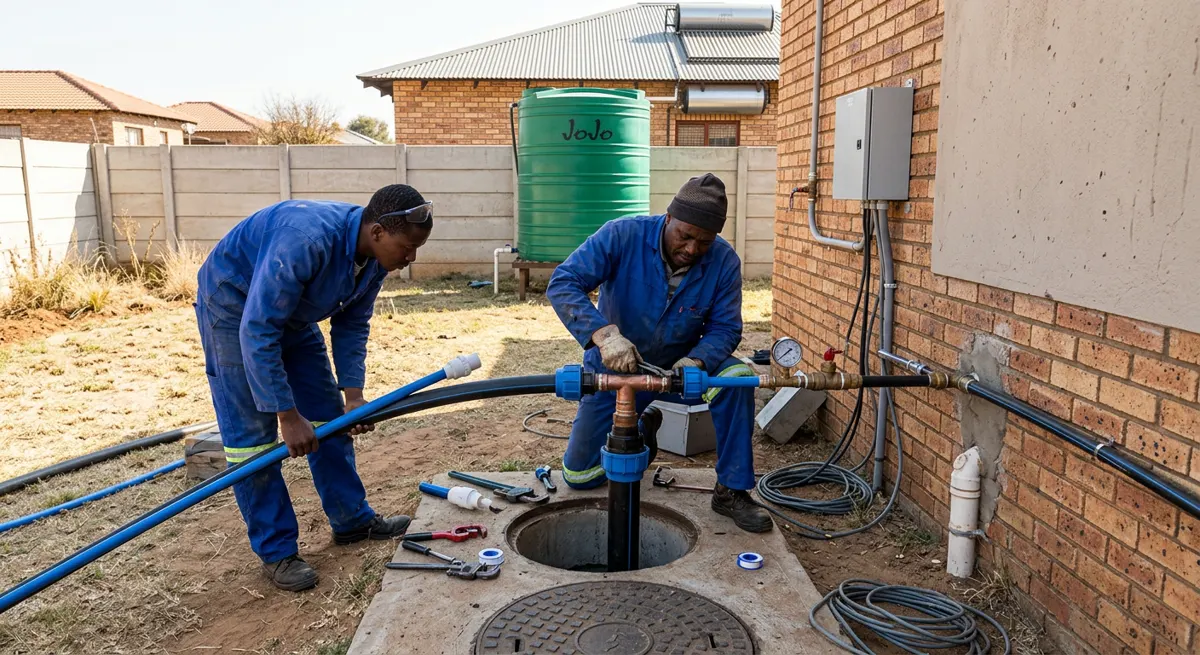
Borehole pump installation means selecting and fitting a pump that lifts groundwater from an existing borehole to the surface. Connections include the delivery pipework, valves, electrical supply and controls that send that water to irrigation, storage or a suitably designed household supply. Drilling, water treatment and household pressure boosting are separate parts of the project, so confirm what your installation quote covers.
When do you need a borehole pump installation or new connections?
A drilled borehole is not yet a working water supply. It needs a pump matched to its tested yield, water levels and intended use, plus a safe route for the water to reach its destination. An existing installation may also need changes when you add a storage tank, extend irrigation or plan to supply the house.
Weak flow does not automatically mean you need a bigger pump. Low groundwater levels, worn components, a leaking delivery pipe or a blocked filter can cause similar symptoms. Establish the cause before replacing equipment.
- You have a completed borehole but no pump, controls or delivery pipework.
- Your existing pump repeatedly stops, runs without delivering water or trips its electrical protection.
- You want to change from garden-only use to tank storage or household supply.
- Your current installation lacks working dry-run protection or reliable tank-level control.
What affects the cost of installation and connections?
Pump selection depends on both flow and total pumping head: the lift from the pumping water level, the elevation of the destination, pipe friction and any required outlet pressure. Borehole depth alone is not enough to select a pump. A pump that extracts water faster than the borehole can replenish it may run dry and suffer damage.
Ask for a written scope separating the borehole equipment, surface plumbing, electrical work and any tank or treatment system. This makes it easier to compare quotes and identify items that are not included.
- The borehole's tested yield, pumping water level, casing diameter and condition.
- Pump capacity, installation depth, rising-main specification and cable length.
- Distance to the tank or outlets, trenching requirements and access for installation.
- Available electrical supply, motor starting requirements and protective controls.
- Storage, booster pumping, water testing and treatment requirements.
- Removal of an old pump and repairs to existing connections.
Gauteng practicalities: storage, water quality and municipal separation
Requirements differ between Gauteng municipalities. Before connecting a borehole to household plumbing, check the applicable municipal rules for registration, alternative water supplies and protection of the drinking-water network. Do not connect borehole and municipal pressure lines through a simple changeover valve. A compliant design must prevent borehole water from entering the municipal network; an appropriately designed air-gap arrangement may form part of that protection.
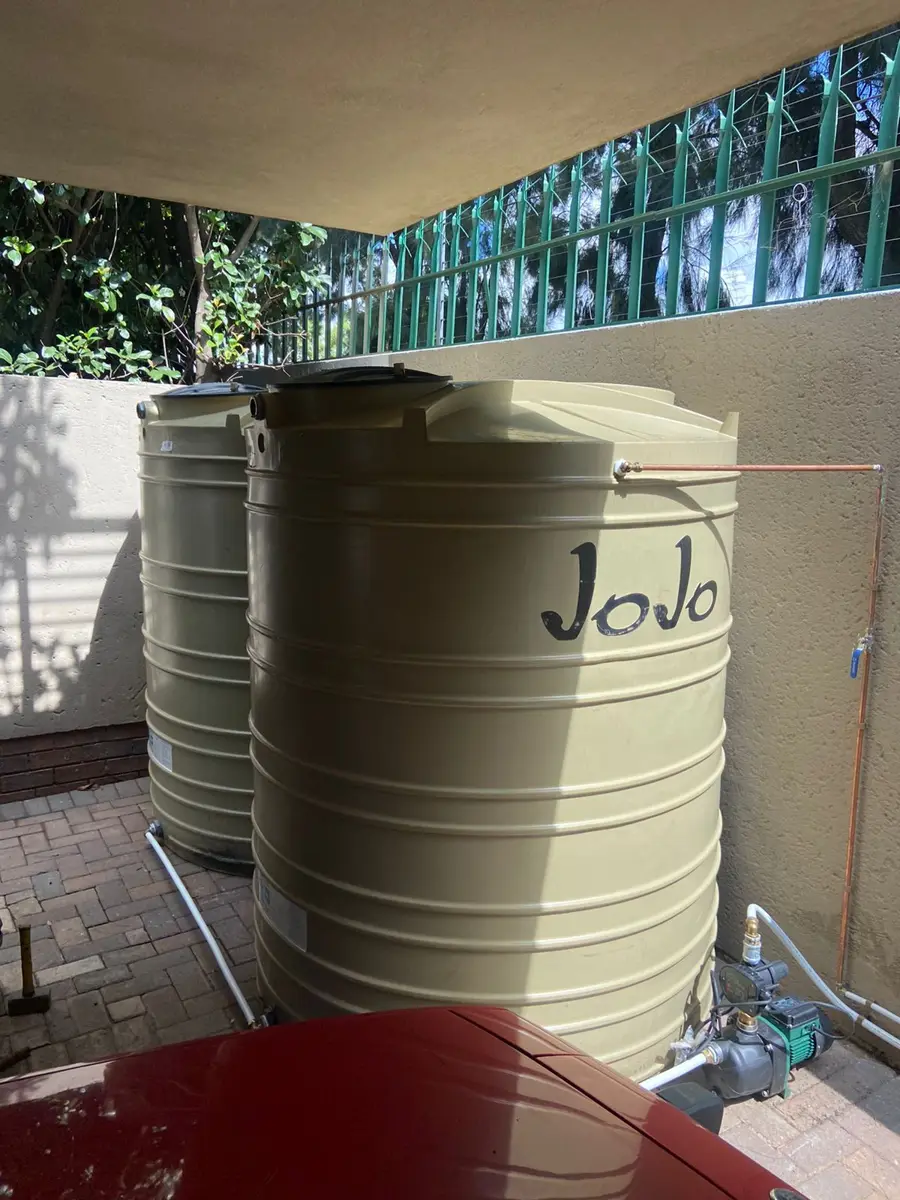
Clear water is not proof that it is safe to drink. Use a suitable laboratory to test for microbiological and chemical quality before choosing treatment for household use. Sediment filtration alone does not make unsafe water drinkable. A storage tank can help separate borehole pumping from peak household demand, but it cannot compensate for insufficient sustainable yield.
- Keep borehole outlets clearly identified, particularly where water has not been verified as potable.
- Protect the borehole head against surface runoff, debris and unauthorised access.
- Check backup-power compatibility with the pump's running and starting requirements.
- Remember that stored water still needs gravity or a powered booster pump to reach outlets.
Discuss your connection requirements with Fox Plumbing
Fox Plumbing is based in Benoni and serves the East Rand and greater Gauteng. Owner Evan Pretorius is a qualified registered plumber with more than 20 years' experience and remains on the tools. Fox Plumbing is a member of IOPSA and PIRB and issues plumbing Certificates of Compliance (COCs). Confirm which certification applies to your scope; electrical work requires its own appropriate qualified practitioner and certification where required.
The price is agreed upfront, the call-out fee includes the first hour of work, pensioners receive a special rate and every job is insured. Call 084 368 1879 to discuss your borehole plumbing requirements and clarify the work needed. Hours are Monday to Friday, 08:00–17:00, with Saturdays by appointment.
- Have your borehole yield report and existing pump details available, if you have them.
- Explain whether the water is intended for irrigation, storage or household use.
- Confirm responsibility for pump installation, electrical work, water testing and municipal requirements before work begins.
How we do the job
- 1
Assess the borehole and intended demand
Review the borehole construction record, yield test, standing and pumping water levels, and the outlets to be supplied. If reliable test information is missing, arrange assessment rather than guessing the pump size.
- 2
Design the pumping and storage arrangement
Select a pump using the required flow and total pumping head. Decide whether it will fill a tank or serve an approved direct-use arrangement, and specify pipe sizes, pressure ratings and any separate booster pump.
- 3
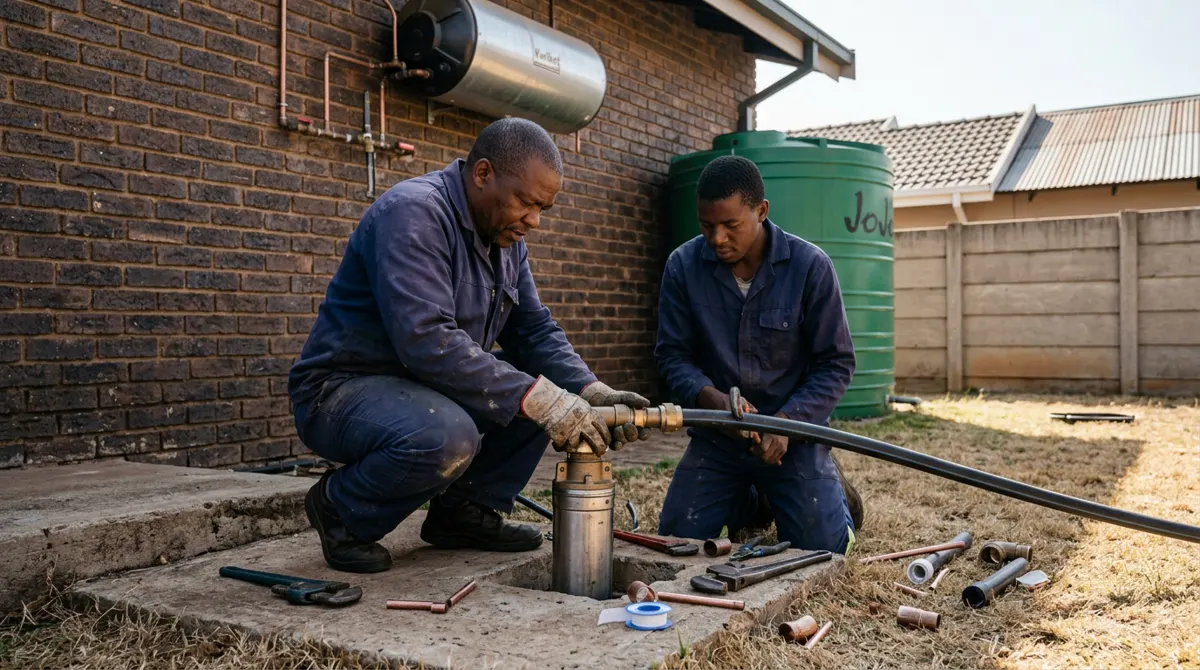
Fit and lower the pump assembly
Install suitable rising-main pipework, submersible cable joints and manufacturer-approved support. Position the pump with adequate submergence and clearance from sediment, following the borehole conditions and pump specifications.
- 4
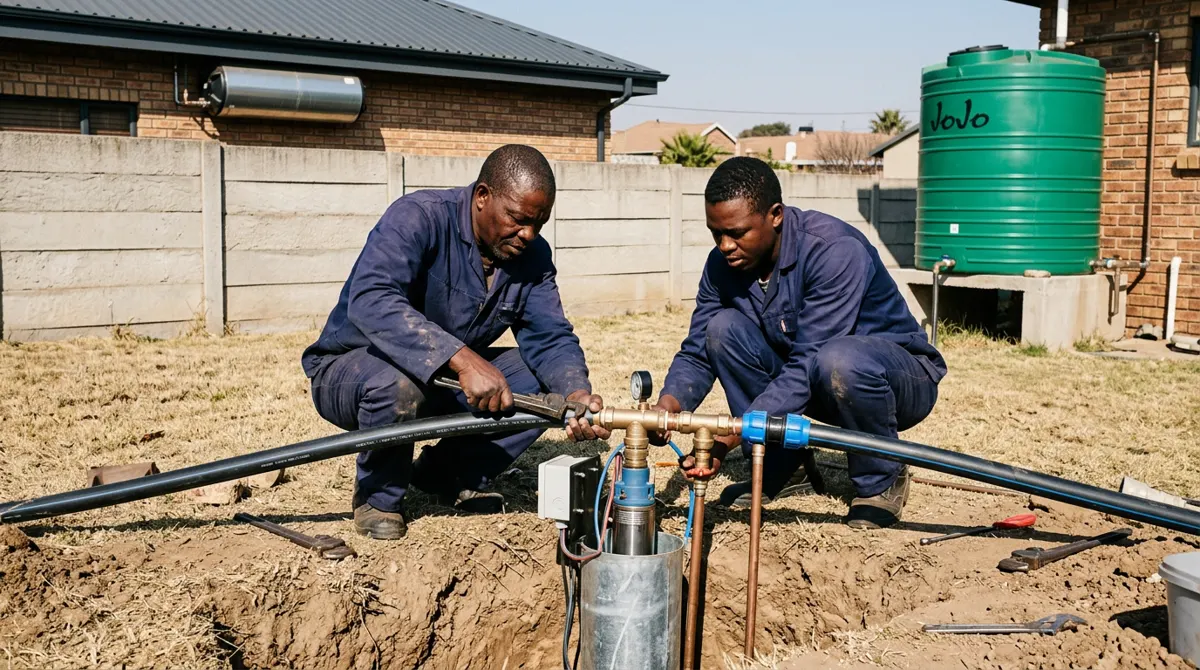
Complete the surface plumbing
Connect the delivery line, suitable valves and any tank inlet controls. Protect the borehole head, provide access for servicing and ensure the alternative supply cannot contaminate the municipal system.
- 5
Install electrical supply and protection
Have an appropriately qualified electrical practitioner provide the required supply, isolation, earthing and motor protection. Include suitable dry-run and level controls, and coordinate tank controls with the pump.
- 6
Test, commission and hand over
Measure delivered flow and pressure, check for leaks and verify protective controls. Arrange water-quality testing before potable use, and hand over operating instructions, equipment details and applicable compliance documentation.
Common questions
Does drilling a borehole include the pump installation? +
Not necessarily. Some contractors quote for drilling and casing only, while others include testing or pumping equipment. Check the written scope for the pump, pipework, cable, controls, electrical connection and commissioning.
Is a borehole pump the same as a pressure booster pump? +
No. A typical submersible borehole pump lifts groundwater to the surface. A booster pump commonly takes water from a storage tank and supplies the pressure needed at household taps or irrigation outlets.
Can borehole water supply my kitchen and bathrooms? +
Potentially, but the water must be tested and treated as necessary for its intended use. Household connections also need a compliant design that protects the municipal supply. Do not assume a standard filter solves every water-quality problem.
Will the borehole work during a power outage? +
An electric pump needs a compatible backup supply to operate during an outage. A full tank provides stored water, but delivery still depends on gravity or a powered booster pump. Check motor starting demand before selecting an inverter or generator.
What maintenance does the installation need? +
Follow the equipment manufacturer's service guidance and arrange periodic checks of flow, pressure, leaks, controls and electrical protection. Repeated tripping, sand in the water or a sudden drop in output needs investigation. Never bypass dry-run protection to keep a pump operating.