
Quick answer
Electric geyser replacements involve removing an existing electric hot-water cylinder and fitting a new one, with the necessary plumbing connections and safety components. Replacement is normally needed when the cylinder itself fails; a faulty element, thermostat or valve may only need a repair. The job also includes checking the installation for compliance, rather than simply connecting a new tank to the old fittings.
Signs you may need a replacement, not a repair
A confirmed leak from the cylinder itself generally means the geyser needs replacing. Water around a geyser, however, can also come from a pipe joint, valve or element seal. A wet ceiling or water flowing from a discharge pipe needs prompt investigation, but neither proves on its own that the tank has burst.
If water is entering the ceiling, switch off the geyser circuit at the distribution board only if it is safe and dry to approach. Close the water supply if you can safely reach the shut-off valve, keep clear of the affected ceiling and call a plumber. Do not climb into a wet roof space or touch wet electrical equipment.
- Cylinder leakage: have the source confirmed before approving a replacement.
- No hot water: the element, thermostat or electrical supply may be at fault.
- Repeated electrical tripping: leave the geyser switched off until the fault is assessed; do not keep resetting it.
- Recurring faults: compare the condition of the cylinder and the likely repair work with the scope of a replacement.
- Insufficient hot water: check household demand and heating settings before assuming the tank has failed.
What affects the cost of an electric geyser replacement?
The cylinder is only one part of the job. Its capacity, pressure rating, mounting orientation and compatibility with the existing installation all matter. A larger tank is not automatically the right choice: available space, structural support and household hot-water demand must be considered together.
The condition of the existing installation also affects the scope. A new geyser may require changes to valves, discharge pipes, the drip tray, insulation or supports. Agree what is included before work begins, including removal of the old cylinder, compliance documentation and any separate electrical work.
- Cylinder specification and the capacity needed for the household.
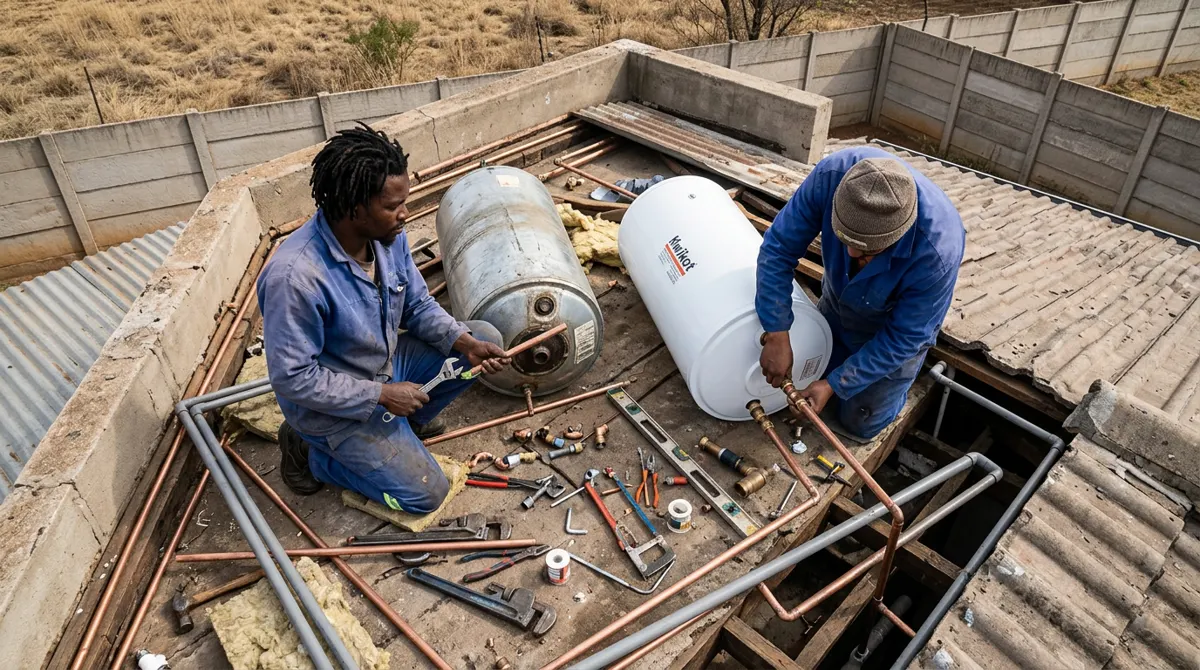
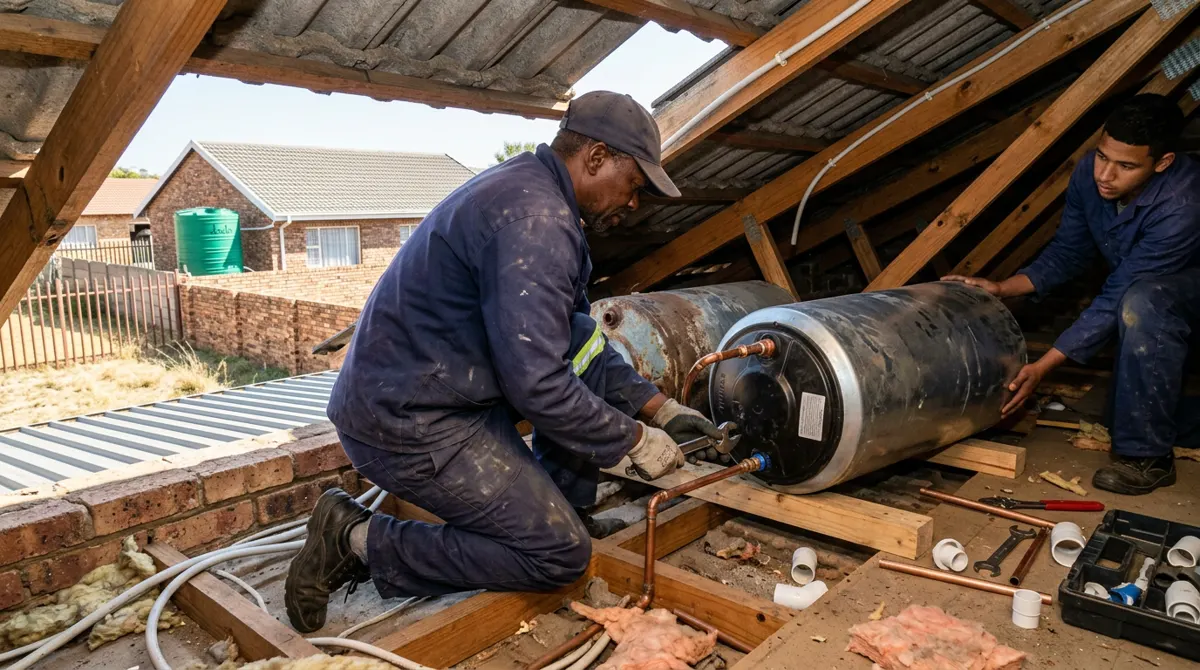
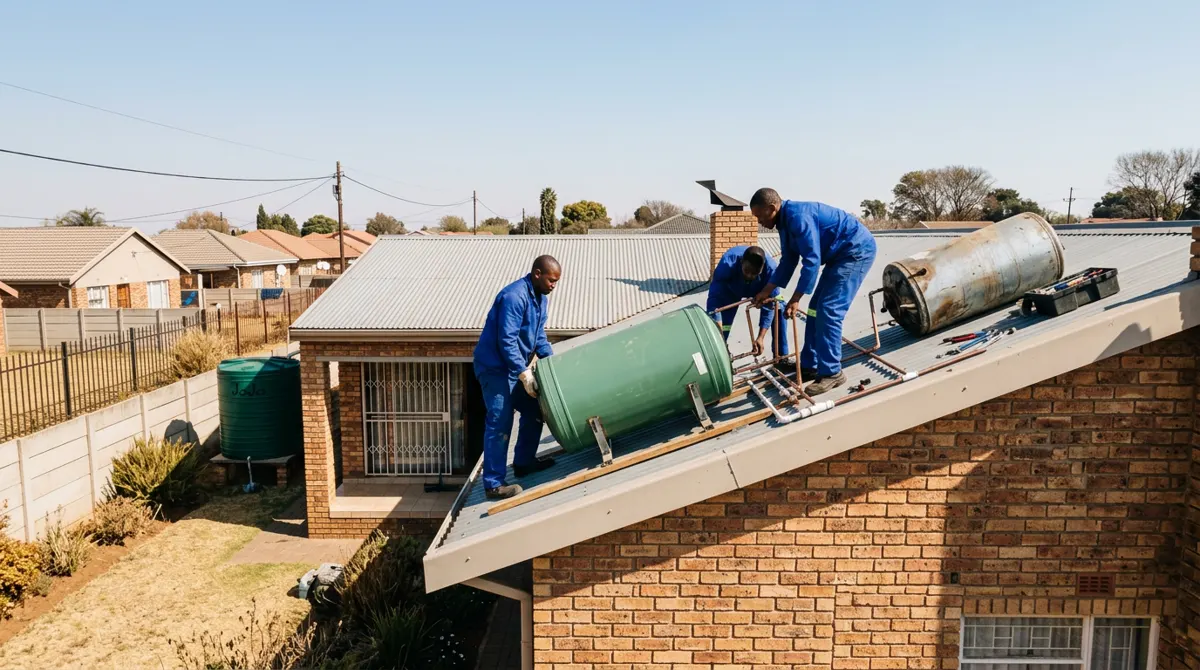
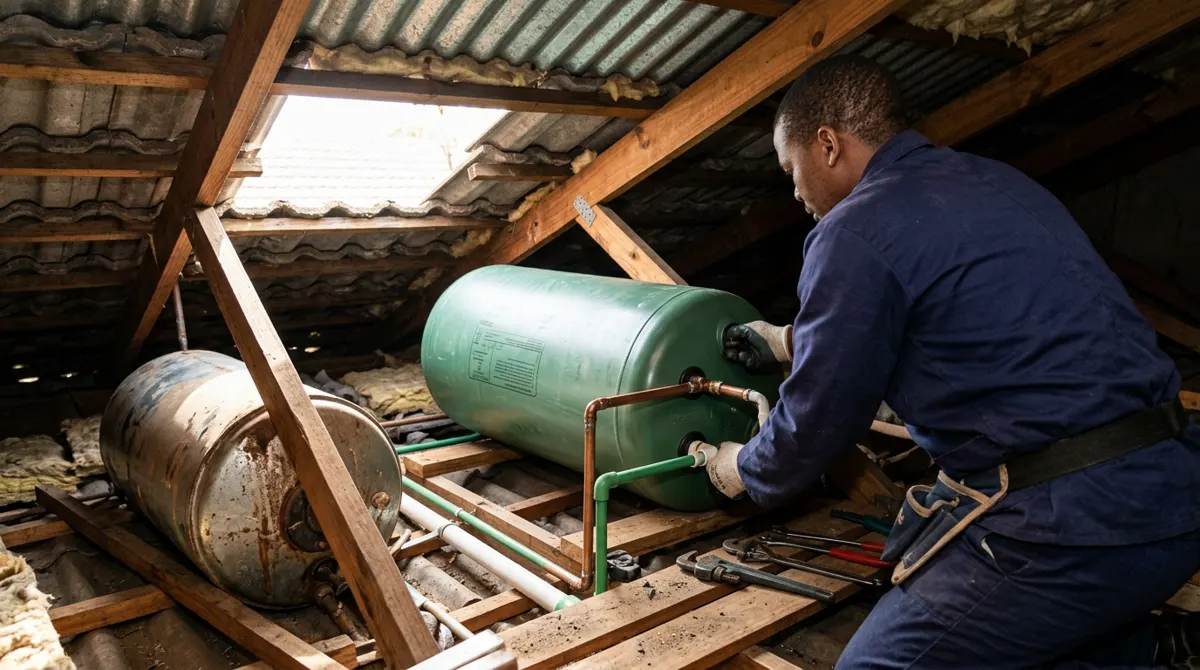
- Access through the ceiling hatch and space to remove and position the tanks.
- Condition and suitability of existing pipes, valves and safety components.
- Required changes to supports, drip-tray drainage and discharge routes.
- Electrical faults or connection changes requiring an appropriately qualified electrical professional.
- Whether the geyser stays in its current position or needs relocating.
Practical considerations for Gauteng homes
Before booking, note whether the geyser is in a roof space, garage, cupboard or outside, and describe the access. If the label is safely visible, a photograph of its capacity and pressure rating helps with planning. For a sectional-title property, check with the managing agent or body corporate about access, shared water shut-offs and responsibility for the geyser.
Replacement work should meet applicable South African requirements, including SANS 10254 for fixed electric storage water-heating installations. Existing safety fittings and discharge arrangements must be checked, not assumed suitable because they served the previous tank. A plumbing Certificate of Compliance does not replace any electrical certification required for electrical work.
- Ask your insurer about authorisation and claim requirements before arranging replacement, where practical; cover depends on your policy.
- Allow for a period without hot water while the tank is replaced, filled, tested and heated.
- An older geyser does not automatically need replacing merely because a property is being sold.
- Better insulation can reduce standing heat loss, but a replacement is not a guarantee of a lower electricity bill.
Booking a replacement assessment with Fox Plumbing
Fox Plumbing is based in Benoni and serves the East Rand and greater Gauteng. Owner Evan Pretorius is a qualified registered plumber with more than 20 years of experience and remains on the tools. Fox Plumbing is a member of IOPSA and PIRB and issues Certificates of Compliance.
The price is agreed upfront, the call-out fee includes the first hour of work, pensioners receive a special rate and every job is insured. Call 084 368 1879 to arrange an assessment. Hours are Monday to Friday, 08:00–17:00, with Saturday appointments by arrangement.
- Describe the leak or hot-water problem and whether the power is tripping.
- Send photographs only where you can take them safely.
- Ask for a clear distinction between necessary repairs, replacement work and compliance corrections.
- Confirm the proposed cylinder specification and the documentation included in the agreed scope.
How we do the job
- 1
Confirm the fault
Inspect the cylinder, connections and valves to establish where water is escaping or why the geyser is not heating. Determine whether a repair is sufficient before recommending a replacement.
- 2
Assess the installation and agree the scope
Check capacity, pressure compatibility, access, supports, pipework and safety components. Identify any electrical work needed and agree the replacement specification and price before proceeding.
- 3
Isolate, drain and remove
Safely isolate the water and electricity, allow for hot water when draining, and remove the old cylinder. Electrical disconnection and reconnection must be handled by an appropriately qualified person.
- 4
Fit the new geyser and required components
Secure the cylinder on suitable supports and connect the pipework. Fit or correct the drip tray, drainage, valves, discharge pipes and insulation as required by the installation and applicable standards.
- 5
Fill and test before heating
Fill the cylinder, release trapped air and check the connections and safety arrangements. The element must not be energised while the tank is empty. Once electrical safety is confirmed, check heating operation.
- 6
Complete the handover
Explain the shut-off points, what discharge to watch for and when to call for assistance. Provide the applicable compliance documentation and explain the manufacturer's operating and warranty requirements.
Common questions
Does water coming from the overflow mean my geyser has burst? +
Not necessarily. First establish whether the water is coming from the drip-tray drain or a valve discharge pipe. Some expansion discharge during heating can be normal, while persistent or heavy flow needs investigation. Never block or cap a discharge pipe.
Can I replace my geyser with a larger one? +
Possibly, but the plumber must check the available space, full operating weight, supports and plumbing compatibility. Choose capacity around household demand rather than simply fitting the largest tank that will fit.
How long does a replacement take? +
Timing depends on access, drainage, the condition of the existing installation and any plumbing or electrical corrections. Ask for an estimate after assessment, and remember that the new tank still needs time to heat after it has been filled and commissioned.
Will insurance pay for the new geyser and ceiling damage? +
That depends on your policy, the cause of the failure, exclusions and any excess. Contact your insurer to confirm its authorisation process and required evidence. Fox Plumbing's statement that every job is insured is separate from your household insurance cover.
Is a plumbing COC the same as an electrical COC? +
No. They cover different work. Ask which plumbing compliance documentation will be issued for the replacement and whether the electrical work requires separate certification by an appropriately registered electrical professional.