
Quick answer
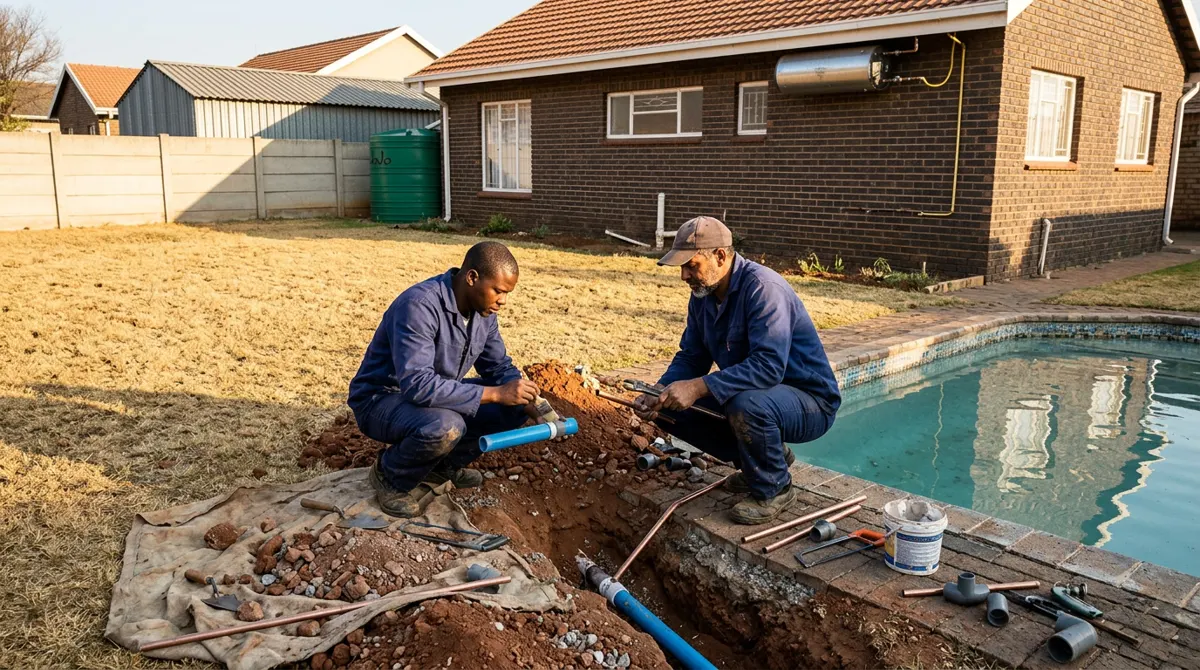
Pool pipe repairs fix leaks, damaged joints or blockages in the plumbing that carries water from your pool to the pump and filter, then back to the pool. The work involves identifying the affected line, locating the fault, repairing or replacing the damaged section and testing it before returning the system to use.
Signs your pool plumbing needs attention
Repeated topping up, weak return flow and a pump that struggles to prime are reasons to investigate, but none proves that an underground pipe is leaking. A low water level, blocked basket, leaking pump-lid seal or faulty filter valve can cause similar symptoms.
Suction-side faults can draw air into the system while the pump runs, sometimes without leaving a visible wet patch. Return-side leaks can release water into the surrounding ground. If the pump will not prime or is running dry, switch it off rather than leaving it to run while you investigate.
- Bubbles continue coming from the return jets after the system should have cleared its air.
- The pool cleaner loses suction even after its hose and baskets have been checked.
- Ground or paving along the pipe route stays damp without an obvious cause.
- The water level drops repeatedly despite no recent backwashing or heavy pool use.
- Water escapes from the filter’s waste outlet while the valve is set to filter; have the valve checked before assuming a buried pipe has failed.
What affects the cost of pool pipe repairs?
The repair scope depends on where the fault is and what is needed to reach it. Replacing an exposed fitting near the pump is a different job from accessing a pipe beneath paving. Detection helps establish where work is needed before surfaces are disturbed.
A local repair may suit an otherwise sound pipe. Where a line is brittle, has several faults or runs beneath a difficult-to-access structure, replacing or rerouting it may be more practical. Agree on the repair scope and clarify who will reinstate paving, concrete or landscaping.
- The number of lines requiring isolation and testing.
- Pipe depth, access and the surface above the fault.
- The length and condition of the affected pipe.
- The required pipe specification, fittings and jointing method.
- Whether clearing a blockage, replacing a section or rerouting is necessary.
- Excavation, backfilling and surface reinstatement requirements.
Practical checks for Gauteng pool owners
Gauteng’s dry, windy weather can increase evaporation, while summer rain can disguise water loss. There is no single water-loss figure that proves a leak in every pool. Compare conditions over time and account for splashing, backwashing, automatic top-ups and rainfall.
A bucket comparison can help screen for unexplained loss: secure a bucket of pool water on a submerged step with its rim above the pool surface, then mark the levels inside and outside. Compare both drops over the same period without rain, swimming or topping up. A greater drop in the pool suggests further investigation, but does not identify whether the fault is in a pipe, fitting or pool shell.
- Record when water loss occurs and whether it appears worse during normal pump operation.
- Photograph damp areas and note any recent paving, gardening or excavation near the pipe route.
- Check the water level, baskets and visible equipment for obvious problems first.
- Do not loosen pressurised fittings or change a multiport valve setting while the pump is running.
Pool leak investigation with Fox Plumbing
Fox Plumbing is based in Benoni and serves the East Rand and greater Gauteng. Owner Evan Pretorius is a qualified registered plumber with more than 20 years’ experience and remains on the tools. Fox Plumbing is a member of IOPSA and PIRB and issues Certificates of Compliance (COCs).
Fox uses non-invasive leak detection with harmless tracer gas and a detector. Most leaks are found within the hour, without digging during detection; accessing a buried pipe for repair may still require excavation. The price is agreed upfront, the call-out fee includes the first hour of work, pensioners receive a special rate and every job is insured.
- Phone 084 368 1879 to discuss the symptoms and arrange a visit.
- Hours: Monday–Friday, 08:00–17:00; Saturday by appointment.
- Ask what the agreed scope includes, particularly access work and surface reinstatement.
How we do the job
- 1
Check the symptoms and visible equipment
Review water loss, pump behaviour and recent maintenance. Inspect accessible pipes, fittings, baskets, seals and the filter waste outlet before attributing the problem to underground plumbing.
- 2
Isolate and test the suspect line
Where the layout allows, test suction and return lines separately using suitable equipment and controlled test conditions. This helps distinguish pipe faults from equipment or pool-shell problems.
- 3
Locate the leak before opening the ground
Fox uses harmless tracer gas and a detector to locate leaks without digging during detection. Pipe layout and site conditions affect how long locating a particular fault takes.
- 4
Agree on access and the repair
Choose between repairing a joint, replacing a damaged section or rerouting a line, based on its condition and accessibility. Agree on the price and scope before repair work starts.
- 5
Repair with suitable materials
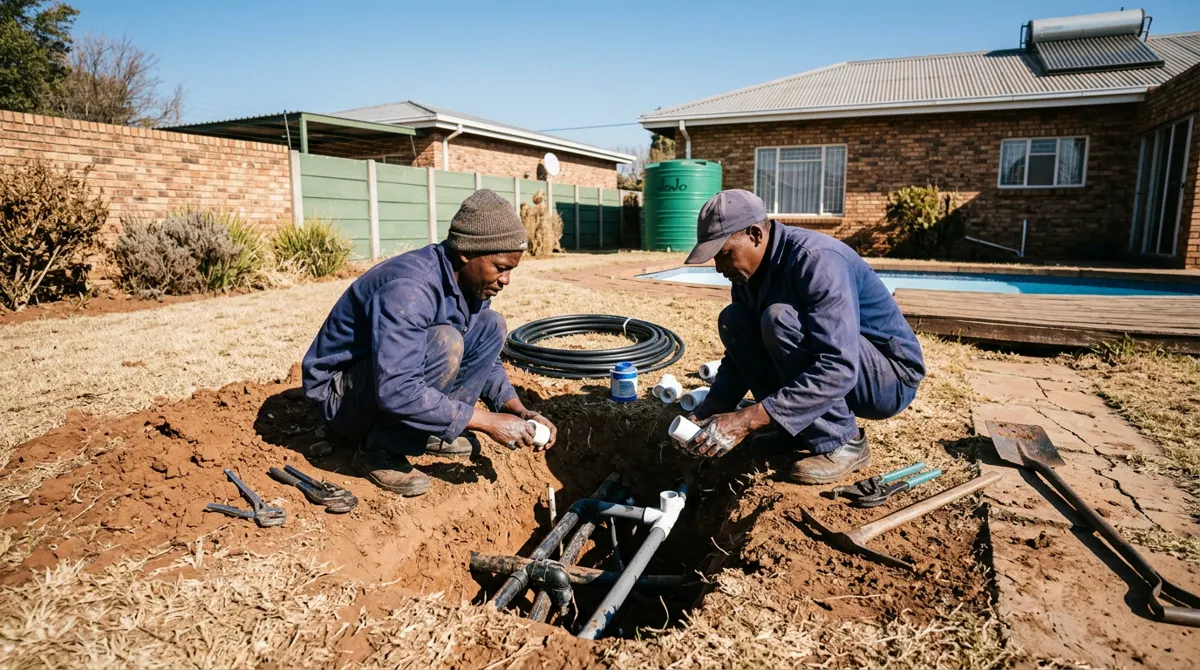
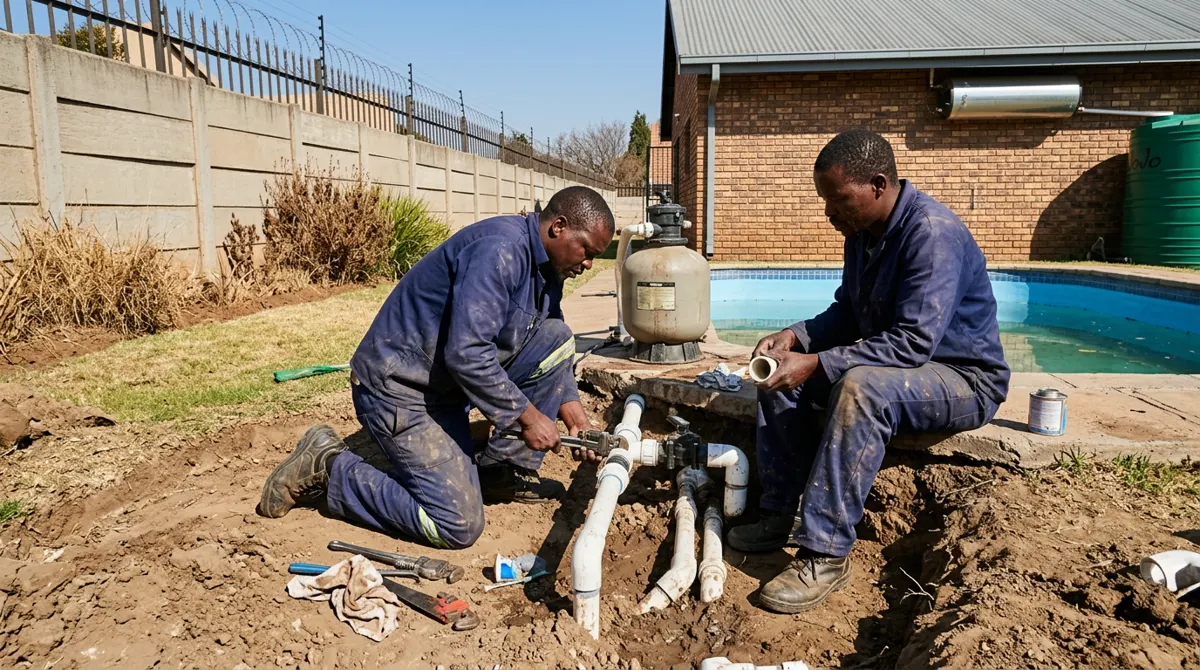
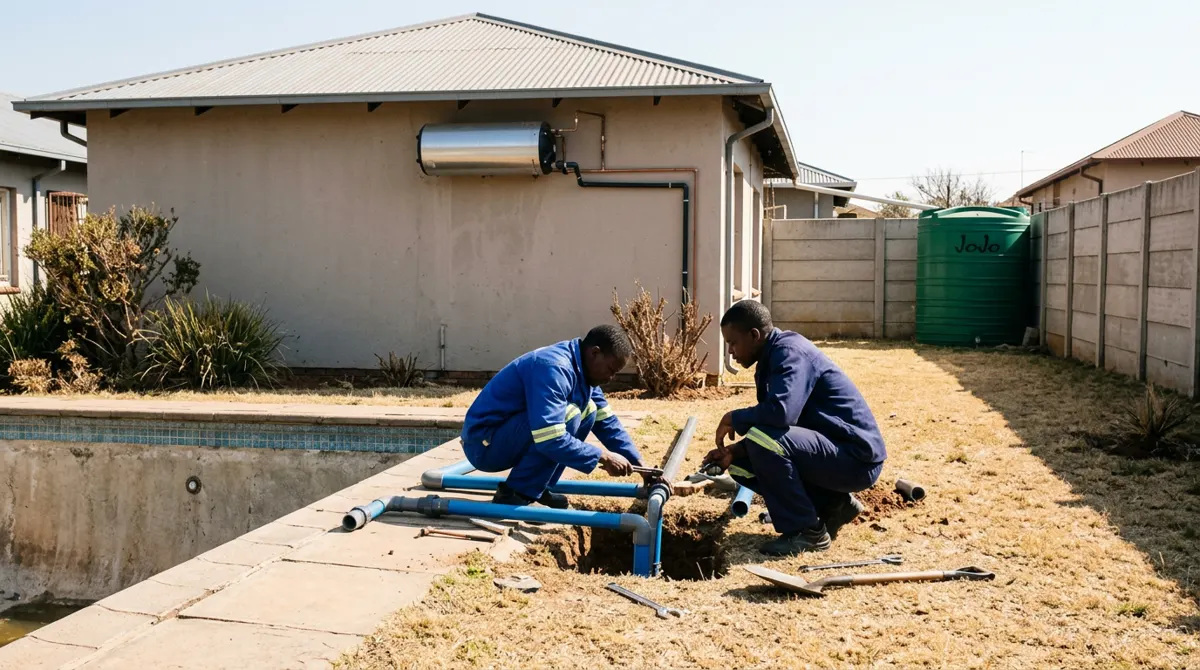
Expose only the necessary area where practical. Use pool-compatible pipe and fittings rated for the system, support the pipe properly and allow joints to cure according to the product instructions.
- 6
Test before covering the pipe
Check the repaired line for leaks before backfilling. Restore circulation, confirm that the pump primes and return flow is satisfactory, then complete the agreed reinstatement.
Common questions
Does a falling water level mean my pool pipes are leaking? +
No. Evaporation, splashing, backwashing, equipment faults and leaks through the shell or pool fittings can also cause water loss. A bucket comparison can flag unexplained loss, but line testing and inspection are needed to locate the cause.
Can a pool pipe leak be found without digging? +
Yes. Fox Plumbing uses harmless tracer gas and a detector for non-invasive leak detection, with most leaks found within the hour. Detection does not require digging, but repairing the located pipe may require opening the ground or paving.
Can I keep running the pump if I suspect a leak? +
Do not run a pump that cannot prime, is running dry or has insufficient water reaching it. Switch it off and arrange an assessment. Even if circulation appears normal, investigate unexplained water loss promptly rather than relying on repeated top-ups.
Will the whole pipe need replacing? +
Not necessarily. A single damaged joint or short cracked section may be repairable on its own. Widespread deterioration, repeated failures or inaccessible routing may make replacement or rerouting more sensible.
How long will the pool be out of use? +
That depends on access, the extent of the damage, joint curing requirements and testing. Finding a leak within an hour does not mean the repair will be complete within that hour. Ask for a likely downtime once the fault has been assessed.