
Quick answer
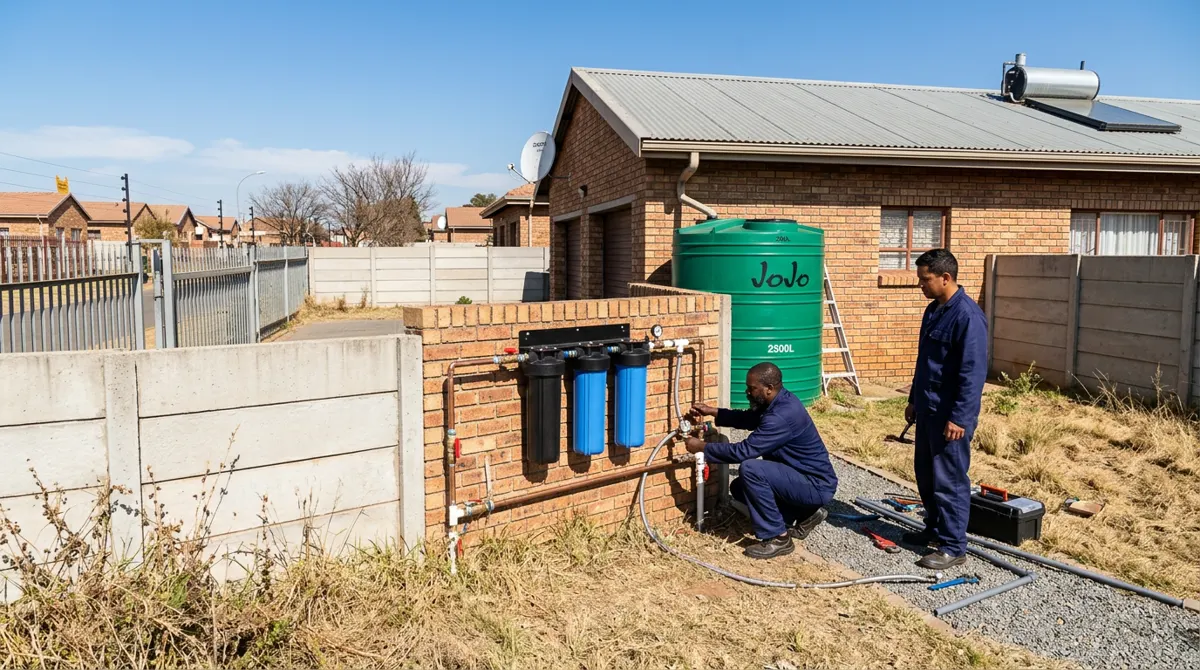
Water filtration systems treat water by passing it through materials or membranes designed to reduce particular contaminants, such as sediment, chlorine or certain dissolved substances. They can serve one drinking-water tap or the whole property, but no single filter removes everything or automatically makes unsafe water safe to drink. The right system depends on your water source, the problem you need to solve and how much water you use.
Signs you may need filtration—and which type helps
Grit in tap aerators, recurring sediment and an unpleasant chlorine taste are reasons to investigate your water supply. They are not, on their own, proof that the water is unsafe. Equally, clear water can contain contaminants you cannot see, taste or smell; testing is important when safety is uncertain.
Choose treatment for the specific problem rather than buying the system with the most stages. Check the manufacturer's independently verified reduction claims for the contaminant you want to address.
- Sediment filters trap particles such as sand and rust. Their micron rating indicates the particle size they are designed to capture; they do not remove dissolved salts.
- Activated carbon can reduce chlorine taste and odour and certain other substances, depending on the filter's specifications. Ordinary carbon filters are not reliable disinfection systems.
- Reverse osmosis uses a membrane to reduce many dissolved substances. It is commonly used at a drinking-water tap, needs maintenance and produces a reject-water stream.
- Water softeners address hardness minerals that cause scale. A standard sediment or carbon cartridge will not soften water.
- UV is a disinfection stage, not a particle filter. It needs suitable pre-treatment, electricity and maintenance to work effectively.
What affects the cost of a water filtration system?
An under-sink system treats water at one outlet, making it a focused option when the concern is drinking and cooking water. A whole-house system treats the incoming supply and must accommodate simultaneous demand from taps, showers and appliances.
Compare ongoing costs as well as installation requirements. A system with difficult-to-source cartridges or demanding servicing can be impractical even if it suits the available space.
- Water test results and the treatment stages needed.
- Single-tap treatment versus whole-property treatment.
- Peak flow demand, incoming pressure and the system's pressure loss.
- Access to pipework, mounting space and any additional tap, drain connection or electrical supply required.
- Isolation valves, suitable backflow protection and any necessary pipework alterations.
- Replacement cartridges, membranes, UV lamps, servicing and follow-up testing.
Practical considerations for Gauteng properties
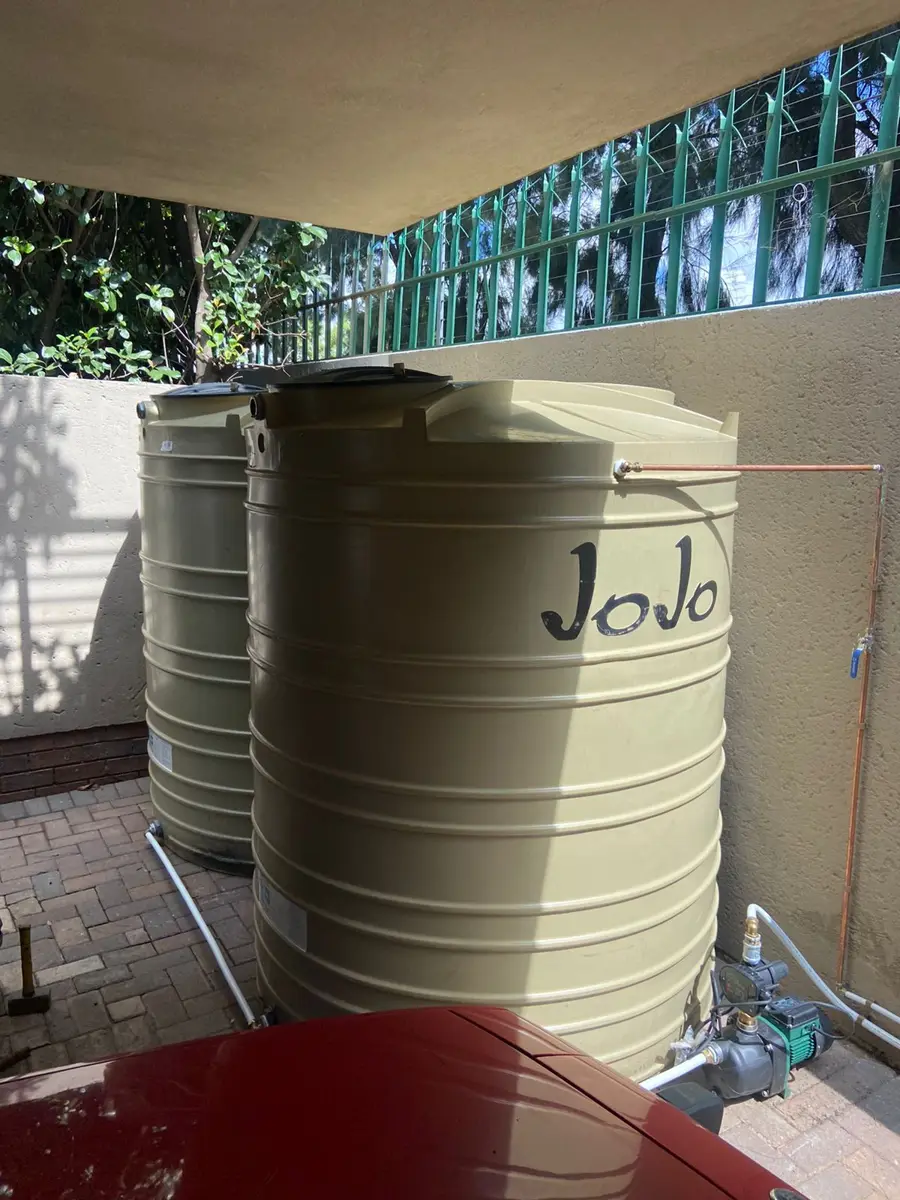
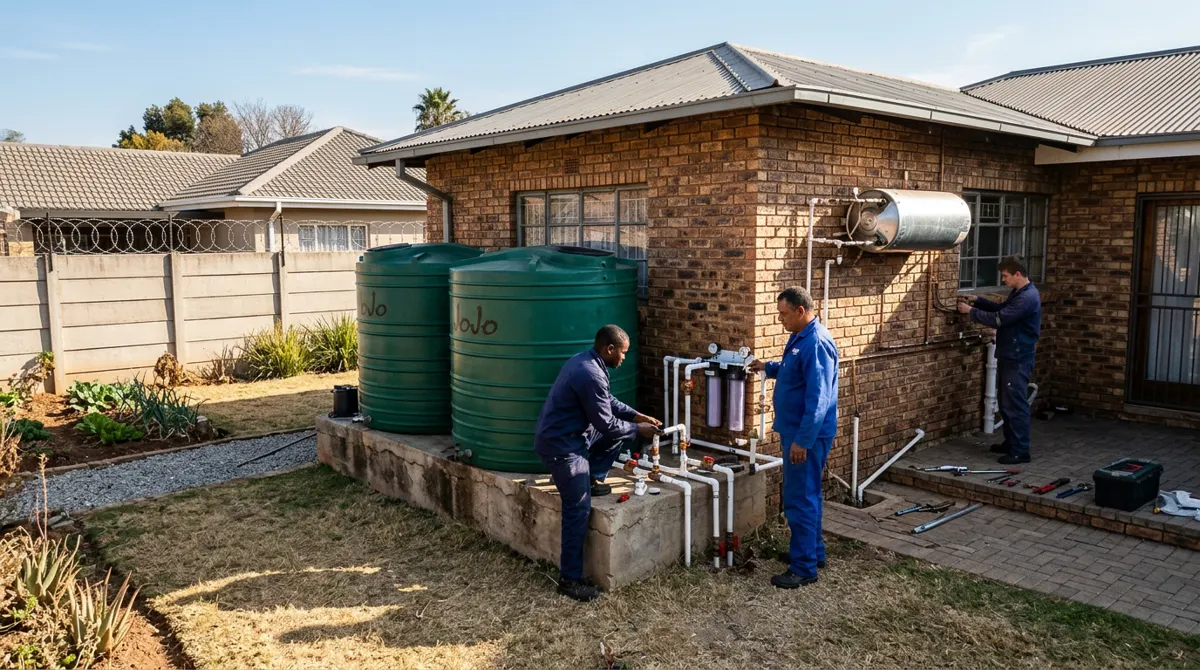
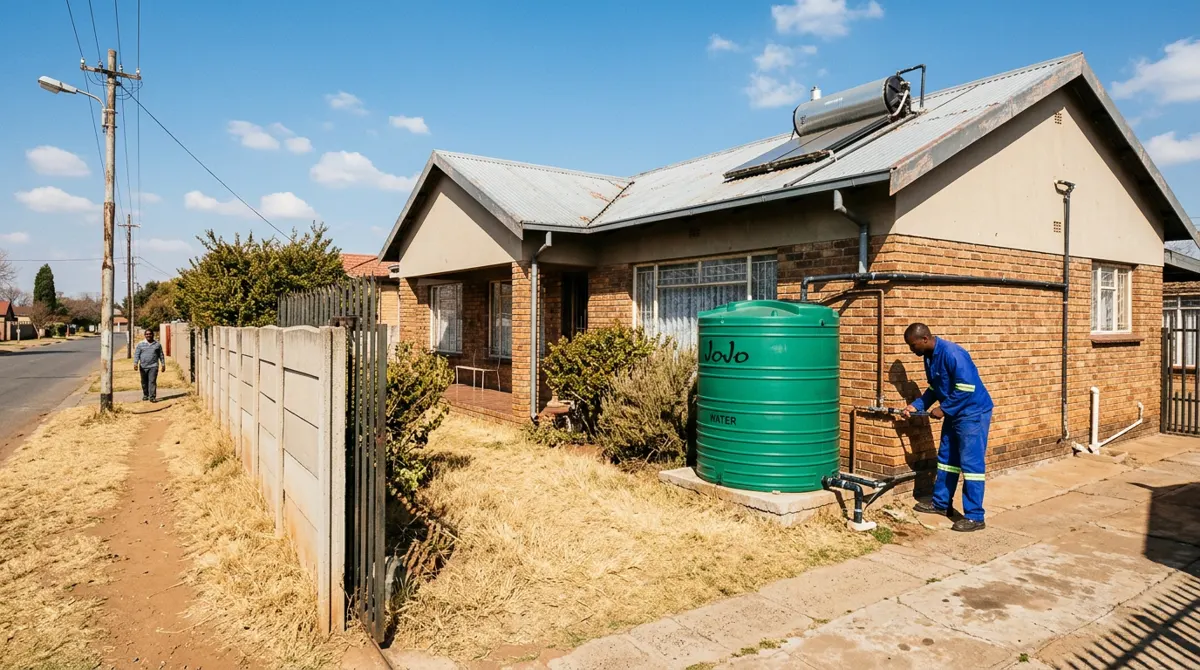
Start by identifying whether your property uses municipal water, stored municipal water, borehole water, rainwater or a combination. These sources need different assessments. A storage tank does not treat water: its cleanliness, cover and plumbing connections also matter. Borehole and rainwater supplies should be tested before selecting treatment for drinking use; do not assume that a basic cartridge makes them potable.
After a supply interruption or pipe repair, discoloured water deserves investigation rather than an automatic filter purchase. Follow municipal notices and flushing guidance. During a boil-water advisory, do not rely on an ordinary household filter as a substitute for the stated precautions.
- For borehole water, ask a suitable laboratory about microbiological and chemical testing, including hardness, iron and manganese where relevant.
- Keep alternative water supplies separated from the municipal supply through compliant plumbing and appropriate backflow protection.
- Allow space to remove filter housings and change cartridges without dismantling cupboards or nearby pipework.
- Record pressure and flow before choosing a whole-house unit; an undersized filter can restrict supply.
Speak to Fox Plumbing about your plumbing requirements
Fox Plumbing is based in Benoni and serves the East Rand and greater Gauteng. Owner Evan Pretorius is a qualified registered plumber with more than 20 years' experience and remains on the tools. Fox Plumbing is a member of IOPSA and PIRB and issues Certificates of Compliance (COCs).
The price is agreed upfront, the call-out fee includes the first hour of work, and every job is insured. Pensioners receive a special rate. To discuss your water supply and the plumbing requirements for a proposed filtration system, phone 084 368 1879. Hours are Monday to Friday, 08:00–17:00, with Saturdays by appointment.
How we do the job
- 1
Identify the source and the problem
Establish where the water comes from and whether the concern is sediment, taste, scale, staining or drinking-water safety. Check whether the issue affects one tap or the entire property.
- 2
Test where necessary
Use appropriate laboratory testing for untreated sources or suspected contamination. Follow the laboratory's sampling instructions so that results can guide treatment selection.
- 3
Select and size the treatment
Match each treatment stage to the findings. Choose between a dedicated drinking-water outlet and whole-house treatment, checking rated flow, operating pressure and replacement-part availability.
- 4
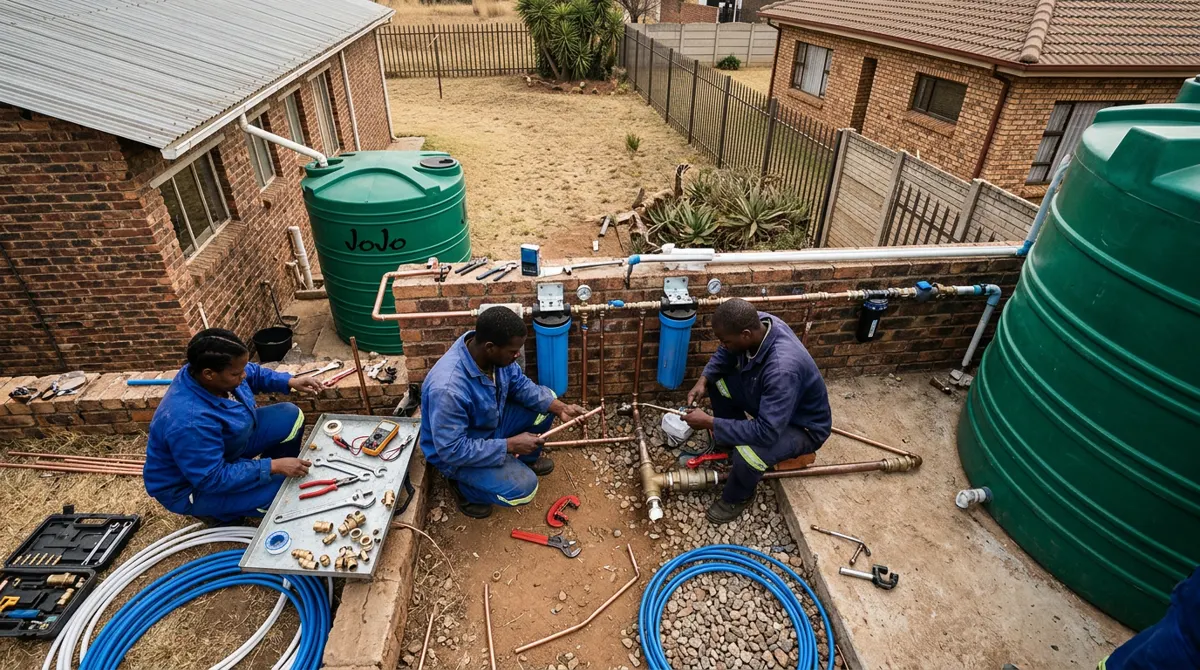
Install with safe access and connections
Provide suitable mounting, accessible isolation valves and required drainage or backflow protection. Follow the equipment manufacturer's instructions and applicable plumbing requirements.
- 5
Commission and plan maintenance
Flush and sanitise components as instructed, check for leaks and confirm usable flow. Where drinking-water safety depends on treatment, arrange appropriate verification testing. Record cartridge details and replacement dates.
Common questions
Will a water filter make any water safe to drink? +
No. A filter only addresses contaminants within its design and verified performance limits. Untreated or contaminated water may need several treatment stages, including disinfection, with testing to confirm that the treated water is suitable for drinking.
How often should filter cartridges be replaced? +
Follow the manufacturer's time and volume limits, whichever comes first. Heavy sediment can require earlier replacement. Reduced flow or returning tastes can indicate a problem, but some exhausted filters show no obvious warning, so do not rely on appearance alone.
Can filtration reduce water pressure? +
Yes. Every filter creates some resistance, and a clogged cartridge increases it. Correct sizing helps limit the effect, but the available pressure and expected simultaneous demand must be checked before installation.
Will a whole-house filter prevent scale in my geyser? +
Not if it is only a sediment or carbon filter. Scale caused by hardness needs a suitable hardness-treatment approach, selected using water results and the requirements of the connected equipment.
Do I need reverse osmosis for municipal drinking water? +
Not automatically. If the supply meets drinking-water requirements and your concern is chlorine taste, an appropriate carbon filter may be sufficient. Reverse osmosis is worth considering when a specific dissolved contaminant needs reduction, rather than simply because it offers more treatment stages.