
Quick answer
Borehole installation involves assessing your site, checking applicable water-use requirements, drilling, testing the available supply and fitting a suitable pumping system. For Gauteng property owners, the key is to establish whether the borehole can meet the intended demand: finding water does not guarantee a reliable supply or water that is safe to drink.
When is a borehole worth investigating?
A borehole may be worth considering if you have regular irrigation demand or want an additional water source during municipal interruptions. Start by listing what you want to supply: garden taps, toilets and drinking-water outlets have different plumbing and water-quality requirements.
If your main concern is an unexpectedly high water bill, investigate leaks before committing to drilling. If you mainly need short-term backup during outages, compare a borehole with a correctly installed municipal-water storage system. A borehole pump also needs power unless an alternative energy arrangement is provided.
- Estimate daily demand and peak demand rather than choosing a pump first.
- Allow space for storage, controls and any treatment equipment.
- Budget for electricity, testing and maintenance as well as installation.
- Do not assume a neighbour's successful borehole guarantees the same result on your property.
What affects borehole installation costs?
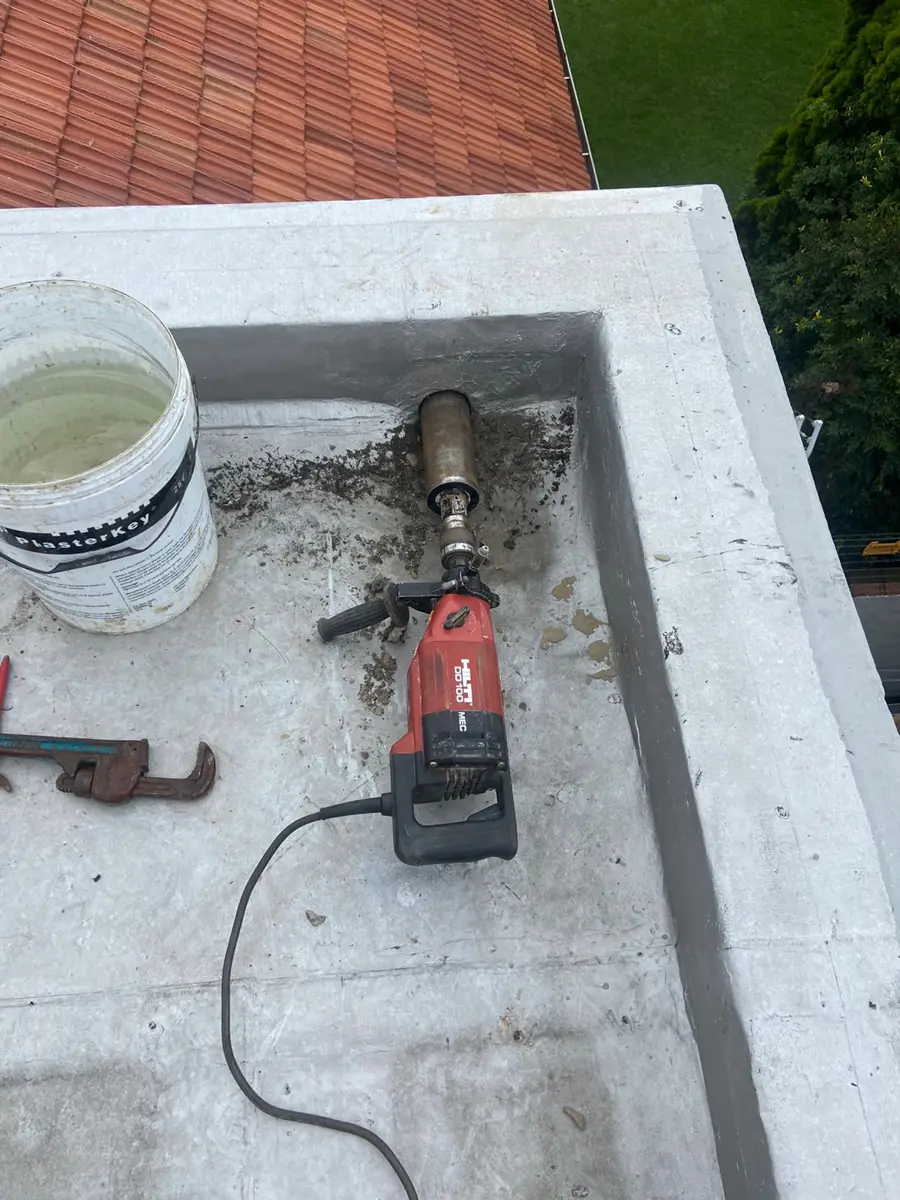
Ground conditions, drilling depth and the construction needed to keep the borehole stable all affect the scope. Access matters too: a drilling contractor needs room for the rig, equipment and safe movement around the work area.
Ask for an itemised quotation that separates drilling from testing, pumping equipment, storage, treatment and plumbing connections. Before drilling starts, agree how additional depth, difficult ground or an unsuccessful borehole will be charged. A drilling quotation is not necessarily a quotation for a complete working water system.
- Site assessment, rig access and protection of paving or landscaping.
- Drilling depth, rock conditions, casing and borehole sealing.
- Yield testing and laboratory water analysis.
- Pump duty, cable length, electrical protection and controls.
- Storage capacity, treatment needs, pipe routes and reinstatement.
Gauteng practicalities: permissions, access and water safety
Gauteng spans several municipalities, so check the requirements for your actual property rather than relying on advice for another town. Confirm any municipal borehole notification or registration requirements and the applicable Department of Water and Sanitation water-use requirements before proceeding. Estate or body corporate approval may also be needed. Owning a borehole does not automatically exempt you from applicable restrictions.
Choose the drilling position with underground services, buildings, contamination sources and future maintenance access in mind. Borehole water must not be allowed to feed back into the municipal network; any household integration needs compliant separation and backflow protection appropriate to the arrangement. Test the water before deciding whether treatment is needed for its intended use.
- Locate buried water pipes, drains and electrical cables before drilling.
- Assess nearby septic systems, fuel storage and other contamination risks.
- Plan where drilling discharge and spoil will go.
- Keep the borehole head protected against surface-water entry.
- Retain the drilling log, yield-test report and laboratory results.
Speak to Fox Plumbing about the plumbing scope
Fox Plumbing is based in Benoni and serves the East Rand and greater Gauteng. Owner Evan Pretorius is a qualified registered plumber with more than 20 years of experience and remains on the tools. Fox Plumbing is a member of IOPSA and PIRB and issues Certificates of Compliance (COCs). For a borehole project, contact Fox to discuss the plumbing requirements and confirm which parts of the proposed work it can undertake; drilling, groundwater assessment and laboratory testing need clearly allocated responsibilities.
The price is agreed upfront, the call-out fee includes the first hour of work, pensioners receive a special rate and every job is insured. Phone 084 368 1879, Monday to Friday, 08:00–17:00; Saturdays are by appointment.
How we do the job
- 1
1. Define the water demand
List the outlets you want to supply and estimate their usage. Decide whether the project is for irrigation, household backup or drinking water, and compare the practical alternatives.
- 2
2. Assess the site and confirm requirements
Have a suitable groundwater specialist assess the drilling prospects and location. Check services, contamination risks, rig access and applicable approvals. A siting assessment reduces uncertainty but cannot guarantee water.
- 3
3. Drill and construct the borehole
The drilling contractor records the ground encountered and installs casing and sealing appropriate to the conditions. Confirm the process for approving extra depth or changes to the agreed scope before work begins.
- 4
4. Establish yield and water quality
Develop the borehole to remove drilling debris, then carry out a pumping and recovery test to establish a suitable operating rate. Arrange laboratory sampling for the intended use; clear-looking water is not proof of drinking-water safety.
- 5
5. Fit the pump, storage and connections
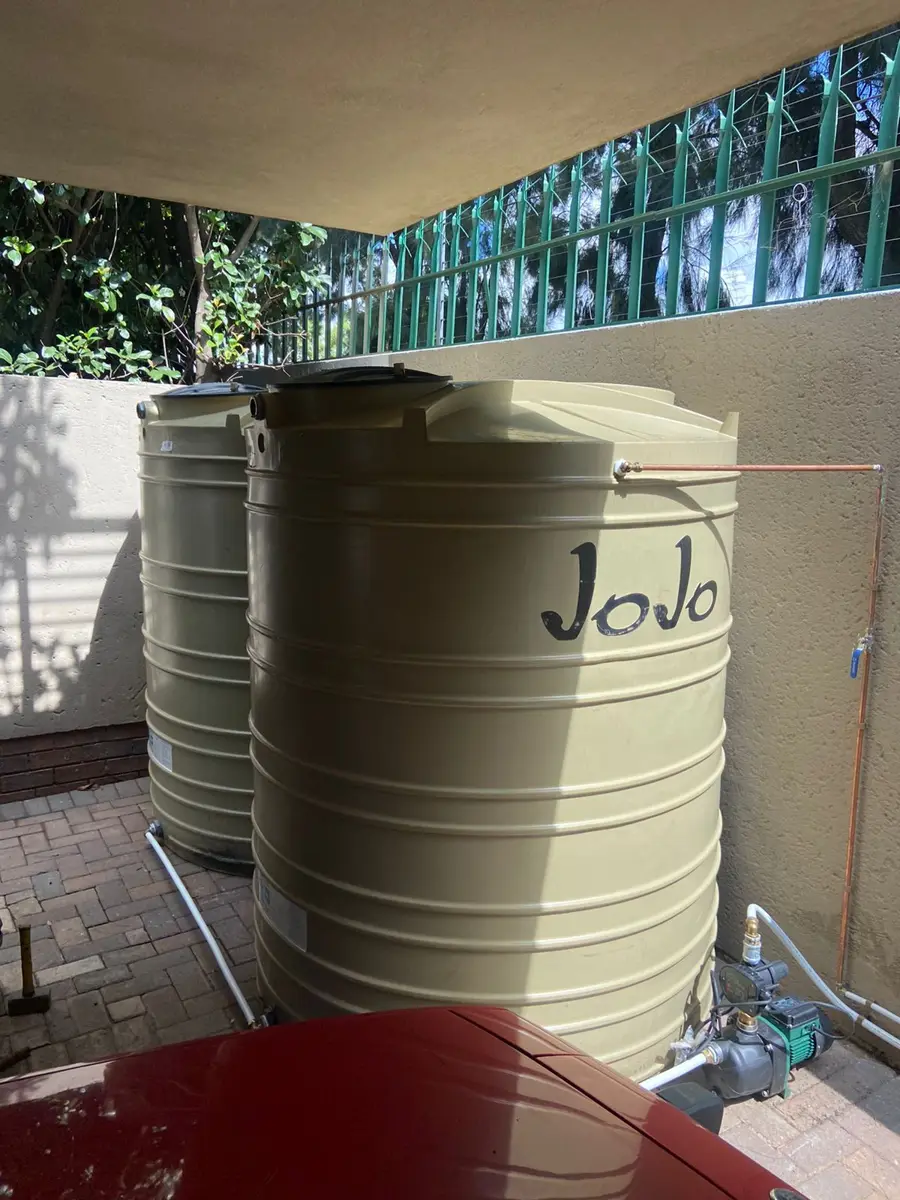
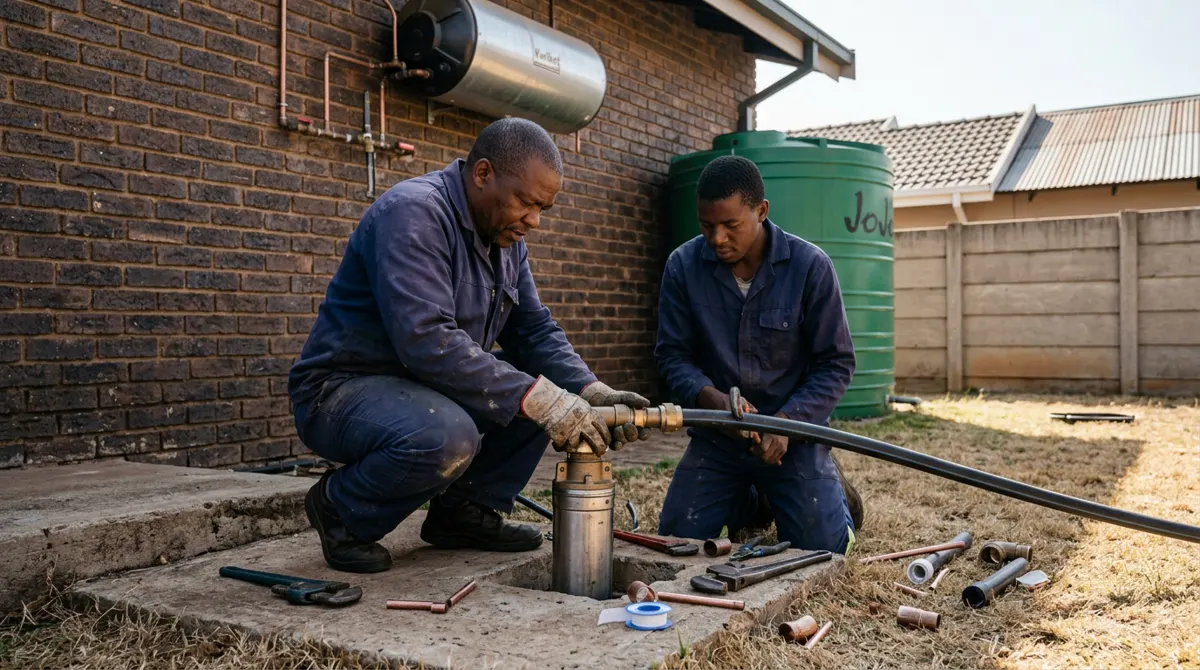
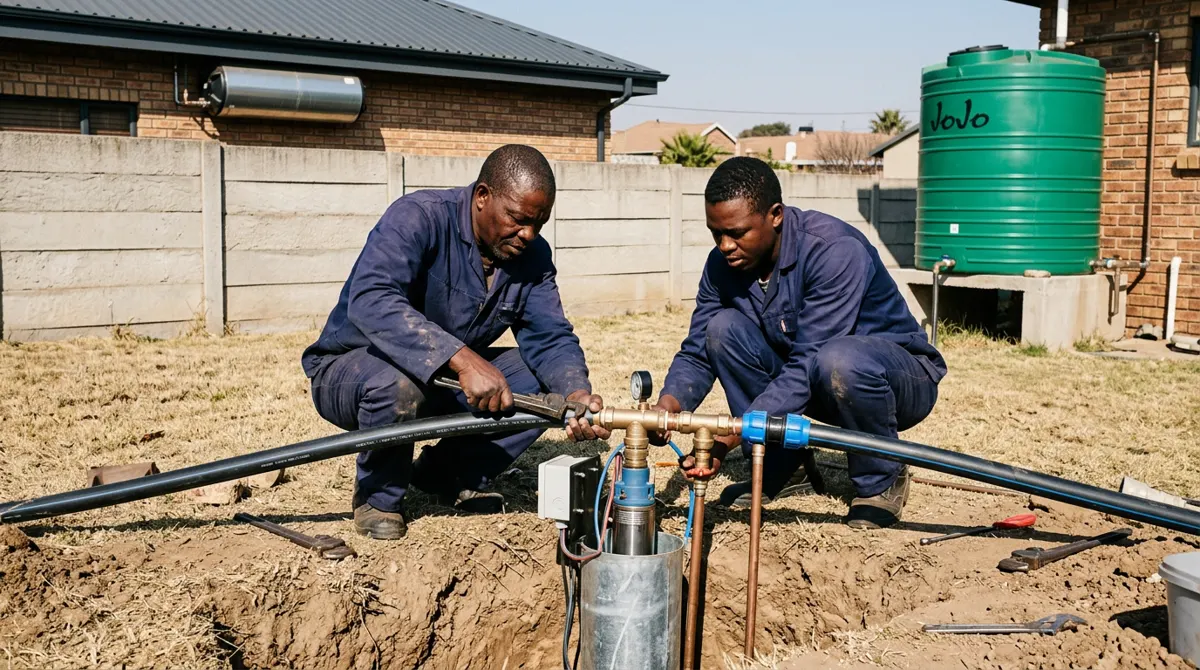
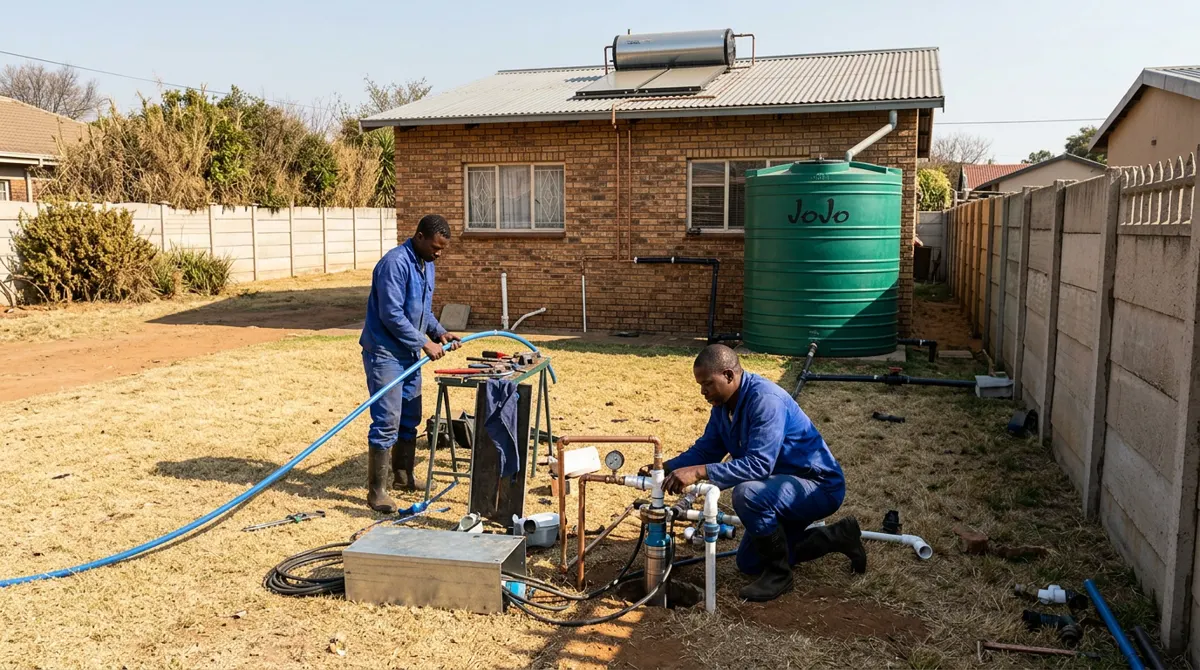
Select the pump using the tested yield, pumping water level, delivery height and required pressure. Install suitable controls and dry-run protection, with qualified electrical work and compliant plumbing. Add storage and treatment where the design requires them.
- 6
6. Commission and hand over
Check pressure, flow, controls, leaks and protection against contamination or municipal backflow. Obtain the relevant compliance documentation, equipment instructions and test reports, together with an operating and maintenance plan.
Common questions
Can I drink borehole water straight from the ground? +
Do not assume it is safe. Have a suitable laboratory test it for drinking-water use and base any treatment on the results. Filtration alone may not address microorganisms or dissolved contaminants. Arrange ongoing testing appropriate to the supply and retest after flooding, contamination concerns or changes in water quality.
How deep will my Gauteng borehole need to be? +
There is no reliable province-wide depth. Local geology and the water-bearing fractures encountered determine the outcome. Nearby drilling records can inform an assessment, but neither depth nor usable yield can be promised from those records alone.
Do I need permission to install or use a borehole? +
Check both municipal requirements and the national water-use rules that apply to your intended abstraction. Depending on the circumstances, registration or authorisation may be required. Estate approval does not replace government requirements.
Will a borehole supply water during load shedding? +
Not automatically. An electrically driven pump stops without a suitable backup power supply. Stored water may still be available, but delivery depends on whether the system uses gravity or a booster pump that also needs electricity.
Does a plumbing COC confirm that the borehole water is safe? +
No. A plumbing COC covers the applicable plumbing work within its scope; it does not replace laboratory water testing, a yield assessment or water-use authorisation. Keep these documents separately.