
Quick answer
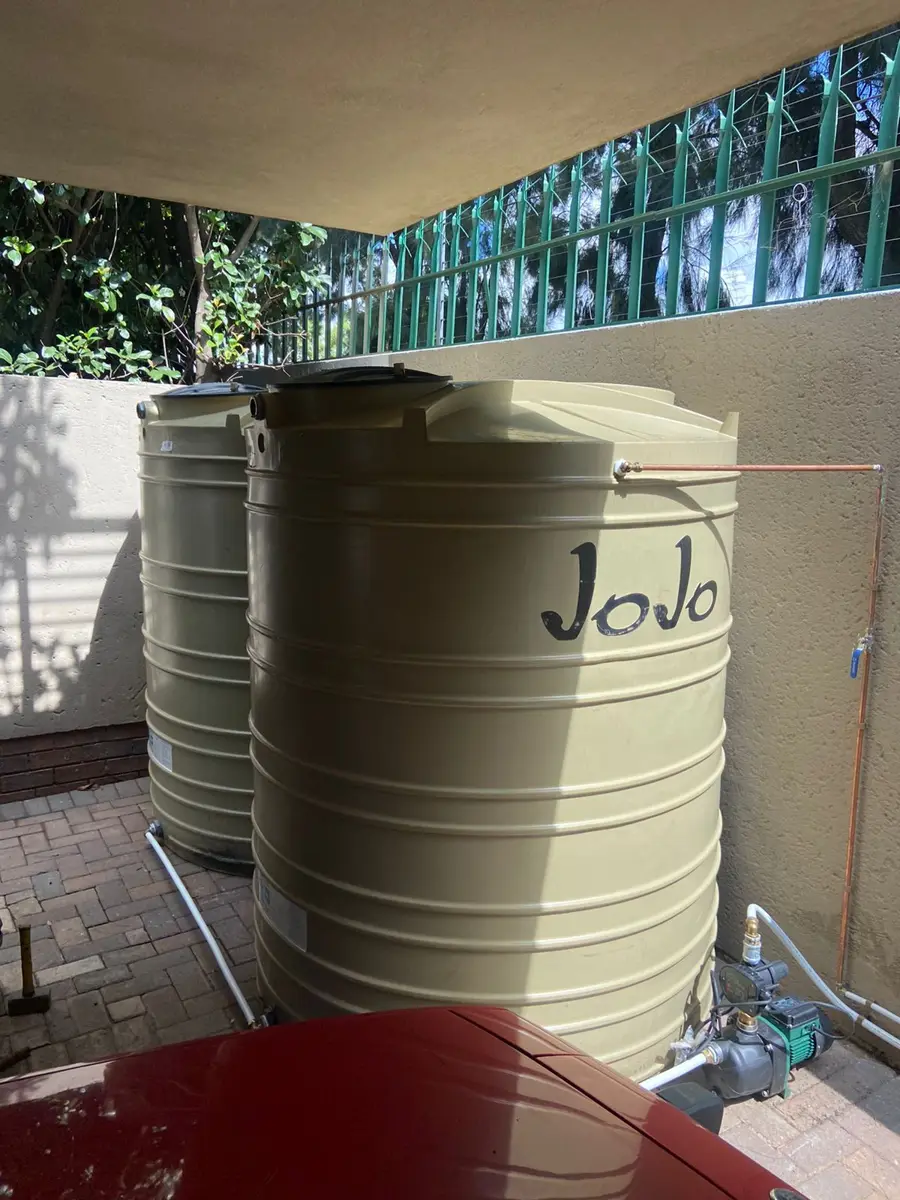
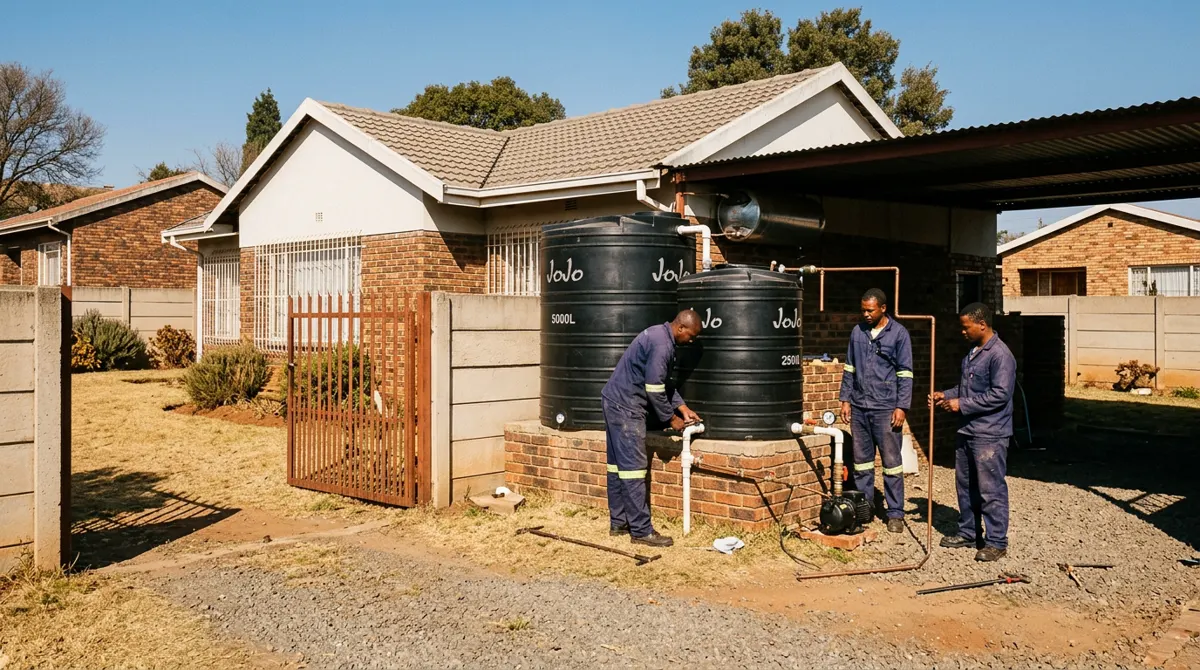
A water tank and pump system can keep selected taps and appliances supplied during a municipal interruption, provided the tank holds enough water and the pump has power. For a Springs property, the right setup depends on your essential water use, available space and existing plumbing—not simply the biggest tank or strongest pump. Fox Plumbing serves Springs from Benoni, with owner Evan Pretorius on the tools and the price agreed upfront.
Signs you should consider a tank and pump system
Consider backup storage if water interruptions leave you unable to flush toilets, wash or run essential business facilities. A pump may also help where stored water cannot provide enough pressure to supply your fixtures properly.
Weak pressure alone does not prove that you need a pump. A partly closed valve, blocked strainer, leaking pipe or restricted supply can produce similar symptoms. Check the cause first: adding a stronger pump will not fix every plumbing fault.
- Your essential taps stop working whenever the municipal supply is interrupted.
- An existing tank stores water but cannot deliver useful flow to the building.
- Pressure drops noticeably when more than one outlet is used.
- Your current pump repeatedly starts and stops, runs without delivering water or struggles to maintain pressure.
What affects the cost of water storage and pumping?
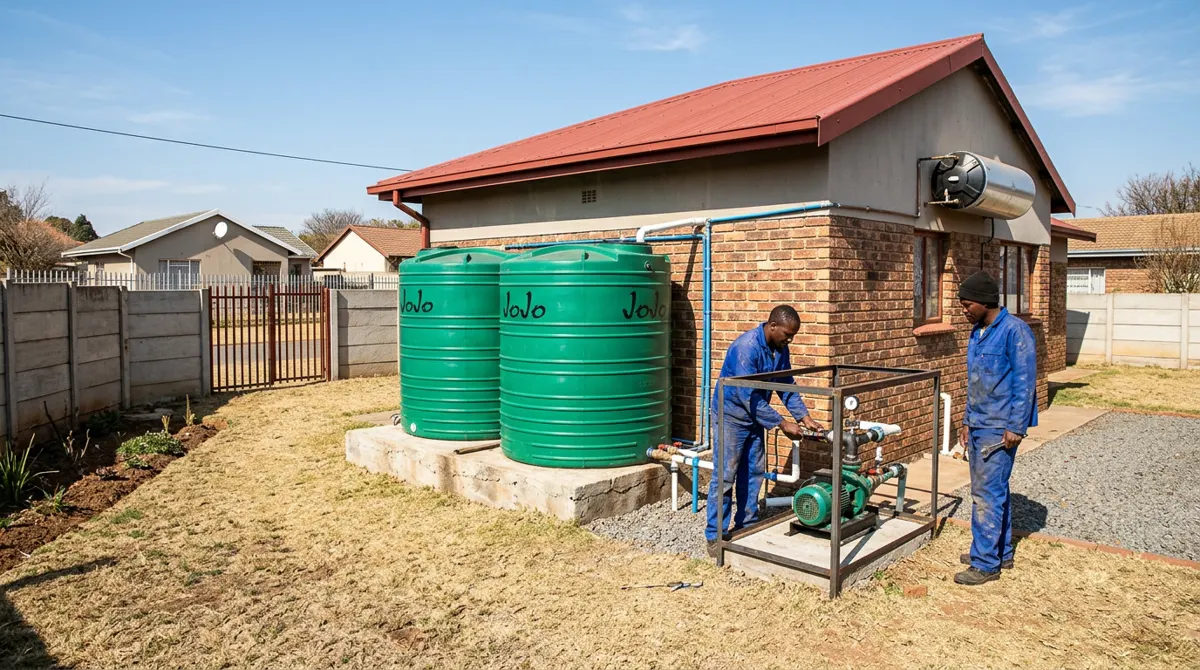
The scope depends on how much water you need to store and how it must be delivered. Start by deciding which outlets matter during an interruption. Supplying toilets and a few washing points is a different requirement from running an entire home and irrigation together.
Site preparation and plumbing changes also matter. A tank needs a stable, level base that meets its manufacturer's requirements, while the pump needs suitable electrical provision and accessible, protected placement. Fox Plumbing agrees the price upfront; its call-out fee includes the first hour of work.
- Storage capacity and the number of tanks needed.
- Base preparation, site access and distance from the existing pipework.
- Required flow, delivery pressure, pipe sizes and elevation changes.
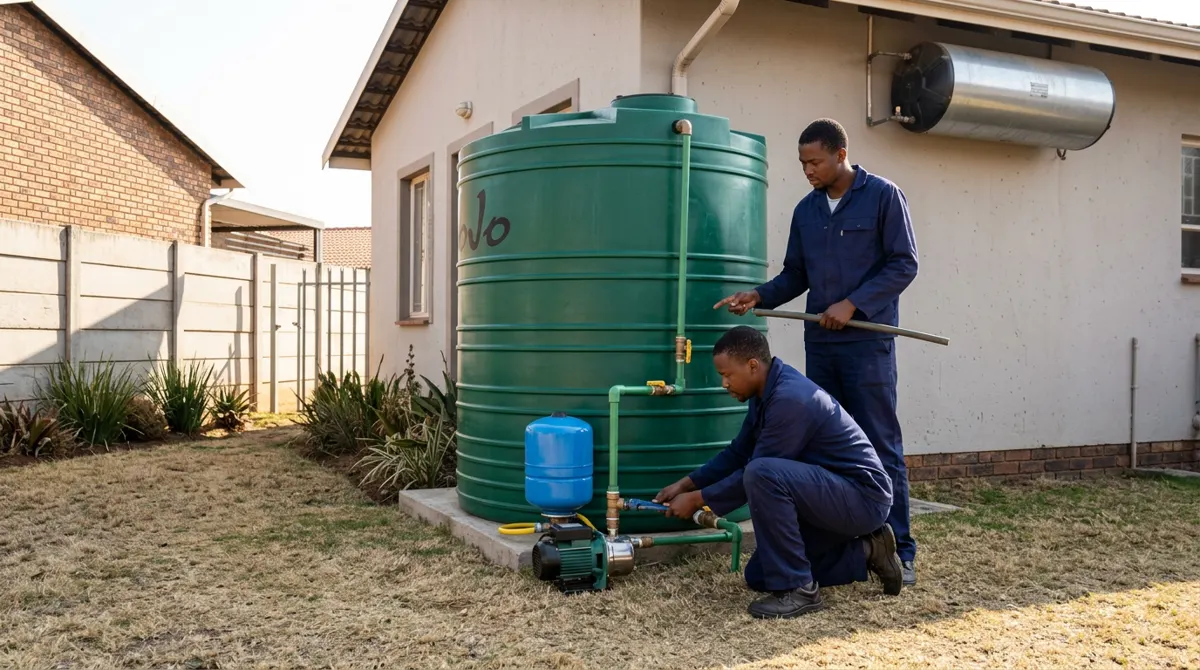
- Pump controls, dry-run protection and any pressure vessel required.
- Backflow protection, isolation valves and changeover arrangements.
- Water treatment requirements and any necessary electrical work.
Practical planning for a Springs property
For your Springs home or business, plan around actual consumption rather than a fixed promise of several days' backup. List the essential uses, estimate their daily demand and decide how long you want storage to last. Keep garden irrigation separate from that calculation unless it is genuinely part of your backup requirement.
Water storage and electricity backup are separate issues. Most pressure pumps need electricity, so a full tank may not supply pressurised water during a power cut. Any alternative power source must suit the pump's starting and running requirements. Municipal top-up, rainwater and other sources also need distinct safety considerations: stored water is not automatically safe to drink, and a sediment filter alone does not make rainwater potable.
- Allow access to the tank lid, valves, filters and pump for maintenance.
- Choose a pump position that limits noise near bedrooms and neighbours without restricting ventilation.
- Plan a safe route for overflow water so it does not undermine the base.
- Have applicable municipal requirements and backflow protection checked before connecting to household plumbing.
Why discuss your system with Fox Plumbing?
Fox Plumbing is based in Benoni and serves the East Rand and greater Gauteng, including Springs. Owner Evan Pretorius is a qualified registered plumber with more than 20 years of experience. He is on the tools, is a member of IOPSA and PIRB, and issues Certificates of Compliance (COCs).
Every job is insured, pensioners receive a special rate, and the price is agreed upfront. Call 084 368 1879 to discuss your water supply, existing equipment and intended backup needs. Hours are Monday to Friday, 08:00–17:00, with Saturdays by appointment.
How we do the job
- 1
Assess the supply and existing plumbing
Check incoming pressure and flow, identify restrictions or leaks, and inspect any existing tank and pump. Establish whether the main need is storage, pressure support or a repair.
- 2
Define demand and size the equipment
Agree which outlets the system must serve and the intended backup duration. Match tank capacity to consumption and select the pump for the required flow and pressure, allowing for pipe losses and elevation.
- 3
Prepare the tank and pump positions
Provide a level, load-bearing base in line with the tank manufacturer's instructions. Arrange maintenance access, overflow drainage and a protected, ventilated pump location, with electrical work handled by a suitably qualified electrician.
- 4
Connect the system safely
Fit the specified pipework, isolation valves, controls and backflow protection. Where a bypass or changeover is included, ensure it cannot create an unsafe connection between water sources.
- 5
Test operation and explain maintenance
Prime the pump as required, check for leaks, test pressure under demand and verify the controls and dry-run protection. Demonstrate normal operation, safe isolation and any changeover procedure, and clarify maintenance and applicable COC requirements.
Common questions
What size water tank do I need? +
Base the size on essential daily consumption multiplied by your intended backup period, with an allowance for uncertainty. Available space, the supporting base and how reliably the tank can refill also affect the choice.
Will a water tank and pump work during a power cut? +
The tank still stores water, but an electrically powered pump needs a suitable power source to deliver pressure. Gravity supply is only practical where the height and plumbing layout provide enough pressure; a ground-level tank will not normally replace a pressure pump.
Can a booster pump draw directly from the municipal main? +
Do not assume this is permitted or suitable. Direct boosting can affect the shared supply and create contamination risks. Have local requirements checked; a suitably designed break-tank arrangement separates stored water from the incoming supply.
Can I use the same system for rainwater and drinking water? +
Do not mix sources or connect rainwater to drinking-water plumbing without a properly designed system. Rainwater used for drinking needs treatment suited to its quality, ongoing maintenance and appropriate testing. Basic sediment filtration is not enough.
Why does my pump keep switching on when no taps are open? +
Possible causes include a leak, a passing non-return valve, a pressure vessel problem or a control fault. Arrange an assessment rather than repeatedly adjusting the pressure settings. If the pump is running dry or overheating, switch it off safely and have it checked.