
Quick answer
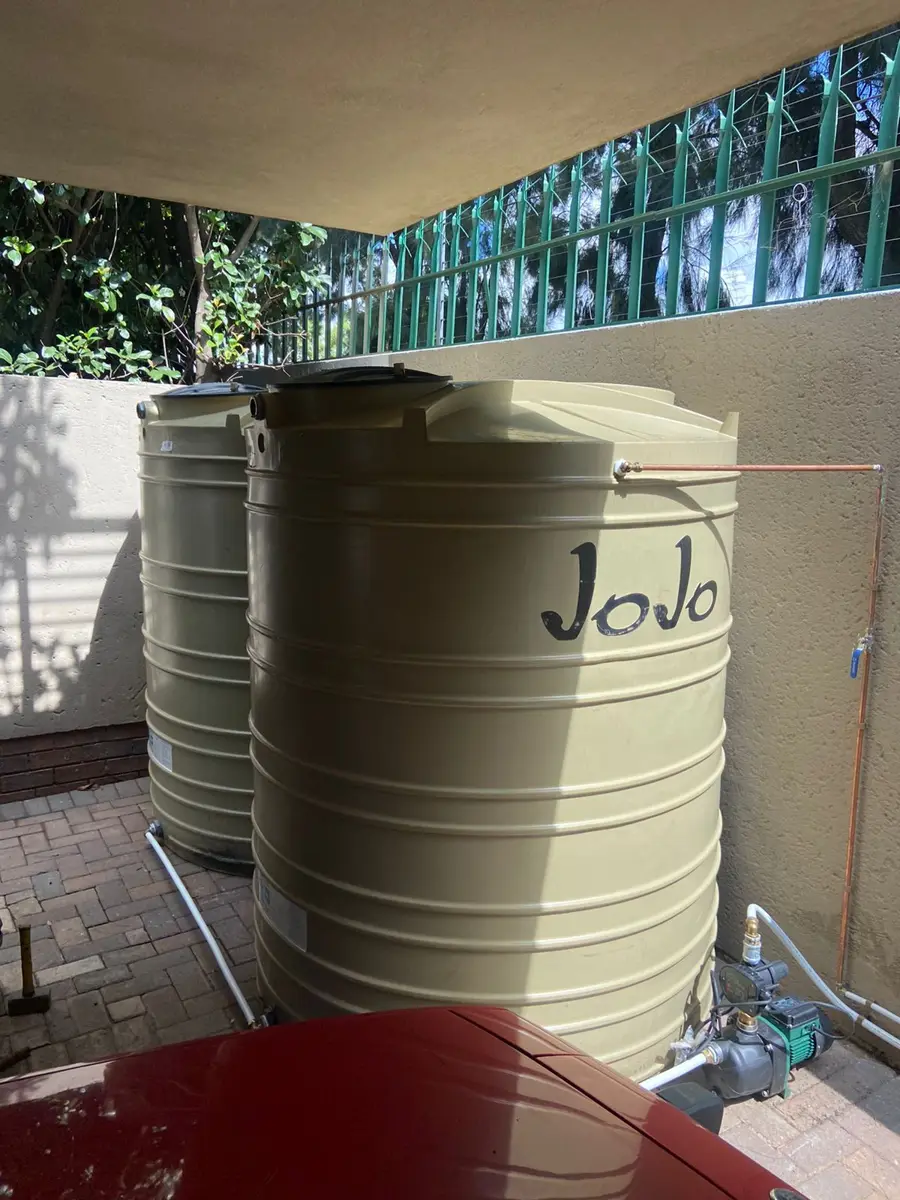
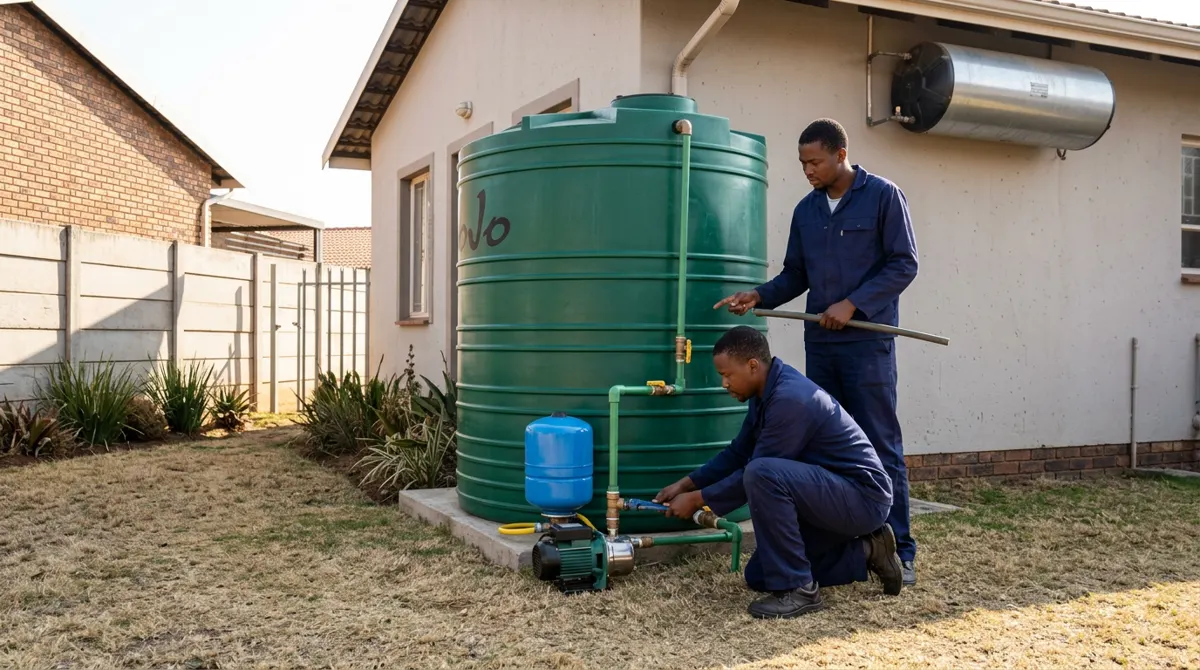
A water tank and pump system stores water and supplies it to your property at a usable pressure. The tank provides a reserve, while the pump moves that water through your plumbing when needed. In Gauteng, it can help during municipal interruptions or with inadequate supply pressure, provided there is enough stored water and power for the pump.
How the system works and when you might need one
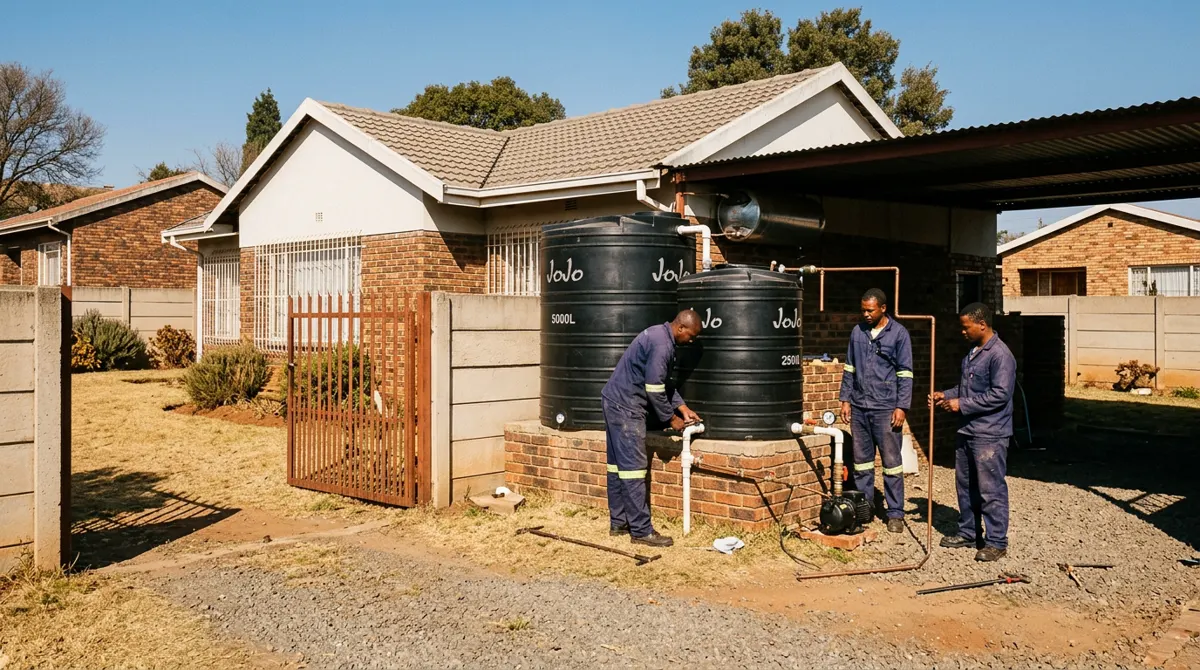
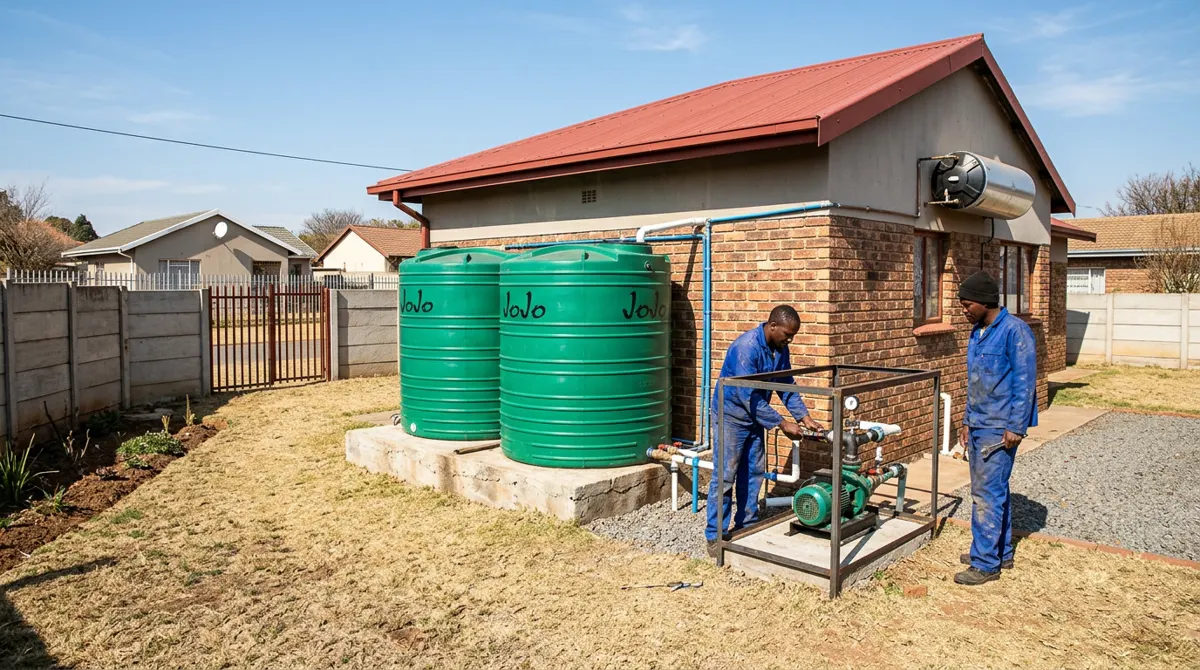
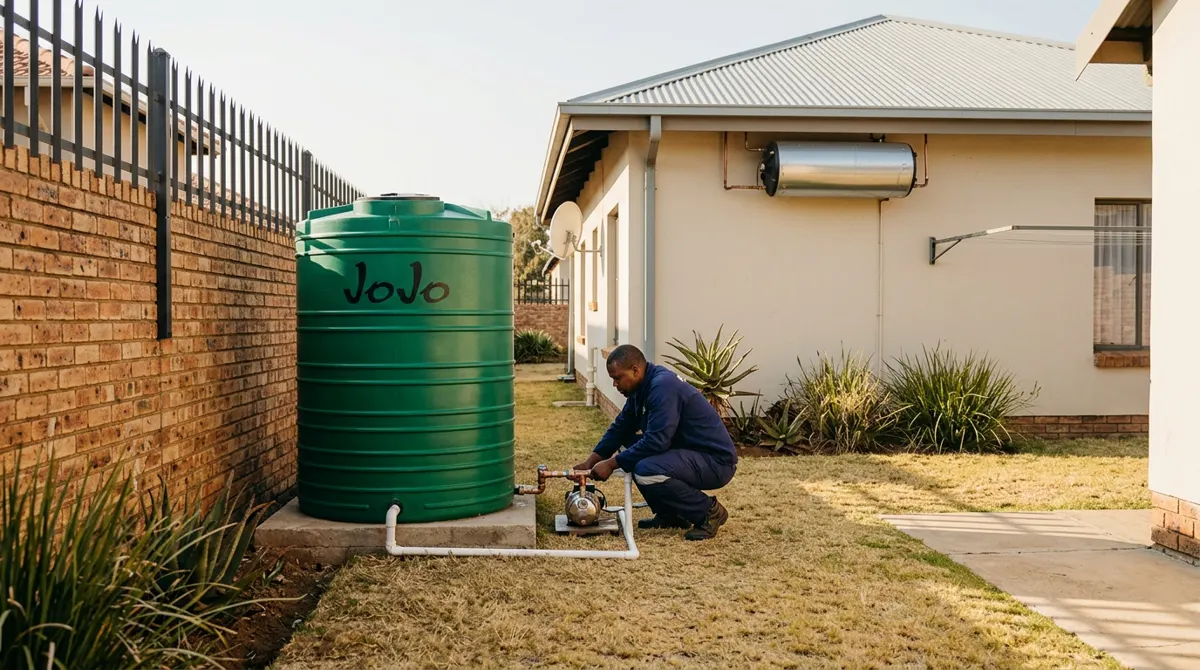
In a municipal backup arrangement, the incoming supply fills a tank through a controlled inlet, usually with a float valve that stops filling when the tank is full. A pump draws from the tank and feeds the property through suitable controls, isolation valves and backflow protection. Depending on the design, opening a tap triggers the pump through a pressure or flow controller; some systems also use a pressure vessel to reduce frequent starting.
Consider a system if interruptions regularly leave you without water, or if several outlets cannot operate comfortably together. First establish why pressure is poor: a leak, blocked strainer, faulty valve or restricted pipe may need repair rather than a booster pump. An elevated tank can provide gravity pressure, but whether that is sufficient depends on its height above the outlets and the appliances' requirements.
- A storage tank addresses a shortage of available water; a pump addresses delivery pressure and flow.
- Dry-run protection helps stop the pump when the tank is empty.
- A pressure vessel can reduce pump cycling, but it does not replace the storage tank.
- A system supplying toilets and selected taps has different requirements from one supplying an entire house.
What affects system size and installation cost?
Choose tank capacity around essential daily consumption and the length of interruption you want to cover. Multiply your estimated essential use per day by the intended backup period, then allow for water that cannot be drawn from the tank. Check that the available supply can refill it between interruptions; a larger tank is not useful if it rarely fills.
Pump selection requires both flow and pressure calculations. The plumber should consider how many outlets will run together, the height to upper floors, pipe lengths and friction losses, and appliance limits. A bigger motor is not automatically a better choice: an oversized or poorly controlled pump can cause excessive pressure, noise and repeated starting.
- Tank capacity, shape and access for delivery.
- Ground preparation and a level base capable of supporting the full tank.
- Pump duty, control type, dry-run protection and any pressure vessel.
- Pipe routes, isolation valves, backflow protection and a suitable bypass arrangement.
- Water testing, filtration or treatment appropriate to the source.
- Electrical work, weather protection and any compatible backup power.
Practical considerations for Gauteng properties
Plan for water and electricity interruptions separately. An ordinary electric pump will stop during a power outage unless a suitable backup supply is available. An inverter or generator must accommodate the pump's starting demand as well as its running load. A correctly designed municipal bypass can supply the house without the pump only while municipal water and adequate pressure are available.
Water quality needs its own plan. Use a tank suitable for the intended water use, with a secure lid, protected openings and access for inspection and cleaning. Regular turnover helps, but does not guarantee drinking-water safety. Rainwater and borehole water require source-specific assessment, testing and treatment before drinking; a basic sediment filter does not remove all harmful microorganisms or dissolved contaminants.
- Confirm the relevant municipality's requirements before altering supply connections; rules can differ across Gauteng.
- Prevent stored or alternative-source water from flowing back into the municipal main.
- Do not boost directly from the municipal main without confirming that the arrangement is permitted.
- Keep non-potable pipework clearly identified and separate from drinking-water plumbing.
- Route overflow away from foundations and neighbouring properties, and consider pump noise near bedrooms or shared boundaries.
- For sectional-title properties, check body corporate approval and shared-service arrangements before work starts.
Discuss your requirements with Fox Plumbing
Fox Plumbing is based in Benoni and serves the East Rand and greater Gauteng. Owner Evan Pretorius is a qualified registered plumber with more than 20 years' experience and remains on the tools. Fox Plumbing is a member of IOPSA and PIRB and issues Certificates of Compliance (COCs).
The price is agreed upfront, the call-out fee includes the first hour of work, pensioners receive a special rate and every job is insured. To discuss your property's water supply and backup requirements, phone 084 368 1879. Hours are Monday to Friday, 08:00–17:00, with Saturday appointments by arrangement.
- Have your water source, typical interruption length and essential outlets ready to discuss.
- Mention any upper-floor bathrooms, existing tank, borehole or inverter.
- Ask what the proposed scope includes and which compliance documentation applies.
How we do the job
- 1
Assess the existing supply
Check incoming pressure and flow, inspect the plumbing and investigate leaks or restrictions. Establish whether the priority is stored backup water, improved delivery pressure or both.
- 2
Calculate storage and pump requirements
Estimate essential consumption, the desired backup duration and simultaneous outlet demand. Match the pump to the required flow and pressure rather than selecting by motor size alone.
- 3
Plan the layout and protections
Choose an accessible tank position and suitable base. Plan the inlet, overflow, pump position, isolation valves, backflow protection and any bypass, while checking municipal requirements.
- 4
Install the tank, pump and connections
Secure the tank on its prepared base and connect the plumbing and controls. Arrange electrical work through an appropriately qualified electrical professional, including safe isolation and any backup-power connection.
- 5
Test operation and water suitability
Check for leaks, confirm inlet shut-off and dry-run protection, and test pressure with multiple outlets open. Check the changeover or bypass operation and complete any required cleaning, disinfection or water testing before use.
- 6
Hand over operating and maintenance instructions
Identify the valves and controls, explain what happens during water or power interruptions, and set maintenance intervals based on the equipment and water source. Include filter servicing, tank inspection and checks for unusual pump cycling.
Common questions
Will a tank and pump keep my taps running throughout an outage? +
Only while there is usable water in the tank and power for the pump. Backup duration depends on consumption and stored volume. Limiting non-essential use, such as irrigation, helps preserve water for household needs.
Can I drink water stored in a municipal backup tank? +
It can remain suitable for drinking if the incoming water is safe and the tank, plumbing and maintenance protect that quality. Storage does not make unsafe water safe, and clear-looking water is not proof of safety. If contamination is suspected or an advisory applies, follow local guidance and have the water assessed.
Do I need a pump if the tank is raised? +
Not for every application. Gravity may be enough for a low-level garden tap, but household fixtures and appliances often need more pressure. Check the vertical height from the tank's water level to the outlet, pipe losses and appliance requirements before deciding.
Can the pump supply my geyser? +
Yes, if the system is designed to suit the geyser and its pressure-control and safety components. The pump's maximum pressure must be considered, not just its normal operating pressure. Geyser safety valves must never be bypassed to accommodate a pump.
Why does a pump keep switching on when no taps are open? +
Possible causes include a plumbing leak, a leaking non-return valve, a pressure-vessel problem or a control fault. Repeated cycling should be investigated rather than accepted as normal. If the pump runs without delivering water or appears to be running dry, switch it off and arrange an inspection.