
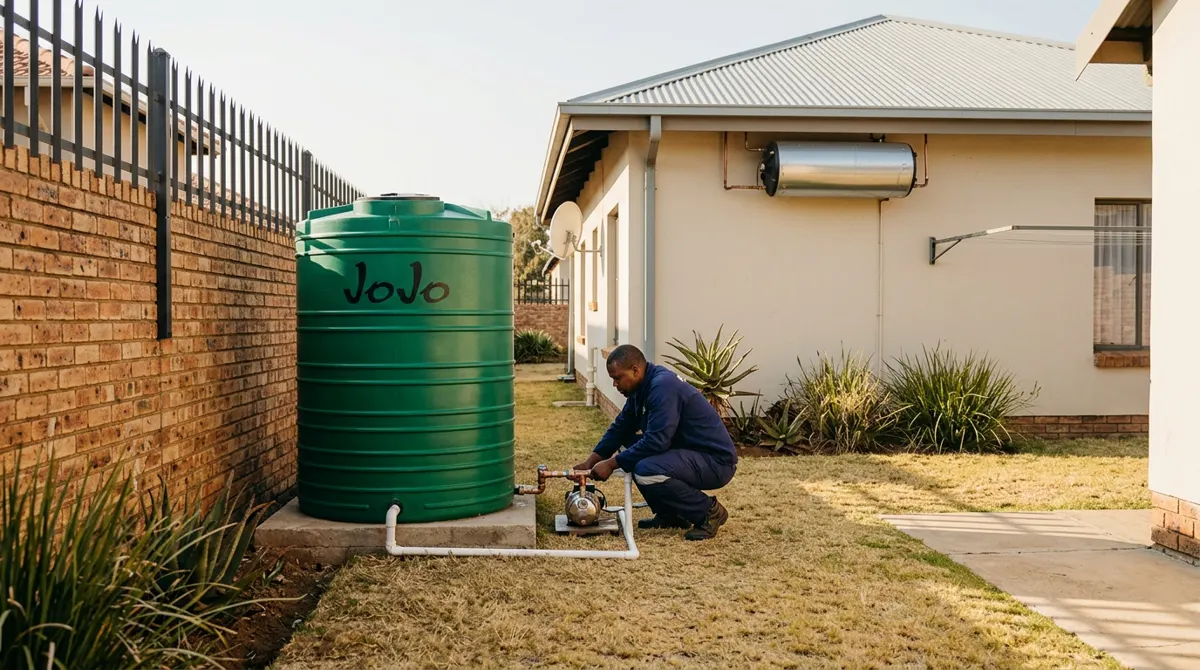
Quick answer
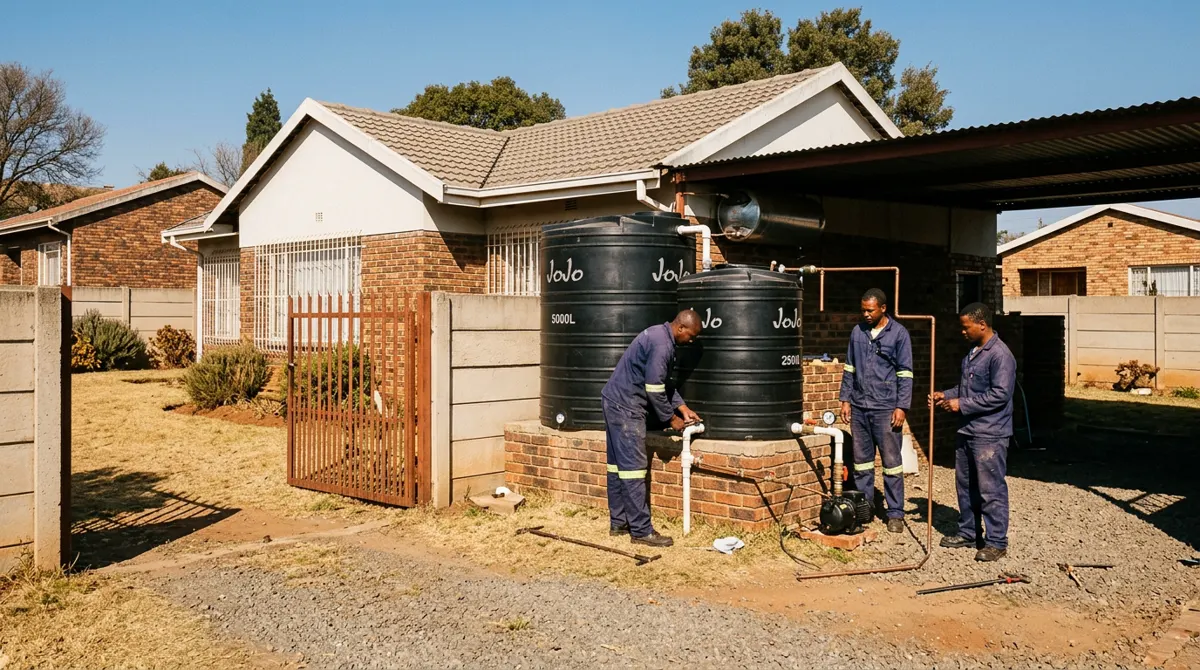
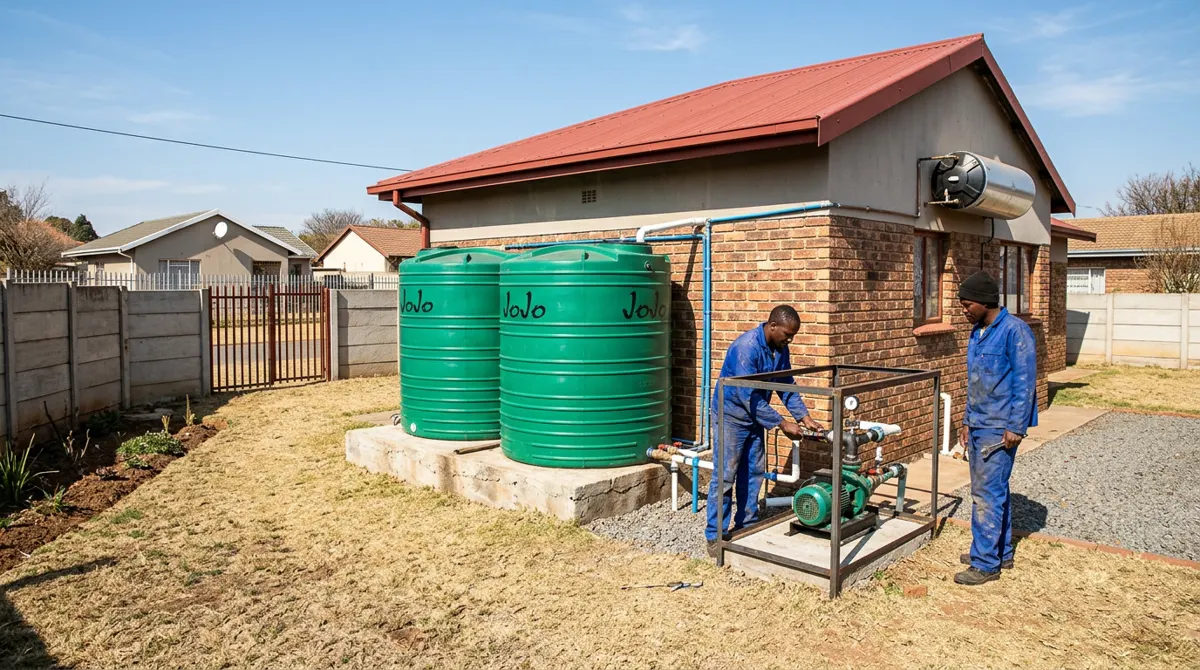
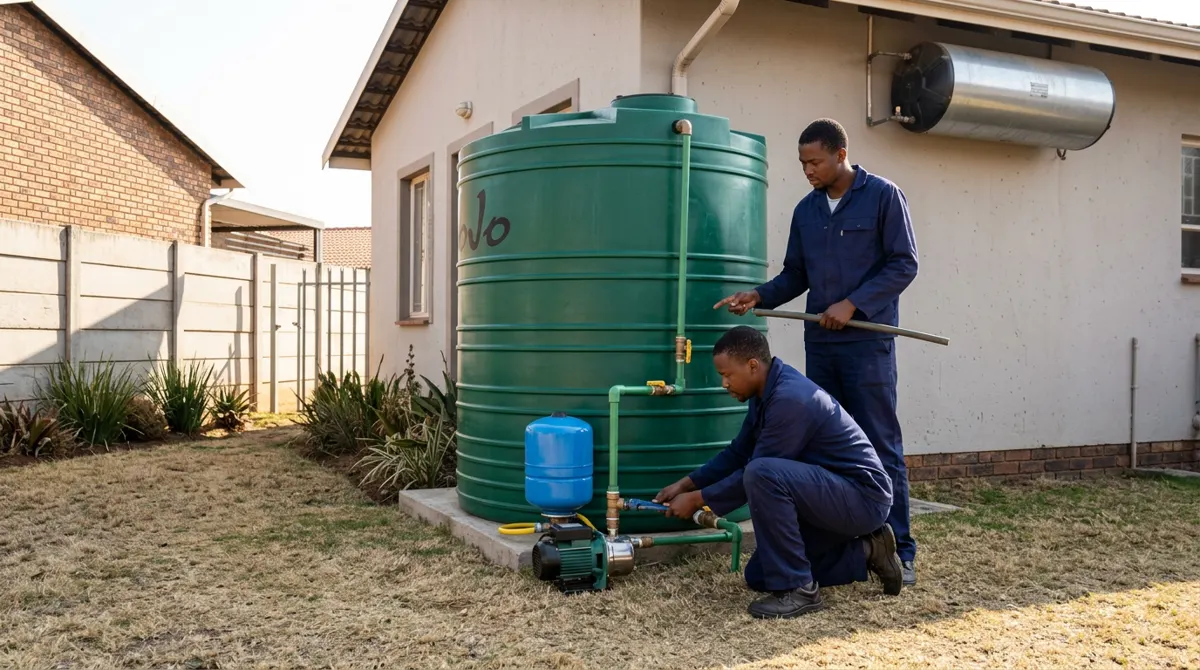
A water tank and pump system stores water for supply interruptions and delivers it to selected outlets at a suitable pressure. For a Benoni home or business, the right setup depends on daily water use, available space, simultaneous demand and whether the pump will have power during an outage. Contact Fox Plumbing to discuss your property and agree on the scope and price upfront.
When a tank and pump system makes sense
Consider stored water if supply interruptions leave you unable to flush toilets, wash or keep essential business activities running. Decide which outlets really need backup before choosing a tank: supplying toilets and a few taps requires a different plan from supporting the whole property.
Weak pressure needs investigation before buying a pump. A restricted valve, blocked filter, undersized pipe or leak can cause poor flow even when municipal pressure is adequate. A pump should address a confirmed supply need, not mask a plumbing fault.
- Choose storage capacity around essential daily use and the interruption period you want to cover.
- Size the pump for the outlets likely to run together, pipe distances and changes in height.
- Check that the proposed pressure suits the existing plumbing, geyser and appliances.
- Consider dry-run protection so the pump stops safely if the tank empties.
What affects the installation cost
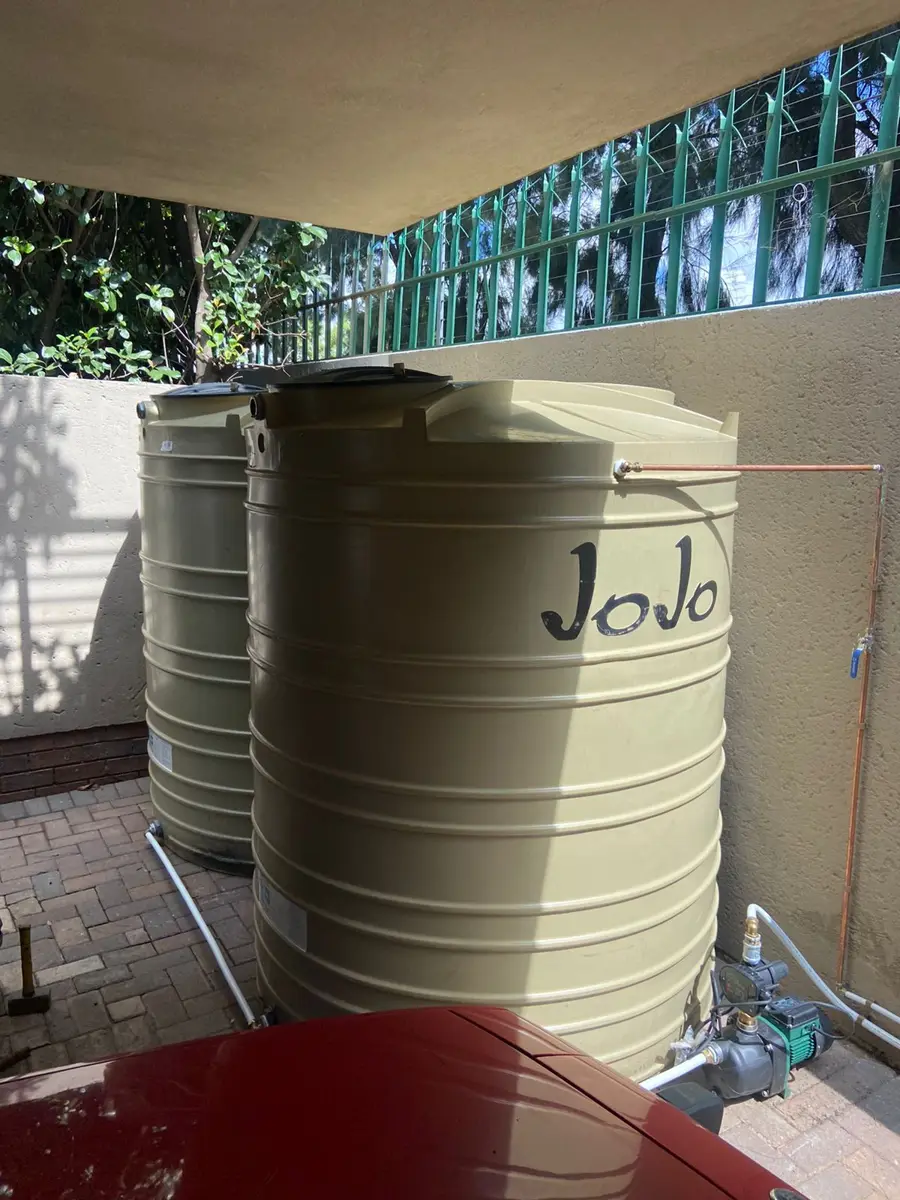
The tank and pump are only part of the installation. Access, base preparation, pipe routes and the condition of existing plumbing can change the amount of work considerably. A suitable level base must support the full tank in line with the tank manufacturer's requirements.
Controls and protection also affect the scope. Confirm which valves, backflow safeguards, filters and electrical arrangements are included, and whether any building or electrical work needs separate provision. Fox Plumbing agrees the price upfront; the call-out fee includes the first hour of work.
- Tank capacity, shape and access for delivery.
- Ground preparation and the required supporting base.
- Pump flow, pressure requirements and control equipment.
- Pipe lengths, trenching, wall penetrations and connection points.
- Backflow protection, filtration and any water treatment required.
- A safe electrical supply and any compatible backup-power provision.
Planning a practical setup in Benoni
For a Benoni property, start with the actual site rather than a standard tank package. Check the route from the street to the proposed position, clearance under eaves, access to the municipal inlet and space to service the pump. Keep pump noise in mind near bedrooms and neighbouring properties, and route overflow water away from foundations and walkways.
Municipal backup storage, rainwater harvesting and borehole storage serve different purposes. Do not assume that rainwater or borehole water is suitable for household drinking use: testing and appropriate treatment may be needed. Connections must prevent contamination of the municipal supply and comply with applicable local requirements.
- Use a covered tank suitable for its intended water use, with protected vents and overflow openings.
- Do not allow a pump to draw directly from the municipal main without confirming what local rules permit; plan an appropriately protected storage arrangement.
- Provide accessible isolation valves and a clearly explained changeover or bypass arrangement where appropriate.
- Check backup-power capacity against the pump's starting demand, not just its running power.
- Allow room for tank inspection, filter servicing and pump removal.
Speak to Fox Plumbing about your property
Fox Plumbing is based in Benoni and serves the East Rand and greater Gauteng. Owner Evan Pretorius is a qualified registered plumber with more than 20 years' experience and remains on the tools. Fox Plumbing is a member of IOPSA and PIRB and issues Certificates of Compliance (COCs); ask which certification applies to the proposed work.
Every job is insured, pensioners receive a special rate and the price is agreed upfront. Phone 084 368 1879, Monday to Friday, 08:00–17:00, or arrange a Saturday appointment. Photos of the available space, the water inlet and the intended pipe route are useful starting points.
- Explain whether you need outage backup, improved pressure or water for irrigation.
- List the outlets you want supplied and how many people use the property.
- Mention existing tanks, pumps, boreholes or backup electricity.
- Ask for the agreed scope to identify equipment, connection work and exclusions.
How we do the job
- 1
Establish the demand and check the existing supply
Identify essential outlets, expected water use and likely simultaneous demand. Investigate existing pressure or flow problems before deciding that a pump is the solution.
- 2
Select the tank position and system layout
Choose storage capacity and pump duty together. Check delivery access, base requirements, overflow routing, maintenance clearance and the electrical supply.
- 3
Confirm the scope and prepare the site
Agree on the price and responsibilities before work begins. Prepare a level, adequately supported base to the tank manufacturer's requirements and plan safe pipe and cable routes.
- 4
Connect the storage, pump and safeguards
Fit the planned inlet control, isolation valves, backflow protection and pump controls. Any required electrical work should be handled by a suitably qualified electrical professional.
- 5
Test operation and explain maintenance
Check for leaks, verify pressure under demand and test the controls and supply-changeover arrangement. Explain isolation, dry-run protection, cleaning and servicing, and confirm the applicable compliance documentation.
Common questions
What size water tank do I need? +
Estimate how much water your essential outlets use each day, then consider how long you want that supply to last. Available space and refill conditions also matter. A larger tank gives more storage, but it does not compensate for an incorrectly selected pump.
Will the system work during a power cut? +
The tank still stores water, but an electric pump needs power to deliver pressurised flow. Backup electricity must be compatible with the pump and able to handle its starting demand. A ground-level tank alone will not provide normal household pressure.
Is stored municipal water safe to drink? +
Do not assume storage preserves drinking-water quality indefinitely. The incoming water, tank material, hygiene, turnover and plumbing arrangement all matter. Keep the tank protected from contamination and arrange testing if quality is uncertain; a sediment filter alone does not disinfect water.
What maintenance does a tank and pump need? +
Follow the equipment manufacturers' schedules. Check for leaks, sediment, damaged lids or screens, blocked filters and unusual pump noise. A pump that repeatedly starts when no outlets are open needs investigation, as this can indicate a leak, valve fault or control problem.
Can I connect rainwater to the same household plumbing? +
Not as an informal connection. Rainwater needs a system designed for its intended use, with appropriate separation and backflow protection. Drinking-water use requires a suitable testing and treatment plan; clearly separated non-potable uses may be more practical.