
Quick answer
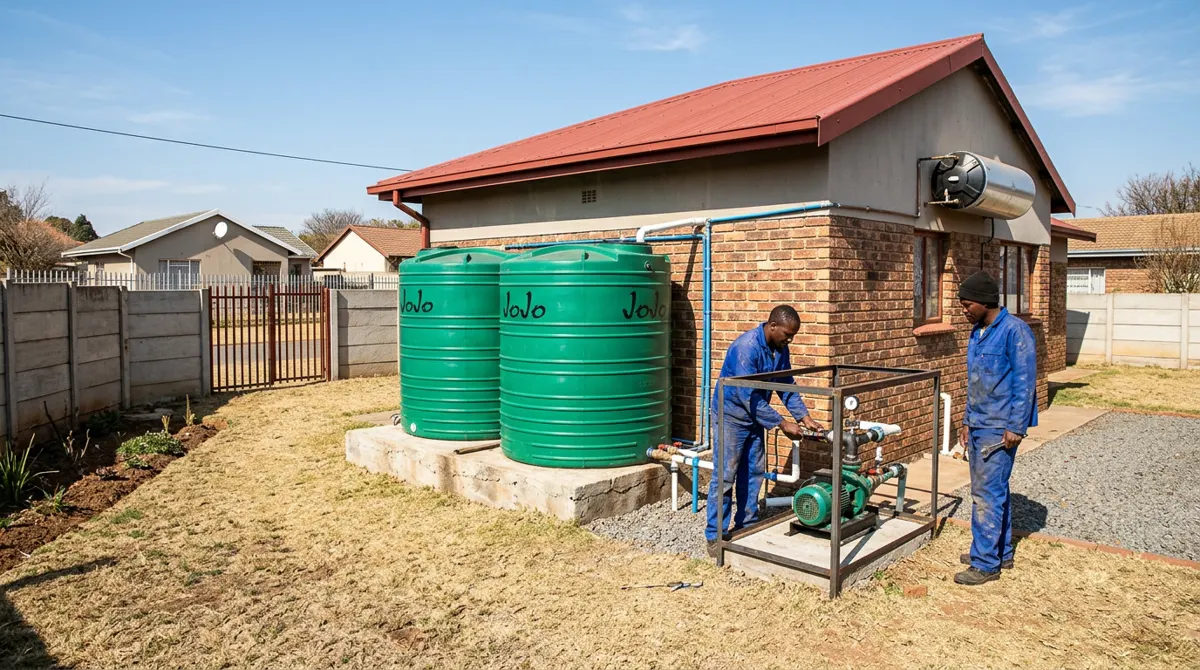
A water tank and pump system can supply your Brakpan property during a municipal interruption, provided there is enough stored water and power for the pump. The right setup depends on your daily water use, the taps and appliances you need to supply, and whether you are storing municipal water or collecting rainwater.
When a tank and pump system makes sense
If supply interruptions leave you unable to flush toilets, wash or keep your business operating, stored water gives you a practical buffer. Decide which uses matter most before choosing a tank: supplying essential fixtures requires a different arrangement from running an entire property as normal.
Weak pressure needs a diagnosis before you buy equipment. A restricted valve, blocked strainer or leaking pipe can cause poor flow too. A correctly sized pump can supply water from a tank at suitable pressure, but it will not fix every underlying plumbing problem.
- Your taps run dry during supply interruptions.
- You need stored water for essential household or business use.
- Several fixtures need to run together without a major pressure drop.
- You want a separate rainwater supply for garden irrigation or suitable non-drinking uses.
What affects the installation cost
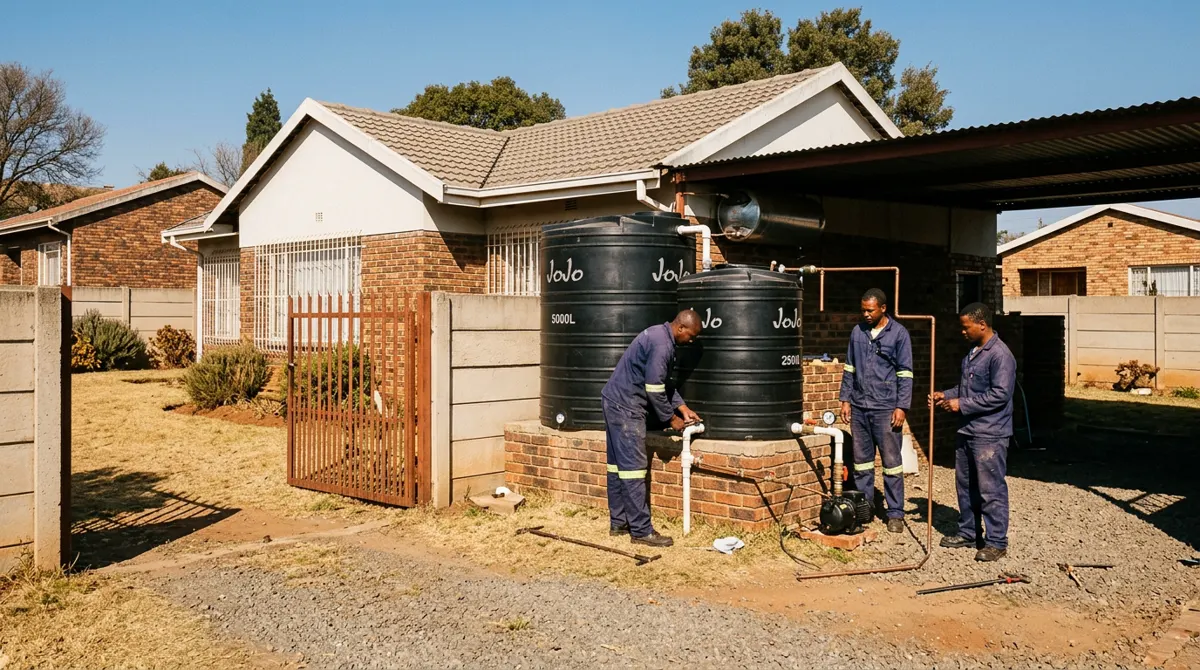
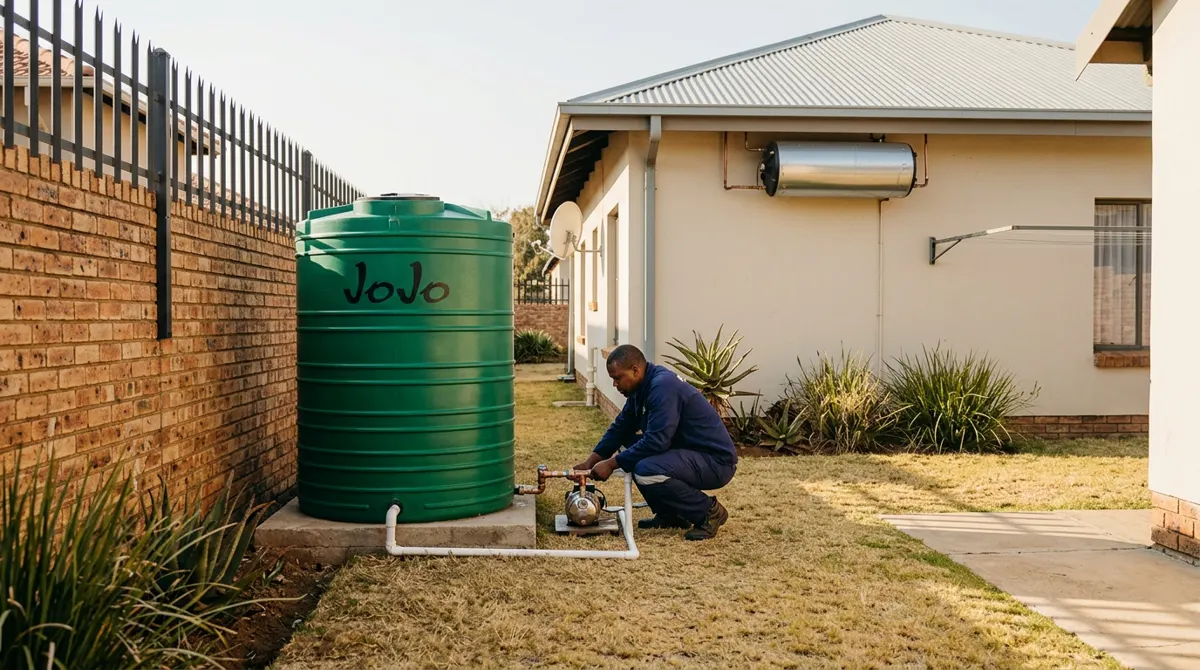
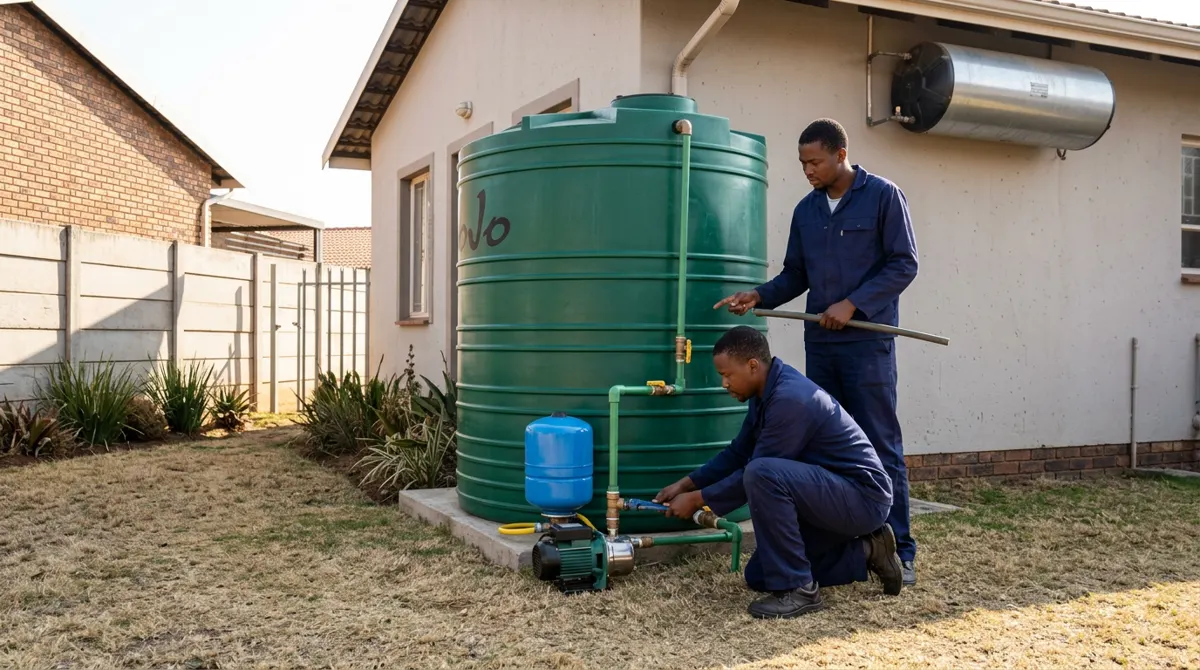
Tank capacity is only one part of the cost. The installation also needs a suitable base, correctly sized pipework, pump controls and protection against contamination or backflow. Compare quotes on the complete working system rather than the tank and pump alone.
Pump selection should account for simultaneous demand, pipe distances and changes in height. An oversized pump can create excessive pressure; an undersized one may struggle when several outlets open.
- Tank size, access for delivery and preparation of a level, load-bearing base.
- Distance between the tank, incoming supply and building connection.
- Pump duty, pressure controls, dry-run protection and any pressure vessel.
- Isolation valves, bypass arrangements and the required backflow protection.
- Electrical supply, weather protection and any compatible backup power.
- Water treatment, commissioning and applicable compliance requirements.
Planning for a Brakpan property
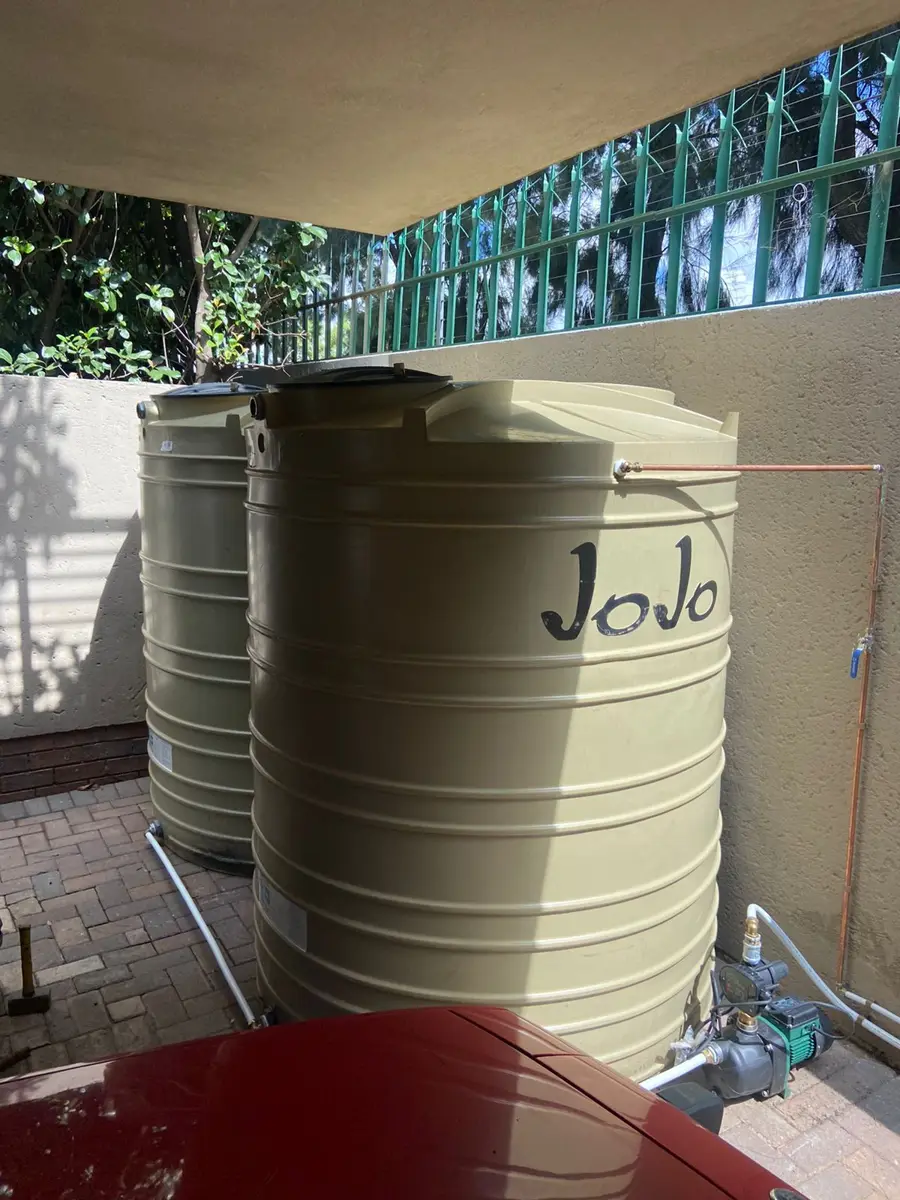
Check the available space before ordering a tank. It needs a base that meets the manufacturer's requirements, access for cleaning and servicing, and an overflow route that will not undermine foundations or flood a neighbouring property. Position the pump with noise, weather exposure and maintenance access in mind.
For a Brakpan installation, confirm applicable City of Ekurhuleni requirements before connecting storage to municipal plumbing. Municipal backup and rainwater harvesting are different designs: untreated roof runoff must not mix with drinking-water pipework. Backflow protection must suit the installation; a basic non-return valve should not automatically be treated as sufficient.
- Allow for periods when the municipal supply cannot refill the tank.
- Plan for power interruptions as well as water interruptions.
- Keep tank lids secure and protect vents and overflows against insects.
- Label non-potable outlets clearly and keep their pipework separate.
Discuss your system with Fox Plumbing
Fox Plumbing is based in Benoni and serves the East Rand, including Brakpan, and greater Gauteng. Owner Evan Pretorius is a qualified registered plumber with more than 20 years of experience and remains on the tools. Fox Plumbing is a member of IOPSA and PIRB and issues Certificates of Compliance (COCs).
The price is agreed upfront, the call-out fee includes the first hour of work, and every job is insured. Pensioners receive a special rate. Phone 084 368 1879 to discuss your property, existing plumbing and water-storage needs. Hours are Monday to Friday, 08:00–17:00, with Saturdays by appointment.
How we do the job
- 1
Assess demand and the existing supply
Identify essential outlets, estimate the storage required and check existing flow and pressure. Investigate plumbing faults before treating low pressure as a pump-sizing problem.
- 2
Choose the tank position and system layout
Check delivery access, ground support, overflow drainage and service space. Plan pipe routes, isolation points and appropriate protection for the municipal supply.
- 3
Match the pump and controls
Select equipment for the required flow and pressure, including dry-run protection. If backup power is needed, check both the pump's starting demand and running load.
- 4
Prepare the base and connect the plumbing
Install the tank on a suitable base and fit the planned pipework, valves and controls. Have any required electrical work completed by a suitably qualified electrical contractor.
- 5
Test and hand over
Check filling, overflow, leaks, pump operation and pressure at representative outlets. Demonstrate isolation and any bypass controls, explain maintenance, and confirm applicable compliance documentation.
Common questions
What size water tank do I need? +
Base the choice on expected daily use and how long you want stored water to last. Count the people or business activities relying on it, distinguish essential use from normal consumption, and allow for the space available. A larger tank is not useful if the site cannot support it safely.
Will the pump work during a power cut? +
An ordinary electric pump stops when its power supply fails. Backup power must be compatible with the pump and sized for its starting and running demands. Do not assume an existing household inverter has enough spare capacity.
Can I drink water from the tank? +
Potable municipal water needs a tank suitable for drinking-water storage, hygienic installation and ongoing maintenance. Storage alone does not guarantee water quality. If contamination is suspected, have the water assessed before drinking it; a sediment filter does not disinfect water.
Can rainwater supply my house? +
Rainwater can serve suitable non-potable uses through separately designed plumbing. Drinking-water use requires appropriate treatment and verification of water quality, not just a basic filter. Keep untreated rainwater separate from the potable supply.
Why does my pump keep switching on when no taps are open? +
Possible causes include a leak, a passing valve, unsuitable control settings or a pressure-vessel problem. Repeated cycling needs investigation because it can waste stored water and wear the pump. Avoid repeatedly adjusting pressure settings without identifying the cause.